EPSC2026 Call for Sessions

EPSC2026 Call for Sessions

The Call for Sessions for the Europlanet Science Congress (EPSC) 2026 is now open!

EPSC2026 will be held at AMARE in The Hague, Netherlands, from 6–11 September 2026.

The success of EPSC is founded on the excellence of the scientific sessions organised by the session conveners. The community is therefore encouraged to submit session proposals through the conference website by 4 March 2026.

Please suggest new sessions, with conveners and a description, within the programme group (PG) that is most closely aligned with the proposed session’s subject area. Co-organisations with other PGs can be requested in the session proposal.

  •  Terrestrial Planets (TP)
  •  Outer Planet Systems (OPS)
  •  Missions, Instrumentation, Techniques, Modelling (MITM)
  •  Small Bodies (comets, KBOs, rings, asteroids, meteorites, dust) (SB)
  •  Exoplanets, Origins of Planetary Systems and Astrobiology (EXOA)
  •  Outreach, Diversity, Amateur Astronomy, and Community (ODAC)

From 2026, EPSC actively encourages the proposal of sessions on community-based topics (e.g. early-career activities, sustainability and/or environmental impact, capacity-building, interdisciplinary and cross-community collaborations) as part of the renamed ODAC PG.

Call for EPSC SOC Members Now Open

Call for EPSC SOC Members Now Open

Deadline for Applications: 13 January 2026

Submit your application now!

EPSC is a scientific congress that places an emphasis on sharing values on high-quality science, inclusiveness, and transparency. In our commitment to keep the EPSC an open scientific forum for scientists at any career stage level, the EPSC Executive Committee has launched a Call for Members of the Scientific Organizing Committee (SOC).

The new mandate for the SOC is valid for the 2026/27 two-year period. The structure of the SOC will be divided into the six Programme Groups (PGs) of the EPSC conference:

  • Terrestrial Planets (TP)
  • Outer Planet Systems (OPS)
  • Missions, Instrumentation, Techniques, Modelling (MITM)
  • Small Bodies (comets, KBOs, rings, asteroids, meteorites, dust) (SB)
  • Exoplanets, Origins of Planetary Systems and Astrobiology (EXOA)
  • Outreach, Diversity, Amateur Astronomy, and Community (ODAC)

The number of SOC members in each PG will be between 2 and 4, depending on the size of the PG itself. Ideally, each PG will be assigned both senior and early-career scientists, and the gender balance will also be considered.

To apply, please send an email with the subject “EPSC SOC 2026 membership application” to Stavro Ivanovski (stavro.ivanovski@inaf.it) and Giovanni Poggiali (giovanni.poggiali@inaf.it) expressing your interest in joining the SOC, indicating your preference for the PG you would like to participate in, with a few sentences that summarize your scientific fields of interest and expertise. Furthermore, attached to the email a CV of two pages.

New members are expected to commit to the SOC duties and to be involved in organizing the conference. In particular, SOC members have:

  1. To solicit the scientific community to submit sessions and to create sessions if important and/or breakthrough scientific content is missing.
  2. To review the submitted sessions
    1. to verify that the most important areas of research relevant to the PG topic are covered, and
    2. to add missing sessions, if necessary.
  3. To participate actively in the EPSC SOC meetings and to respect the deadlines.
  4. To participate in the EPSC within the limits of your possibilities and support the EPSC Executive Committee to ensure a smooth execution.
  5. To act as session convener if necessary.

Before applying, please note that part of the activity needs to be done online in the summer months. Please also note that participating in EPSC SOC is a volunteering activity, and no reduction of registration fees or any other financial benefits are awarded to the SOC members (all EPSC Executive Committee members pay the regular fees).

For a detailed description of the EPSC SOC duties, please refer to SOC guidelines on the website: https://www.epsc2026.eu/guidelines/soc-guidelines.html

All SOC members must follow the Code of Conduct of EPSC:

Please send your applications by 13 January 2026. If you are selected, you will be notified by the end of January.

The support of the SOC members of the EPSC is fundamental, and without their enthusiastic work, the conference simply cannot be realized. In the past years, the SOC members have conducted EPSC meetings of a very high level of scientific content and effective collaborations so far. We are deeply thankful to all past SOC members for their dedicated work.

Stavro Ivanovski and Giovanni Poggiali

EPSC SOC Co-Chairs

Call for Hosting EPSC in 2028 and 2029

Apply to Host EPSC in 2028 or 2029!

The call to host the Europlanet Science Congress (EPSC) in 2028 or 2029 is now open. EPSC is the major European meeting on planetary science, regularly attracting over 1200 participants from around the world, and is the annual meeting of Europlanet.

The deadline for applications is 15 February 2026.

Top level requirements:

EPSC 2028 and 2029 should be hosted in a European city under the responsibility of a very motivated and very capable Local Organisation Committee (LOC) led by a research institute/research organisation with close links to the local planetary science community. The proposed venue should be able to accommodate 1200-1500 participants onsite and offer options to allow hybrid access for virtual participation

Facilities should include a large auditorium for 400+ participants, a large lecture hall for 200+ participants, 3-4 rooms for up to 200 participants, and 2-3 rooms for up to 100 participants, as well as 4-9 smaller rooms for splinters, workshops, press conferences etc. 

The venue should include areas for coffee breaks, seating and working spaces, as well as the capacity to display 300 posters (300 single sided or 150 double-sided and to accommodate 15-25 exhibition booths. All facilities, including venues for proposed social event(s), should be of high-quality and accessible to all attendees, including those with reduced mobility and wheelchair users. 

The venue should be in a safe and attractive location with excellent transport links (at both an international and local scale). Low-cost transportation and suitably priced accommodation for students should be available. 

Process:

Candidate host institutes/organisations are welcome to apply for either or both 2028 and 2029. The preferred timing is early-mid September, avoiding holidays (e.g. Yom Kippur).

To respond to this call, please download the application pack. The application pack contains a detailed summary of the venue requirements, as well as a set of guidelines that draw on the experience of past EPSC hosts. 

Applicants should fill in the application form below and submit:

  • A document setting out your proposal in full, addressing all the areas listed in the venue requirements.
  • A completed EPSC Proposal Budget Template (Excel spreadsheet in the application pack).
  • A completed EPSC Room Requirements Template (Excel spreadsheet in the application pack).

Provisional calendar:

  • Deadline for applications: 15 February 2026
  • Early site visit: May-early June (to be confirmed)
  • Proposal evaluation June/July
  • Host selection: Announced at EPSC2026.

Questions regarding the meeting organisation should be addressed to Copernicus (epsc@copernicus.org) and questions regarding Europlanet to europlanet@europlanet.org.

Noah Jäggi, EPSC Executive Committee Chair
Wladimir Neumann, Incoming EPSC Executive Committee Vice-Chair
Ann Carine Vandaele, President of Europlanet
Anita Heward, Vice-President of Europlanet
Stavro Ivanovski, Vice-President of Europlanet
Didier Moreau, Treasurer of Europlanet
Copernicus Meetings

Application form for hosting EPSC2028 and/or 2029

EPSC-DPS2025: Bringing the Digital Revolution to Direct Exoplanet Imaging with PLACID’s LCD Technology

EPSC-DPS2025: Bringing the Digital Revolution to Direct Exoplanet Imaging with PLACID’s LCD Technology 

Joint Meeting of the Europlanet Science Congress and the American Astronomical Society’s Division for Planetary Science (EPSC-DPS2025) Press Release

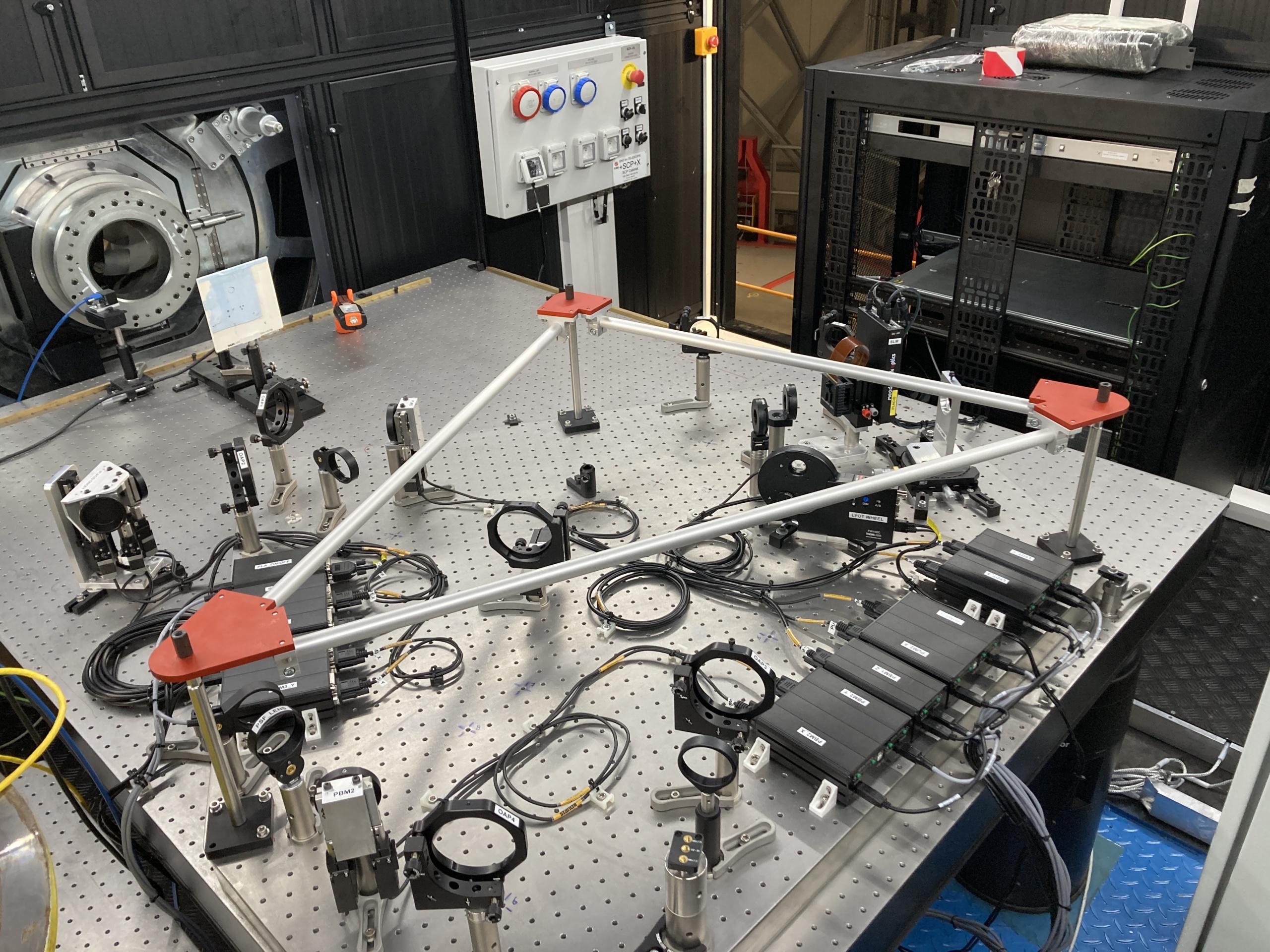
A game-changing instrument is set to improve the detection and direct imaging of planets outside our Solar System by harnessing the power of liquid crystals. The Programmable Liquid-crystal Active Coronagraphic Imager for the DAG telescope (PLACID) was installed earlier this year at the 4m-diameter telescope of the newly-built Eastern Anatolian Observatory (DAG) observatory in Eastern Turkey. Now in the integration and validation phase, the first on-sky observations of PLACID are expected in the first quarter of 2026. 

PLACID, which has been developed by a team of Swiss researchers from the University of Bern in cooperation with the University of Applied Sciences Western Switzerland of Yverdon (HEIG-VD), will join the small club of direct high-contrast imaging facilities in the northern hemisphere. The technology and status of the instrument, as well as the science it will enable, were presented at the recent EPSC-DPS2025 Joint Meeting in Helsinki.

Most of the nearly 6000 exoplanets discovered to date have been found using indirect methods, which focus on periodic changes of the host star’s apparent properties to infer the existence of a planet. Direct imaging requires an ‘eclipse machine’, known as a coronagraph, to mask the light of a star and reveal any body orbiting it – planets, discs, or brown dwarfs. To date, only a few dozen exoplanets have been directly imaged, as it is highly challenging to take an actual picture of a dim planet next to its very bright host star. Nonetheless, direct imaging is infinitely valuable for scientists as it can provide unique insights into how planets form and their composition, particularly their atmosphere. 

“With recent developments in technology and the construction of increasingly large telescopes, the future of exoplanet detection lies in direct imaging. PLACID is one of the stepping stones towards this future,” said Prof Jonas Kühn of the University of Bern in Switzerland, who leads the PLACID project. “It will revolutionise our approach to coronagraphs and bring them into the digital domain.”

Rather than placing a physical plate very precisely in the light path of a telescope, PLACID uses a Spatial Light Modulator (SLM) that relies on the optical properties of liquid crystals to change the optical path or ‘phase’ of light waves for each pixel across a screen. This allows very complex masks to be created at the click of a button.

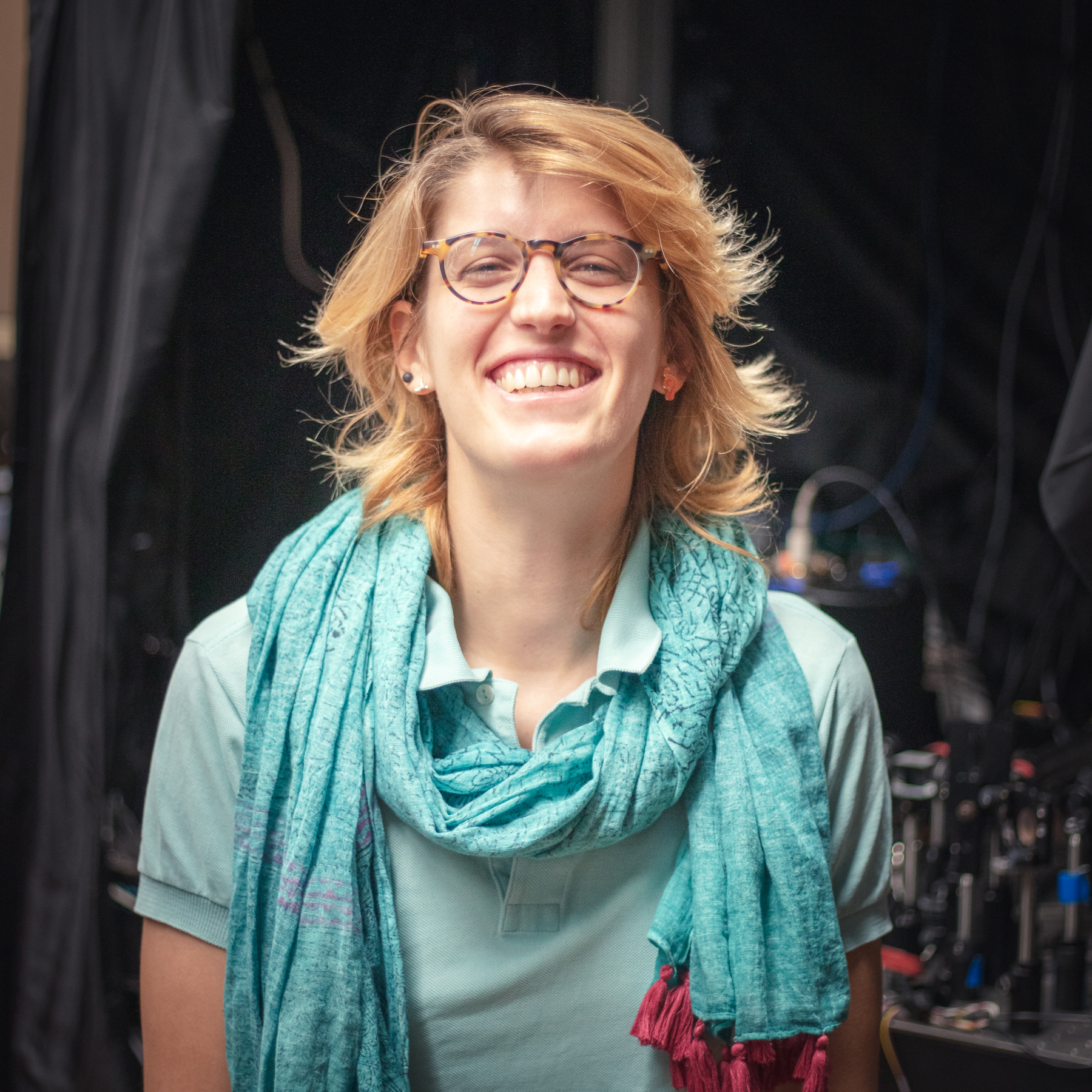
“We use SLM screens all the time in every-day devices, such as our phones, TVs or computers. In PLACID, the liquid crystals influence how the light passes through each pixel, so we can display any mask we want, giving us an extreme adaptability,” explained Ruben Tandon, a doctoral candidate at the University of Bern and member of the PLACID team.  

PLACID’s programming of advanced masks also gives it the exclusive capacity to do direct imaging of so-called circumbinary planets and proto-planetary discs – the cradles for planet formation – orbiting binary or multiple stars. With a traditional coronagraph, this is very challenging, since the unique and variable orbital configuration of each star system makes it almost impossible to set up plates that can block the light from the multiple stars. Thus, while such stars represent about 50% of all stars in our galaxy, no exoplanet orbiting more than one star has been directly imaged to date. 

“With PLACID, we can simply adapt the mask in real time to perfectly block the light of any star systems we choose to observe through the night,” said Tandon, who compiled the catalogue of targets for the instrument. “While we will start by targeting the small number of exoplanets that have already been directly imaged to better understand the instrument behaviour, our next step will be to try to directly image exoplanets orbiting binary stars, which will be a first.” 

The PLACID instrument, which has been almost a decade in development at the University of Bern, was assembled in the laboratory facilities of the HEIG-VD in Switzerland. After comprehensive laboratory testing to ensure it would meet the expected performances, the instrument was shipped to Turkey in early 2024 and delivered to the DAG telescope for installation in January 2025. 

“As with any novel idea, building PLACID involved some risk, but we thankfully benefitted from the support of the National Center of Competence in Research (NCCR) PlanetS and the Division of Space Research and Planetary Science of the University of Bern, who enabled us to do early validation of the technology, before the Türkiye National Observatories (TNO) awarded us the procurement contract. And later, the ERC review panel funded the science exploitation,” said Kühn. 

For the instrument performance to be fully harnessed, it also needs to be paired with an Adaptive Optics (AO) system, built by the team of Prof Laurent Jolissaint of HEIG-VD, which will reduce the effects of atmospheric turbulence. The two instruments are in their final stages of installation and will enable PLACID to observe its first targets in the first quarter of 2026.

“We are happy to welcome PLACID. Its capacities, coupled with our 4-meter class telescope, will lead to the first fully-European instrument in the northern hemisphere able to directly image exoplanets,” concluded Derya Öztürk Çetni, the PLACID instrument scientist from TNO. 

Further information

Abstract: EPSC-DPS2025-1774. The Programmable Liquid-crystal Active Coronagraphic Imager for the 4-m DAG telescope (PLACID) instrument: Discovery Space and Status. Ruben Tandon, Liurong Lin, Lucas Marquis, Axel Potier, Derya Öztürk Çetni, and Jonas G. Kühn.
https://doi.org/10.5194/epsc-dps2025-1774

The PLACID and RACE-GO projects have received funding from the Swiss State Secretariat for Education, Research, and Innovation (SERI) as a SERI-Funded ERC 2021 Consolidator Grant, project RACE-GO # M822.00084, following the discontinued participation of Switzerland to Horizon Europe. Part of this work has been carried out within the framework of the National Centre of Competence in Research PlanetS supported by the Swiss National Science Foundation under grants 51NF40 182901 and 51NF40 205606.

PLACID: https://www.space.unibe.ch/research/research_groups/laboratory_of_exoplanet_imaging_and_adaptive_optics_leiao/the_placid_exoplanet_imager/index_eng.html
www.racego.eu 
Türkiye National Observatories: https://trgozlemevleri.gov.tr/ 

Images

The PLACID instrument. Credit: University of Bern/PLACID.

https://www.europlanet.org/wp-content/uploads/2025/10/The_PLACID_Instrument_Credit_U-Bern_PLACID.jpg

Ruben Tandon and Jonas Kuehn work on the PLACID instrument. Credit: University of Bern/PLACID.

https://www.europlanet.org/wp-content/uploads/2025/10/Ruben_Tandon_and_Jonas_Kuehn_working_on_PLACID_Instrument_Credit_U-Bern_PLACID_lowres.jpeg

The PLACID Team at the DAG telescope for the installation of the PLACID instrument. Credit: University of Bern/PLACID.

https://www.europlanet.org/wp-content/uploads/2025/10/PLACID_Team_at_DAG_Credit_U-Bern_PLACID_lowres.jpeg

Installation of the PLACID Instrument. Credit: University of Bern/PLACID.

https://www.europlanet.org/wp-content/uploads/2025/10/PLACID_Installation_Credit_U-Bern_PLACID.jpg

The PLACID team oversee the installation of the instrument. Credit: University of Bern/PLACID.

https://www.europlanet.org/wp-content/uploads/2025/10/PLACID_Instrument_Lifted_into_Place_2_Credit_U-Bern_PLACID.jpg

The PLACID Instrument is lifted into place. Credit: University of Bern/PLACID.

https://www.europlanet.org/wp-content/uploads/2025/10/PLACID_Instrument_Lifted_into_Place_Credit_U-Bern_PLACID.jpg

Full resolution versions of images can be downloaded from https://www.swisstransfer.com/d/1de2090a-d758-461c-ad6e-3171f2187915 until 05 November 2025.

Contact
Ruben Tandon
PhD Candidate
Physics Institute, Space Research & Planetary Science
University of Bern
Switzerland
ruben.tandon@unibe.ch
+41316843290

Prof. Jonas Kühn
Assistant Professor
Physics Institute, Space Research & Planetary Science
University of Bern
Switzerland
 jonas.kuehn@unibe.ch
+41316844765

EPSC-DPS2025 Press Office
press@europlanet.org  

Notes for Editors

About the Joint Meeting of the Europlanet Science Congress and the Division of Planetary Sciences (EPSC-DPS)
The Europlanet Science Congress (EPSC), established in 2006 as the European Planetary Science Congress, is the largest planetary science meeting in Europe. It covers the entire range of planetary sciences, with an extensive mix of talks, workshops and poster sessions, as well as providing a unique space for networking and exchanges of experiences. 

EPSC joined forces for the first time with the American Astronomical Society’s Division for Planetary Sciences (DPS) for a joint meeting in Nantes, France, in 2011. This was followed by DPS-EPSC 2016 in Pasadena, EPSC-DPS 2019 in Geneva, and the return to the United States for the DPS-EPSC 2023 meeting in San Antonio. This year will mark the third iteration of a joint European-based meeting. The intent of the joint meetings is not only to connect the European and North American planetary science communities, but also to consolidate two major meetings and motivate planetary scientists from all over the globe to attend.

Follow on social media (BlueskyX and LinkedIn) with the hashtag #EPSCDPS2025 for updates on the meeting.

About Europlanet
Europlanet (europlanet.org) is a non-profit association and membership organisation that provides the planetary science community with access to research infrastructure, services and training. The Europlanet Association Sans But Lucratif (AISBL), established in 2023, builds on the heritage of a series of projects funded by the European Commission between 2005 and 2024 (Grant Numbers 871149, 654208, 228319 and RICA-CT-2004-001637) to support the planetary science community in Europe and around the world.

About the DPS
The Division for Planetary Sciences (DPS), founded in 1968, is the largest special-interest Division of the American Astronomical Society (AAS). Members of the DPS study the bodies of our own solar system, from planets and moons to comets and asteroids, and all other solar-system objects and processes. With the discovery that planets exist around other stars, the DPS has expanded its scope to include the study of extrasolar planetary systems as well. The American Astronomical Society (AAS), established in 1899, is the major organization of professional astronomers in North America. The mission of the AAS is to enhance and share humanity’s scientific understanding of the universe as a diverse and inclusive astronomical community, which it achieves through publishing, meeting organization, science advocacy, education and outreach, and training and professional development.

EPSC-DPS2025: Gaia Solves Mystery of Tumbling Asteroids and Finds a New Way to Probe Their Interiors

EPSC-DPS2025: Gaia Solves Mystery of Tumbling Asteroids and Finds a New Way to Probe Their Interiors

Joint Meeting of the Europlanet Science Congress and the American Astronomical Society’s Division for Planetary Science (EPSC-DPS2025) Press Release

Whether an asteroid is spinning neatly on its axis or tumbling chaotically, and how fast it is doing so, has been shown to be dependent on how frequently it has experienced collisions. The findings, presented at the recent EPSC-DPS2025 Joint Meeting in Helsinki, are based on data from the European Space Agency’s Gaia mission and provide a means of determining an asteroid’s physical properties – information that is vital for successfully deflecting asteroids on a collision course with Earth.

“By leveraging Gaia’s unique dataset, advanced modelling and A.I. tools, we’ve revealed the hidden physics shaping asteroid rotation, and opened a new window into the interiors of these ancient worlds,” said Dr Wen-Han Zhou of the University of Tokyo, who presented the results at EPSC-DPS2025.

During its survey of the entire sky, the Gaia mission produced a huge dataset of asteroid rotations based on their light curves, which describe how the light reflected by an asteroid changes over time as it rotates. When the asteroid data is plotted on a graph of the rotation period versus diameter, something startling stands out – there’s a gap, or dividing line that appears to split two distinct populations. 

Now a study led by Zhou, much of which was conducted while he was at the Observatoire de la Côte d’Azur in France, has revealed the reason for this gap – and in doing so solved some longstanding mysteries about asteroid rotation.

“We built a new model of asteroid-spin evolution that considers the tug of war between two key processes, namely collisions in the Asteroid Belt that can jolt asteroids into a tumbling state, and internal friction, which gradually smooths their spin back to a stable rotation,” said Zhou. “When these two effects balance, they create a natural dividing line in the asteroid population.”

By applying machine learning to Gaia’s asteroid catalogue and then comparing the results to their model’s prediction, Zhou’s team found that the location of the gap matched what their model predicted almost perfectly.

Below the gap are slowly tumbling asteroids with rotational periods of less than 30 hours, while above the gap are the faster ‘pure’ spinners. 

For decades, astronomers have been puzzled about why there are so many asteroids tumbling chaotically rather than spinning around a single rotational axis, and why smaller asteroids are more likely to be tumbling slowly.

Zhou’s study shows that collisions and the effects of sunlight are key. Tumbling motion usually starts when an asteroid spins slowly. Its slow rotation means that it is more easily disturbed by collisions, which can knock the asteroid into a chaotic tumble.

Ordinarily, the subtle force of sunlight would be expected to cause the asteroid to stop tumbling and spin up. The surface of an asteroid absorbs heat from the Sun and re-emits it in different directions. The emitted photons give the asteroid a tiny push, one that builds up over time, and depending on the asteroid can either speed up its rotation or slow it down. For an asteroid that is spinning smoothly on its axis, the directions in which sunlight is absorbed and re-emitted remains constant, allowing the strength of the push from sunlight to build up.

However, for tumbling asteroids the effect of sunlight is much weaker. Because they are rotating chaotically, different parts of the surface are absorbing and re-emitting heat at any given time. Rather than giving the asteroid a consistent push, the effect of absorbing and re-emitting sunlight is smoothed out, so there’s no preferred push in any direction. As a result, slowly tumbling asteroids change their spin very slowly, and become stuck in the slow-rotation zone below the gap in the observational data from Gaia.

There’s a practical usefulness to this discovery. By understanding how the rigidity of asteroids’ interior structure relates to their rotation, it’s possible to use that knowledge to infer the internal properties of the asteroids. From the Gaia data, the findings support the picture of asteroids as loosely held together rubble piles, with lots of holes and cavities blanketed in thick, dusty regolith.

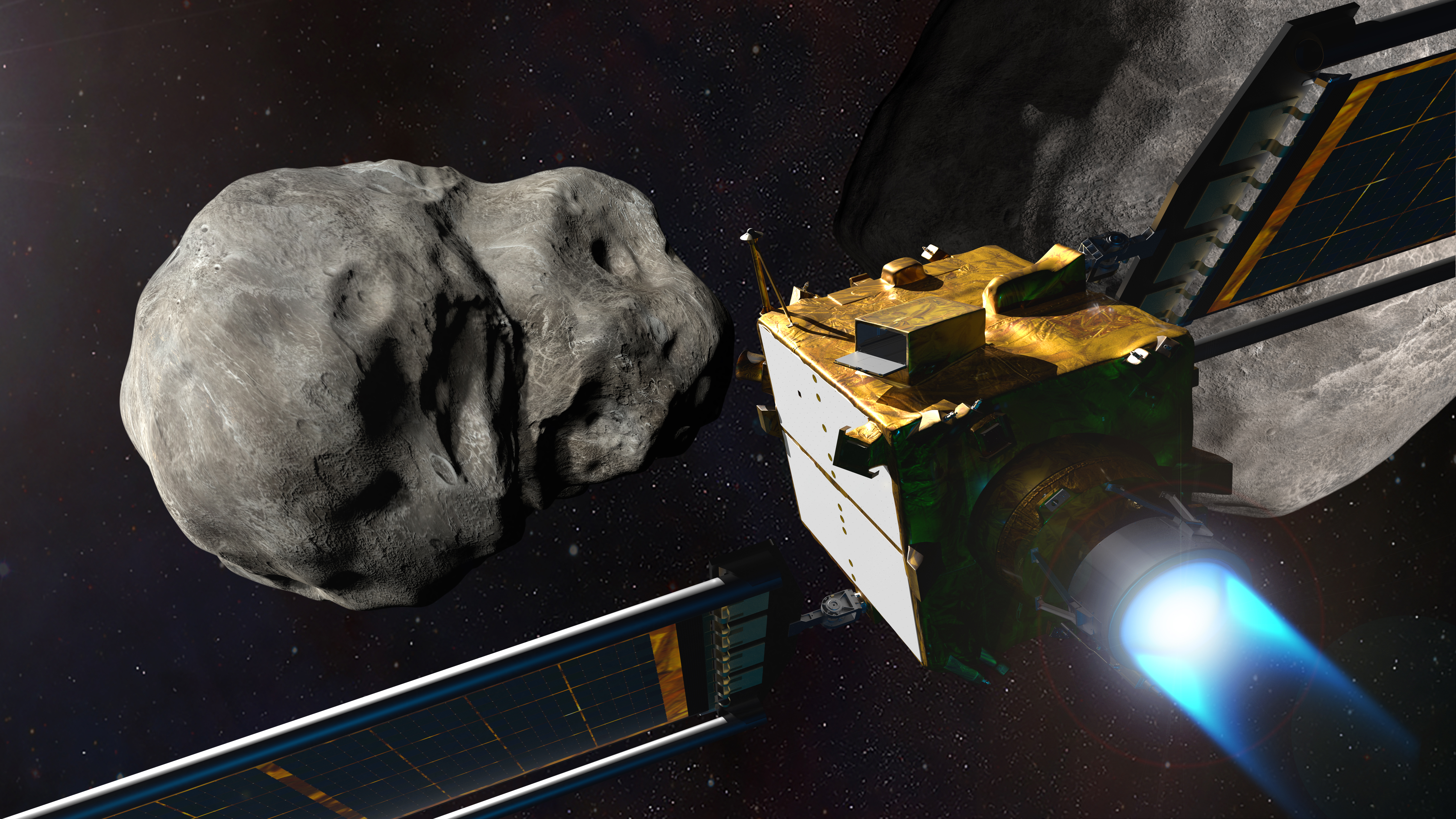
Understanding the properties of asteroids also has repercussions for how to deflect a hazardous asteroid on a collision course, because a rubble pile asteroid would react to a kinetic impact like NASA’s DART differently than a solid, rigid body. Thanks to these findings, astronomers could soon have an extensive catalogue of the internal structures of potentially hazardous asteroids, which could hold the key of how to deflect them.

“With forthcoming surveys like the Vera C. Rubin Observatory’s Legacy Survey of Space and Time (LSST), we’ll be able to apply this method to millions more asteroids, refining our understanding of their evolution and make-up,” said Zhou.

Further information

EPSC-DPS2025-893 Understanding the Long-Term Rotational Evolution of Asteroids with Gaia

Wen-Han Zhou, Patrick Michel, Marco Delbo, Wenchao Wang, Bonny Y. Wang, Josef Durech and Josef Hanuš. https://doi.org/10.5194/epsc-dps2025-893

Paper: Wen-Han Zhou et al; Confined Tumbling State as the Origin of the Excess of Slowly Rotating Asteroids, Nature Astronomy9, 493–500 (2025)

Images

An illustration of two colliding asteroids. Credit: Europlanet/T Roger.

https://www.europlanet.org/wp-content/uploads/2025/09/asteroid_Collision.jpg

Gaia data.jpg

On the left is a graph based on data from Gaia, plotting asteroid rotation versus diameter. Blue dots show where each asteroid falls on the graph. There are two clusters, one dense group above and slightly to the right of a dotted dividing line, with a second more diffuse cluster below and slightly to the left. Dozens of the confirmed tumbler asteroids (shown as purple triangles) are marked in the population below the line, while only three are plotted above the line. On the right is a simulated model that very closely matches the real data.
On the left is a graph based on data from Gaia, plotting asteroid rotation versus diameter. The dividing line between tumblers and pure spinners is evidence. On the right is a simulated model that very closely matches the real data. Image credit: Wen-Han Zhou et al.
https://www.europlanet.org/wp-content/uploads/2025/09/Gaia-data.jpg

Collisions between asteroids are not uncommon: this is the aftermath of a head-on collision between asteroids as seen by the Hubble Space Telescope in 2010. Image credit: NASA/ESA/D. Jewitt (UCLA).
https://www.europlanet.org/wp-content/uploads/2025/09/Hubble_asteroid_collision.jpg

Contacts

Dr Wen-Han Zhou
The University of Tokyo
wenhan.zhou@oca.eu

EPSC-DPS2025 Press Office
press@europlanet.org 

Notes for Editors

About the Joint Meeting of the Europlanet Science Congress and the Division of Planetary Sciences (EPSC-DPS) 

The Europlanet Science Congress (EPSC), established in 2006 as the European Planetary Science Congress, is the largest planetary science meeting in Europe. It covers the entire range of planetary sciences, with an extensive mix of talks, workshops and poster sessions, as well as providing a unique space for networking and exchanges of experiences.

EPSC joined forces for the first time with the American Astronomical Society’s Division for Planetary Sciences (DPS) for a joint meeting in Nantes, France, in 2011. This was followed by DPS-EPSC 2016 in Pasadena, EPSC-DPS 2019 in Geneva, and the return to the United States for the DPS-EPSC 2023 meeting in San Antonio. This year will mark the third iteration of a joint European-based meeting. The intent of the joint meetings is not only to connect the European and North American planetary science communities, but also to consolidate two major meetings and motivate planetary scientists from all over the globe to attend.

Follow on social media (BlueskyX and LinkedIn) with the hashtag #EPSC-DPS2025 for updates on the meeting.

About Europlanet

Europlanet (europlanet.org) is a non-profit association and membership organisation that provides the planetary science community with access to research infrastructure, services and training. The Europlanet Association Sans But Lucratif (AISBL), established in 2023, builds on the heritage of a series of projects funded by the European Commission between 2005 and 2024 (Grant Numbers 871149, 654208, 228319 and RICA-CT-2004-001637) to support the planetary science community in Europe and around the world. 

About the DPS

The Division for Planetary Sciences (DPS), founded in 1968, is the largest special-interest Division of the American Astronomical Society (AAS). Members of the DPS study the bodies of our own solar system, from planets and moons to comets and asteroids, and all other solar-system objects and processes. With the discovery that planets exist around other stars, the DPS has expanded its scope to include the study of extrasolar planetary systems as well. The American Astronomical Society (AAS), established in 1899, is the major organization of professional astronomers in North America. The mission of the AAS is to enhance and share humanity’s scientific understanding of the universe as a diverse and inclusive astronomical community, which it achieves through publishing, meeting organization, science advocacy, education and outreach, and training and professional development.

EPSC-DPS2025: JWST Reveals Dark Beads and Lopsided Star Patterns in Saturn’s Atmosphere

EPSC-DPS2025: JWST Reveals Dark Beads and Lopsided Star Patterns in Saturn’s Atmosphere

Joint Press Release of Northumbria University and the Joint Meeting of the Europlanet Science Congress and the American Astronomical Society’s Division for Planetary Science (EPSC-DPS2025)

A study of Saturn’s atmospheric structure using data from the James Webb Space Telescope (JWST) has revealed complex and mysterious features unseen before on any planet in our Solar System. The results were presented last week by Prof Tom Stallard of Northumbria University, UK, at the EPSC-DPS2025 Joint Meeting in Helsinki. 

“This opportunity to use JWST was the first time we have ever been able to make such detailed near-infrared observations of Saturn’s aurora and upper atmosphere. The results came as a complete surprise,” said Stallard. 

“We anticipated seeing emissions in broad bands at the various levels. Instead, we’ve seen fine-scaled patterns of beads and stars that, despite being separated by huge distances in altitude, may somehow be interconnected – and may also be linked to the famous hexagon deeper in Saturn’s clouds. These features were completely unexpected and, at present, are completely unexplained.”

The international team of researchers, comprising 23 scientists from institutions across the UK, US and France, made the discoveries during a continuous 10-hour observation period on 29 November 2024, as Saturn rotated beneath JWST’s view. 

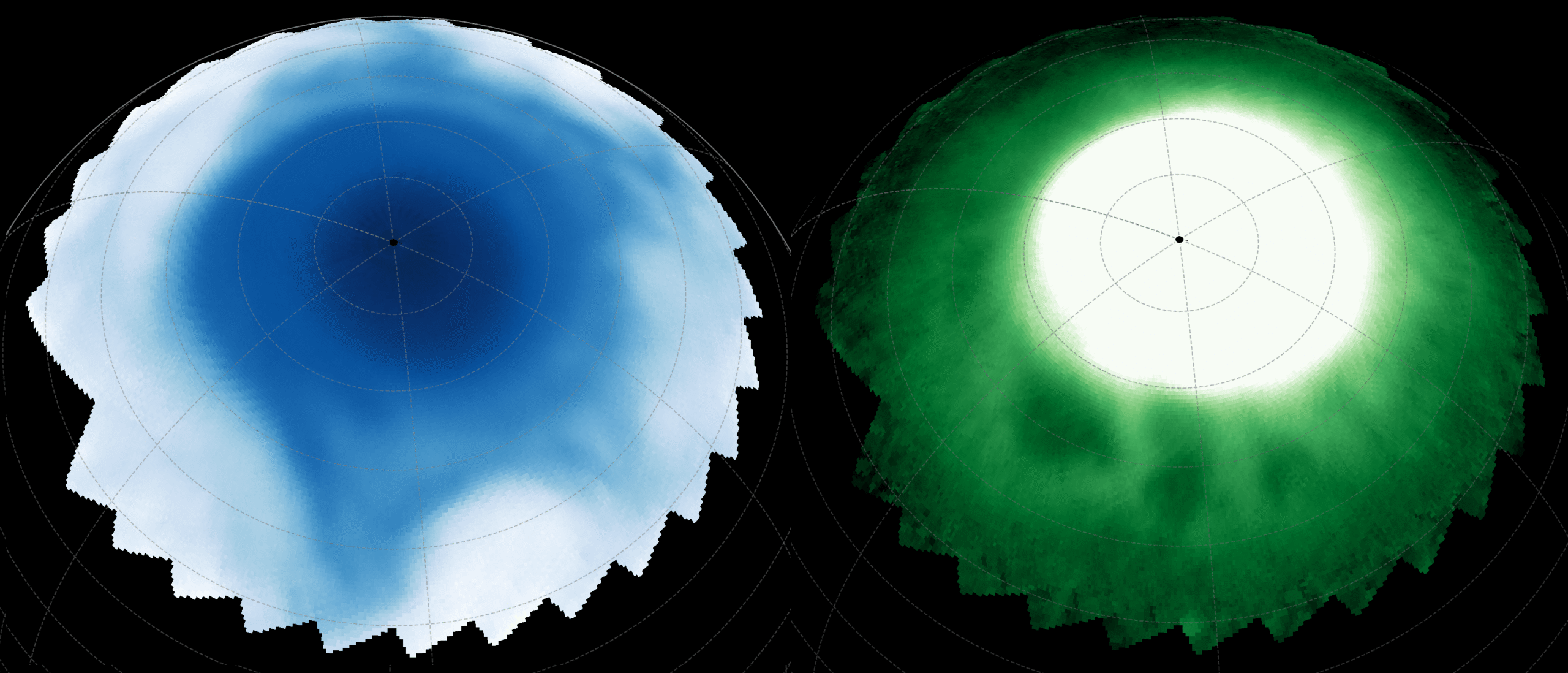
The team focused on detecting infrared emissions by a positively charged molecular form of hydrogen, H3+, which plays a key role in reactions in Saturn’s atmosphere and so can provide valuable insights into the chemical and physical processes at work. JWST’s Near Infrared Spectrograph allowed the team to simultaneously observe H₃⁺ ions from the ionosphere, 1,100 kilometres above Saturn’s nominal surface, and methane molecules in the underlying stratosphere, at an altitude of 600 kilometres.

In the electrically-charged plasma of the ionosphere, the team observed a series of dark, bead-like features embedded in bright auroral halos. These structures remained stable over hours but appeared to drift slowly over longer periods.

Around 500 kilometres lower, in Saturn’s stratosphere, the team discovered an asymmetric star-shaped feature. This unusual structure extended out from Saturn’s north pole towards the equator. Only four of the star’s six arms were visible, with two mysteriously missing, creating a lopsided pattern. 

“Saturn’s upper atmosphere has proven incredibly difficult to study with missions and telescope facilities to date due to the extremely weak emissions from this region,” said Stallard. “JWST’s incredible sensitivity has revolutionised our ability to observe these atmospheric layers, revealing structures that are completely unlike anything we’ve seen before on any planet.” 

The team mapped the exact locations of the features and found that they overlaid the same region of Saturn at different levels, with the star’s arms appearing to emanate from positions directly above the points of the storm-cloud-level hexagon. This suggests that the processes that are driving the patterns may influence a column stretching right through Saturn’s atmosphere.

“We think that the dark beads may result from complex interactions between Saturn’s magnetosphere and its rotating atmosphere, potentially providing new insights into the energy exchange that drives Saturn’s aurora. The asymmetric star pattern suggests previously unknown atmospheric processes operating in Saturn’s stratosphere, possibly linked to the hexagonal storm pattern observed deeper in Saturn’s atmosphere,” said Stallard. 

“Tantalisingly, the darkest beads in the ionosphere appear to line up with the strongest star-arm in the stratosphere, but it’s not clear at this point whether they are actually linked or whether it’s just a coincidence.”

While both features could have significant implications for understanding atmospheric dynamics on gas giant planets, more work is needed to provide explanations for the underlying causes.  

The team hopes that additional time may be granted in future to carry out follow-up observations of Saturn with JWST to further explore the features. With the planet at its equinox, which occurs approximately every 15 Earth years, the structures may change dramatically as Saturn’s orientation to the Sun shifts and the northern hemisphere moves into autumn. 

“Since neither atmospheric layer can be observed using ground-based telescopes, the need for JWST follow-up observations during this key time of seasonal change on Saturn is pressing,” Stallard added. 

Further Information

Abstract: EPSC-DPS2025-817. Tom Stallard, Henrik Melin, Luke Moore, Emma Thomas, Katie Knowles, Paola Tiranti and James O’Donoghue. 

https://doi.org/10.5194/epsc-dps2025-817

The paper JWST/NIRSpec detection of complex structures in Saturn’s sub-auroral ionosphere and stratosphere was published in Geophysical Research Letters on 28 August 2025. 

DOI: https://doi.org/10.1029/2025GL116491

Visit the Northumbria University Research Portal to find out more about Professor Tom Stallard’s work. 

The Saturn research was supported by grants from the Science and Technology Facilities Council (STFC), NASA Solar System Workings program, and the European Research Council. The study represents part of JWST’s ongoing revolutionary observations of our solar system’s planets. 

Images and Animations

Download link: https://www.swisstransfer.com/d/c8e96f72-8794-421e-bf60-ab31d5d07188

Montage of Dark Beads in Saturn’s Ionosphere

Montage of stills from animation showing the dark, bead-like features embedded in bright auroral halos as Saturn rotates beneath JWST’s view. Credit: NASA/ESA/CSA/Stallard et al 2025.

https://www.europlanet.org/wp-content/uploads/2025/09/dark_beads_montage.png

Animation of Dark Beads in Saturn’s Ionosphere

This video of Saturn’s ionosphere highlights the contrast in brightness between JWST’s infrared observations of the aurora and the dim bead features. The aurora itself is relatively weak, almost impossible to image from Earth, needing hours of integration time to observe using ground-based data.  However, the auroral features are at least four times brighter than the brightest parts of the dark bead features, so to properly show the hidden features, the aurora are completely saturated. Credit: NASA/ESA/CSA/Stallard et al 2025.

Montage of Star Arms in Saturn’s Stratosphere

Montage of stills from animation showing near infrared emissions in Saturn’s stratosphere, revealing the four star-arm features flowing from the pole towards the equator, as the planet rotates beneath JWST’s view. Credit: NASA/ESA/CSA/Stallard et al 2025.

https://www.europlanet.org/wp-content/uploads/2025/09/star_arms_montage.png

Montage of Star Arms in Saturn’s Stratosphere

This video of Saturn’s stratosphere shows a complex and highly surprising star-shaped structure, revealed for the first time by JWST’s unprecedented sensitivity. Four dark bands extend away from the polar region, appearing to make up four out of six arms that align with Saturn’s famous hexagon within the lower atmosphere. At this point, it is unknown why the dark arms are flowing towards the equator, or why two of the arms are missing, but the causes may be associated with the complex bead structures observed many hundreds of kilometres above in the ionosphere.  Credit: NASA/ESA/CSA/Stallard et al 2025.

Dark Beads and Star Arms in Saturn’s Upper Atmosphere

Detections of near infrared emissions in Saturn’s ionosphere (right) show dark bead-like features embedded within bright aurora. In the stratosphere (left), 500 kilometres below, a lopsided star-pattern extends towards the equator. Credit: NASA/ESA/CSA/Stallard et al 2025.

https://www.europlanet.org/wp-content/uploads/2025/09/beads_and_star_arms.png

Dark Beads and Star Arms in Saturn’s Upper Atmosphere

This video shows how the structures observed in Saturn’s ionosphere and stratosphere relate to one another. Starting with the aurora at 1100 km, the brightness is increased to reveal the dark bead-like features. The video then fades into the star-arm shapes within the underlying 600 km layer. The darkest beads in the ionosphere appear to line up with the strongest arm underneath it, but it is not clear if this is co-incidental, or if it suggests coupling between Saturn’s lowest and highest layers of the atmosphere.  Credit: NASA/ESA/CSA/Stallard et al 2025.

Notes for Editors

About the Joint Meeting of the Europlanet Science Congress and the Division of Planetary Sciences (EPSC-DPS) 

The Europlanet Science Congress (EPSC), established in 2006 as the European Planetary Science Congress, is the largest planetary science meeting in Europe. It covers the entire range of planetary sciences, with an extensive mix of talks, workshops and poster sessions, as well as providing a unique space for networking and exchanges of experiences.

EPSC joined forces for the first time with the American Astronomical Society’s Division for Planetary Sciences (DPS) for a joint meeting in Nantes, France, in 2011. This was followed by DPS-EPSC 2016 in Pasadena, EPSC-DPS 2019 in Geneva, and the return to the United States for the DPS-EPSC 2023 meeting in San Antonio. This year marks the third iteration of a joint European-based meeting. The intent of the joint meetings is not only to connect the European and North American planetary science communities, but also to consolidate two major meetings and motivate planetary scientists from all over the globe to attend. With over 1800 participants joining in person and online, EPSC-DPS2025 is the largest planetary science meeting held to date in Europe. https://www.epsc-dps2025.eu

Follow on social media (BlueskyX and LinkedIn) with the hashtag #EPSC-DPS2025 for updates on the meeting.

About Europlanet

Europlanet (europlanet.org) is a non-profit association and membership organisation that provides the planetary science community with access to research infrastructure, services and training. The Europlanet Association Sans But Lucratif (AISBL), established in 2023, builds on the heritage of a series of projects funded by the European Commission between 2005 and 2024 (Grant Numbers 871149, 654208, 228319 and RICA-CT-2004-001637) to support the planetary science community in Europe and around the world. 

About the DPS

The Division for Planetary Sciences (DPS), founded in 1968, is the largest special-interest Division of the American Astronomical Society (AAS). Members of the DPS study the bodies of our own solar system, from planets and moons to comets and asteroids, and all other solar-system objects and processes. With the discovery that planets exist around other stars, the DPS has expanded its scope to include the study of extrasolar planetary systems as well. The American Astronomical Society (AAS), established in 1899, is the major organization of professional astronomers in North America. The mission of the AAS is to enhance and share humanity’s scientific understanding of the universe as a diverse and inclusive astronomical community, which it achieves through publishing, meeting organization, science advocacy, education and outreach, and training and professional development.

EPSC-DPS2025: How Interstellar Objects Similar to 3I/ATLAS Could Jump-Start Planet Formation Around Infant Stars

How Interstellar Objects Similar to 3I/ATLAS Could Jump-Start Planet Formation Around Infant Stars

Joint Meeting of the Europlanet Science Congress and the American Astronomical Society’s Division for Planetary Science (EPSC-DPS2025) Press Release

Interstellar objects like 3I/ATLAS that have been captured in planet-forming discs around young stars could become the seeds of giant planets, bypassing a hurdle that theoretical models have previously been unable to explain.

Interstellar objects are asteroid- and comet-like bodies that have been ejected from their home system and now wander through interstellar space, occasionally encountering other star systems. Since 2017 astronomers have detected three interstellar objects passing through our Solar System: 1I/’Oumuamua, 2I/Borisov and most recently 3I/ATLAS, discovered in summer 2025.

However, interstellar objects may be more influential than they at first appear to be, says Professor Susanne Pfalzner of Forschungszentrum Jülich in Germany, who presents her new findings on the subject at this week’s EPSC-DPS2025 Joint Meeting in Helsinki.

“Interstellar objects may be able to jump start planet formation, in particular around higher-mass stars,” said Pfalzner.

Planets form in dusty discs around young stars through a process of accretion, which according to theory involves smaller particles come together to form slightly larger objects, and so on until planet-sized bodies have assembled. However, theorists struggle to explain how anything larger than a metre forms through accretion in the hurly-burly of a planet-forming disc around a young star – in computer simulations, boulders either bounce off each other or shatter when they collide rather than sticking together.

Interstellar objects can potentially bypass this problem. Pfalzner’s models show how the dusty planet-forming disc around each young star could gravitationally capture millions of interstellar objects the size of 1I/’Oumuamua, which was estimated to be around 100 metres long. 

“Interstellar space would deliver ready-made seeds for the formation of the next generation of planets,” said Pfalzner.  

If interstellar objects can act as the seeds of planets, it also solves another mystery. Gas giant planets like Jupiter are rare around the smallest, coolest stars, which astronomers refer to as ‘M dwarfs’. They are more commonly found around more massive stars similar to the Sun. The problem, though, is that planet-forming discs around Sun-like stars have a lifetime of about two million years before dissipating and it’s very challenging to form to form gas giant planets on such a short timescale. However, if captured interstellar objects are present as seeds onto which more material can accrete, it speeds the process of planet formation up and giant planets can form in the lifetime of the disc.

“Higher-mass stars are more efficient in capturing interstellar objects in their discs,” said Pfalzner. “Therefore, interstellar object-seeded planet formation should be more efficient around these stars, providing a fast way to form giant planets. And, their fast formation is exactly what we have observed.”

Pfalzner says that her next steps are to model the success rate of these captured interstellar objects – investigating how many of the millions of captured interstellar objects are able to form planetary bodies, and whether they are captured evenly across a planet-forming disc, or whether they are concentrated in certain areas that could become hotspots for planet-birth.

Further information

EPSC-DPS2025-1927, Interstellar Objects Function as Seeds for Planet Formation Predominantly Around High-Mass Stars

Susanne Pfalzner, https://doi.org/10.5194/epsc-dps2025-1927

Images

Interstellar object 3I/ATLAS imaged by the Hubble Space Telescope. Could similar objects be the seeds of new planets around young stars? Image credit: NASA/ESA/David Jewitt (UCLA). Image Processing: Joseph DePasquale (STScI).

https://assets.science.nasa.gov/content/dam/science/missions/hubble/releases/2025/08/STScI-01K1X6XDR76ZD4FYJ9VTWN1ERB.tif

Contacts

Professor Susanne Pfalzner
Jülich Supercomputing Center, Forschungszentrum Jülich, Germany
s.pfalzner@fz-juelich.de

EPSC-DPS2025 Press Office
press@europlanet.org 

Notes for Editors

About the Joint Meeting of the Europlanet Science Congress and the Division of Planetary Sciences (EPSC-DPS)

The Europlanet Science Congress (EPSC), established in 2006 as the European Planetary Science Congress, is the largest planetary science meeting in Europe. It covers the entire range of planetary sciences, with an extensive mix of talks, workshops and poster sessions, as well as providing a unique space for networking and exchanges of experiences.

EPSC joined forces for the first time with the American Astronomical Society’s Division for Planetary Sciences (DPS) for a joint meeting in Nantes, France, in 2011. This was followed by DPS-EPSC 2016 in Pasadena, EPSC-DPS 2019 in Geneva, and the return to the United States for the DPS-EPSC 2023 meeting in San Antonio. This year will mark the third iteration of a joint European-based meeting. The intent of the joint meetings is not only to connect the European and North American planetary science communities, but also to consolidate two major meetings and motivate planetary scientists from all over the globe to attend. With over 1800 participants joining in person and online, EPSC-DPS2025 is the largest planetary science meeting held to date in Europe. https://www.epsc-dps2025.eu

Follow on social media (BlueskyX and LinkedIn) with the hashtag #EPSC-DPS2025 for updates on the meeting.

About Europlanet

Europlanet (europlanet.org) is a non-profit association and membership organisation that provides the planetary science community with access to research infrastructure, services and training. The Europlanet Association Sans But Lucratif (AISBL), established in 2023, builds on the heritage of a series of projects funded by the European Commission between 2005 and 2024 (Grant Numbers 871149, 654208, 228319 and RICA-CT-2004-001637) to support the planetary science community in Europe and around the world. 

About the DPS

The Division for Planetary Sciences (DPS), founded in 1968, is the largest special-interest Division of the American Astronomical Society (AAS). Members of the DPS study the bodies of our own solar system, from planets and moons to comets and asteroids, and all other solar-system objects and processes. With the discovery that planets exist around other stars, the DPS has expanded its scope to include the study of extrasolar planetary systems as well. The American Astronomical Society (AAS), established in 1899, is the major organization of professional astronomers in North America. The mission of the AAS is to enhance and share humanity’s scientific understanding of the universe as a diverse and inclusive astronomical community, which it achieves through publishing, meeting organization, science advocacy, education and outreach, and training and professional development.

How the Stuff of Life Could Be Brought to Europe’s Mars Rover by Rockfalls and Ancient Floods

How the Stuff of Life Could Be Brought to Europe’s Mars Rover by Rockfalls and Ancient Floods

Joint Meeting of the Europlanet Science Congress and the American Astronomical Society’s Division for Planetary Science (EPSC-DPS2025) Press Release

The Rosalind Franklin mission’s chance of finding evidence of past life on Mars has been boosted by two studies that show that the rover won’t have to travel far to find materials potentially laden with organic molecules. Instead, natural processes could bring those materials to the rover, as revealed in two separate presentations at the EPSC–DPS2025 Joint Meeting in Helsinki this week.

Rosalind Franklin is a European Space Agency (ESA) mission currently scheduled to blast off to Mars in 2028. The rover will land in Oxia Planum, which is a large plain rich in clay minerals that formed in water billions of years ago.

The first study presented at EPSC–DPS2025, by Dr Aleksandra Sokołowska of Brown University in the USA and Imperial College London, describes how the identification of 258 rockfalls in the region of the landing site provides the opportunity for the rover to explore previously inaccessible material.

The second study, presented by Ananya Srivastava of the University of Western Ontario in Canada, reveals how organic-rich clays in Oxia Planum may have originated from elsewhere on Mars and been deposited through a series of floods over 3.5 billion years ago.

Will Rosalind Franklin See the Rolling Stones?

Identifying the rockfalls at Oxia Planum requires the highest resolution imagery from the HiRISE camera on NASA’s Mars Reconnaissance Orbiter, which can resolve objects as small as one metre. Many of the boulders brought to the ground by rockfalls are smaller than 2.5 metres and the largest is up to eight metres across. What really gives them away are their tracks, which can be metres deep and run for 500 metres.

Sokołowska and her colleagues identified the rockfalls at 48 sites thanks to a semi-automatic process, with deep-learning algorithms spotting candidate rockfalls that were then followed-up by a human being for verification. Most rockfalls were found on the steep slopes of craters, mounds and cliffs.

“We have reasons to believe that fresh rockfalls could be very common,” said Sokołowska. “More rockfalls are likely waiting to be found, as our manual follow-ups on small areas revealed many more than our semi-automatic search over the whole Oxia Planum region.”

The chance of Rosalind Franklin finding itself in the path of an onrushing rockfall is slim. Instead, the rover will be able to use them to its advantage. 

“The discovery of rockfalls in Oxia Planum opens up the exciting possibility for the rover to increase the diversity of its samples with material that would otherwise be inaccessible,” said Sokołowska.

Fragments of rock that had been embedded on slopes of mounds, crater walls and other steep cliff-faces before falling would have been partly shielded from the radiation that drenches Mars from space. This, in theory, will improve the chances of organic molecules surviving intact in them. The dirt displaced from metres below the surface by the tracks gouged out by the rockfalls could also provide a new source of accessible samples for the rover to examine.

Sokołowska’s work shows that impact craters play an important role in creating the conditions for the rockfalls, in terms of fracturing the ground and distributing loose material on slopes. She further explains that “Other factors that contributed to the development of rockfalls could include thermal stresses or early fluvial erosion, but a tectonic origin seems unlikely.

The impacts themselves do not necessarily trigger the rockfalls, however. “In terms of triggers, we found no link with recent marsquakes or new impact craters,” said Sokołowska.

Martian clays reveal episodic flooding on ancient Mars

Clays are a prime target for Rosalind Franklin because they can preserve organic molecules, many of which are precursors to the building blocks of life. The clay-bearing geological units in Oxia Planum have compositionally different lower and upper sections (presented in false-colour infrared maps as orange and blue, respectively). It was previously suggested that these represent a single extensive clay unit, with an orange unit at the base overlain by a blue one, consistent with an in-situ formation of the clays.

Srivastava and her team studied clay units exposed in crater walls and found that, throughout Oxia Planum, there are multiple layers of alternating orange and blue sections. Furthermore, by comparing compositional data from NASA’s Mars Reconnaissance Orbiter (MRO) and ESA’s Mars Express missions with high-resolution imagery from MRO and ESA’s Trace Gas Orbiter, Srivastava’s team found a pattern. Craters at lower elevations tend to have thicker orange and blue layers than those at higher elevations, and overall the average thickness of these layers increases downslope of ancient highlands to the north-west of Oxia Planum.

“These results, particularly the variation in the layer thickness, imply that the clays may have originated elsewhere before being transported and deposited in the Oxia basin,” said Srivastava.

The clays were likely brought to Oxia Planum by rivers running from the highlands, the dried-out valley networks of which are still visible. The multiple layers indicate that there may have been cyclical or transient bursts of water that spilled into Oxia Planum about 3.5 billion years ago, before Mars completely lost its liquid water. The repeated clay-bearing layers may therefore be a signature of Mars’s ancient climate and geological conditions, offering clues as to how Mars evolved early in its history.

“The clays could record a far wider range of ancient Martian climatic conditions than previously believed if they came in multiple pulses from various source regions,” said Srivastava. “This diversity of environments improves the prospect that organic molecules were preserved under favourable conditions, strengthening the chances of uncovering the most thrilling discovery – clues for life beyond Earth.”

Further information

EPSC-DPS2025-1727 Will Rosalind Franklin See the Rolling Stones?

Aleksandra Sokołowska, Ingrid Daubar, Ariyana Bonab, Ian Haut, Valentin Bickel, Peter Fawdon, Peter Grindrod, and Susan Conway, https://doi.org/10.5194/epsc-dps2025-1727

Paper: Sokołowska, A. J., Daubar, I. J., Bonab, A., et al, ‘Fresh Rockfalls Near the Landing Site of ExoMars Rosalind Franklin Rover: Drivers, Trafficability and Implications’, npj Space Exploration, 1, 5 (2025) https://doi.org/10.1038/s44453-025-00008-7

This work was funded by the NASA MDAP grant #80NSSC22K1086.

EPSC-DPS2025-1001 Multi-Scale Spectral Characterisation of clay-Rich Crater Walls in Oxia Planum

Ananya Srivastava, Livio Tornabene, Gordon Osinski, Christy Caudill, Vidhya Ganesh Rangarajan, Peter Fawdon, Joe McNeil, Peter Grindrod, Ernst Hauber, Joel Davis, and Maurizio Pajola, https://doi.org/10.5194/epsc-dps2025-1001

Images – Will Rosalind Franklin See the Rolling Stones?

Image from the HiRISE camera on NASA’s Mars Reconnaissance Orbiter showing rockfalls and their trails in the Oxia Planum region. Image credit: Aleksandra Sokołowska (Imperial College)/NASA/HiRISE/University of Arizona.

https://www.europlanet.org/wp-content/uploads/2025/09/ESP_070237_1990_4.jpg

Image from the HiRISE camera on NASA’s Mars Reconnaissance Orbiter showing rockfalls and their trails in the Oxia Planum region. Image credit: Aleksandra Sokołowska (Imperial College)/NASA/HiRISE/University of Arizona.

https://www.europlanet.org/wp-content/uploads/2025/09/ESP_053540_1985_0.jpg

Image from the HiRISE camera on NASA’s Mars Reconnaissance Orbiter showing rockfalls and their trails in the Oxia Planum region. Image credit: Aleksandra Sokołowska (Imperial College)/NASA/HiRISE/University of Arizona.

https://www.europlanet.org/wp-content/uploads/2025/09/ESP_016961_2020_0.jpg

Image from the HiRISE camera on NASA’s Mars Reconnaissance Orbiter showing rockfalls and their trails in the Oxia Planum region. Image credit: Aleksandra Sokołowska (Imperial College)/NASA/HiRISE/University of Arizona.

https://www.europlanet.org/wp-content/uploads/2025/09/PSP_010170_2020_15.jpg

ImagesMartian clays reveal episodic flooding on ancient Mars

An image of a crater in Oxia Planum, presented in false colour from the HiRISE camera on the Mars Reconnaissance Orbiter. The blue and oranges sections show multiple layers of clay units deposited in Oxia Planum and revealed at the crater wall. Image credit: Ananya Srivastava (University of Western Ontario)/NASA/HiRISE/University of Arizona.

https://www.europlanet.org/wp-content/uploads/2025/09/CraterWall_1.tif

Contacts

Dr Aleksandra Sokołowska
Imperial College London
a.sokolowska@imperial.ac.uk

Ananya Srivastava
University of Western Ontario
asriva57@uwo.ca

EPSC-DPS2025 Press Office
press@europlanet.org

Notes for Editors

About the Joint Meeting of the Europlanet Science Congress and the Division of Planetary Sciences (EPSC-DPS) 

The Europlanet Science Congress (EPSC), established in 2006 as the European Planetary Science Congress, is the largest planetary science meeting in Europe. It covers the entire range of planetary sciences, with an extensive mix of talks, workshops and poster sessions, as well as providing a unique space for networking and exchanges of experiences.

EPSC joined forces for the first time with the American Astronomical Society’s Division for Planetary Sciences (DPS) for a joint meeting in Nantes, France, in 2011. This was followed by DPS-EPSC 2016 in Pasadena, EPSC-DPS 2019 in Geneva, and the return to the United States for the DPS-EPSC 2023 meeting in San Antonio. This year will mark the third iteration of a joint European-based meeting. The intent of the joint meetings is not only to connect the European and North American planetary science communities, but also to consolidate two major meetings and motivate planetary scientists from all over the globe to attend.

Follow on social media (BlueskyX and LinkedIn) with the hashtag #EPSC-DPS2025 for updates on the meeting.

About Europlanet

Europlanet (europlanet.org) is a non-profit association and membership organisation that provides the planetary science community with access to research infrastructure, services and training. The Europlanet Association Sans But Lucratif (AISBL), established in 2023, builds on the heritage of a series of projects funded by the European Commission between 2005 and 2024 (Grant Numbers 871149, 654208, 228319 and RICA-CT-2004-001637) to support the planetary science community in Europe and around the world. 

About the DPS

The Division for Planetary Sciences (DPS), founded in 1968, is the largest special-interest Division of the American Astronomical Society (AAS). Members of the DPS study the bodies of our own solar system, from planets and moons to comets and asteroids, and all other solar-system objects and processes. With the discovery that planets exist around other stars, the DPS has expanded its scope to include the study of extrasolar planetary systems as well. The American Astronomical Society (AAS), established in 1899, is the major organization of professional astronomers in North America. The mission of the AAS is to enhance and share humanity’s scientific understanding of the universe as a diverse and inclusive astronomical community, which it achieves through publishing, meeting organization, science advocacy, education and outreach, and training and professional development.

EPSC-DPS2025: Predicting the Green Glow of Aurorae on the Red Planet

Predicting the Green Glow of Aurorae on the Red Planet

Joint Meeting of the Europlanet Science Congress and the American Astronomical Society’s Division for Planetary Science (EPSC-DPS2025) Press Release

EMBARGOED FOR 08:00 EEST (05:00 UTC) ON WEDNESDAY, 10 SEPTEMBER 2025

Planetary scientists believe they can now predict the green glow of an aurora in the night sky above Mars, and they have the images to prove it.

The first observations of a visible-light aurora from the surface of the Red Planet were made by NASA’s Perseverance Mars rover in 2024. Now, presenting at the Europlanet Science Congress–Division of Planetary Science (EPSC–DPS) joint meeting in Helsinki this week, Dr Elise Wright Knutsen of the University of Oslo will reveal a second snapshot of the aurora by Perseverance and, more importantly, the tools to predict when an aurora will occur on Mars.

‘The fact that we captured the aurora again demonstrates that our method for predicting aurorae on Mars and capturing them works,’ said Knutsen, who was also the science lead for the first image of a martian aurora seen from the ground.

Aurorae are produced when a burst of energetic particles in the solar wind, belched out by a coronal mass ejection (CME) from the Sun, collide with molecules in the atmosphere, causing them to glow. Mars’s aurorae glow green as a result of the charged particles colliding with oxygen atoms high above the Red Planet, and could be bright enough that astronauts on Mars would be able to see them with the naked eye. Furthermore, because Mars does not have a magnetic field to direct the charged particles to the magnetic poles, which is where we generally see aurorae on Earth, the martian aurorae are seen all across the night-side of the planet at the same as a glow in the sky. This is called ‘diffuse’ aurora.

The same radiation that causes the aurora could also potentially be dangerous to astronauts without warning that they must take shelter, so having some idea of when a powerful solar storm will hit Mars is crucial if humans are going to one day survive on the surface.

Nonetheless, predicting aurorae on Mars is a complex business. Observations have to be planned and uploaded to the rover three days ahead once a CME bursts out in the direction of Mars. This means a lot of guesswork as to which solar storms will produce an aurora.

Knutsen’s team made eight attempts to view the aurora with Perseverance’s SuperCam and MastCam cameras between 2023 and 2024, and they found it to be a process of trial and error. The first three attempts saw nothing, but by retrospectively analysing conditions as measured by NASA’s MAVEN and the ESA’s Mars Express orbiters, Knutsen and her colleagues realised that the velocities of those CMEs had likely not been fast enough to create a solar wind disturbance at Mars.

‘The faster the CME, the more likely it is to accelerate particles towards Mars that create aurorae, and the stronger the solar wind disturbance around Mars, the more likely it is that those particles make it into Mars’s nightside atmosphere,’ said Knutsen. ‘Later, we progressively targeted faster, more intense CMEs, and that’s when we found our first two detections.’

The final three CMEs also didn’t produce aurorae, even though they met the criteria that Knutsen was looking for. 

‘The last three non-detections are more curious,’ she said. ‘Statistically there is also a degree of randomness to these things, so sometimes we’re just unlucky. This perhaps isn’t that surprising, since predicting the aurora on Earth down to minute precision isn’t an exact science either.’

Aurorae on Mars have previously been observed from orbit in ultraviolet light by ESA’s Mars Express and NASA’s MAVEN missions. Now, with the addition of visible-light detections, there is a growing dataset of observations for improving the accuracy of the aurora predictions. With further observations to come, they will hopefully help solve some ongoing mysteries about how the auroral lights are triggered on Mars. 

‘There is still much we don’t understand about how aurora occur on Mars as, unlike Earth, there is no global magnetic field to guide energetic solar particles onto the nightside where the aurora can be seen,’ said Knutsen. ‘Comparing the timing of solar wind disturbances, the arrival of solar energetic particles and the intensity and timing of aurora will advance our knowledge in this area.’

Further information

EPSC–DPS2025-1314 Green-Line Aurora Detection Attempts From the Surface of Mars

Elise Wright Knutsen, Timothy H. McConnochie, Mark Lemmon, Shayla Viet, Agnes Cousin, Roger C. Wiens, and James F. Bell, https://doi.org/10.5194/epsc-dps2025-1314

This research was funded by the Research Council of Norway, and the NASA Mars 2020 Program.

Images

An artist’s impression of how the aurora might appear in the sky above the Perseverance rover. Image credit: Alex McDougall-Page, University of Strathclyde / AstrollCareers.

Mars_aurora_Perseverance.tiff

An artist’s impression of how the aurora might appear in the sky above the Perseverance rover. Image credit: Alex McDougall-Page, University of Strathclyde/AstrollCareers.

https://www.europlanet.org/wp-content/uploads/2025/09/Mars_aurora_Perseverance.tiff

SCAM_ZCAM.tiff

Four images from Perseverance’s Mastcam-Z. The left hand-side images show both detections of the aurora, on 18 March and 18 May 2024. On the right are non-detections with comparable sky illumination (from Mars’s moons) to show the contrast in colours between a night with aurora and a night with no aurora. The March event was about twice as intense as the May event. The sky was also much dustier in May, which led to fewer stars being visible. The sky is generally much brighter and warmer in color in March due to Phobos, Mars’s largest moon, being in the sky. The coloured boxes show (from top to bottom): the theoretical aurora color for these images, the average sky colour, and the bottom boxes show the sky colour with the aurora signal removed or added, for left and right column respectively. This is to show what the colour of the sky would have been, theoretically, with no aurora that night, or with aurora for the comparison images. If all conditions were identical, then the two bottom boxes should diagonally have the same color, which worked close to perfectly for the May event. Below the images is the spectra from the rover’s SuperCam that identifies the green glow as the 557.7nm atomic oxygen auroral emission, indicated by the vertical green line. The solid lines are the real measurements for the two detections, while the dashed lines show our aurora model, demonstrating that the calculations estimating the aurora’s brightness from the surface with the measured dust amount corresponds very well with the observed aurora intensity. Image credit: Elise Wright Knutsen et al.

https://www.europlanet.org/wp-content/uploads/2025/09/SCAM_ZCAM.tiff

Note: A print-resolution version of the Perseverance images can be downloaded from iCloud at https://tinyurl.com/cfv4vntt until 3rd October 2025. After this date please contact the EPSC-DPS2025 Press Office or Elise Wright Knutsen for the high-res version.

Contacts

Elise Wright Knutsen

University of Oslo

elisewkn@uio.no

EPSC-DPS2025 Press Office

press@europlanet.org

Notes for Editors

About the Joint Meeting of the Europlanet Science Congress and the Division of Planetary Sciences (EPSC-DPS) 

The Europlanet Science Congress (EPSC), established in 2006 as the European Planetary Science Congress, is the largest planetary science meeting in Europe. It covers the entire range of planetary sciences, with an extensive mix of talks, workshops and poster sessions, as well as providing a unique space for networking and exchanges of experiences.

EPSC joined forces for the first time with the American Astronomical Society’s Division for Planetary Sciences (DPS) for a joint meeting in Nantes, France, in 2011. This was followed by DPS-EPSC 2016 in Pasadena, EPSC-DPS 2019 in Geneva, and the return to the United States for the DPS-EPSC 2023 meeting in San Antonio. This year will mark the third iteration of a joint European-based meeting. The intent of the joint meetings is not only to connect the European and North American planetary science communities, but also to consolidate two major meetings and motivate planetary scientists from all over the globe to attend.

Follow on social media (BlueskyX and LinkedIn) with the hashtag #EPSC-DPS2025 for updates on the meeting.

About Europlanet

Europlanet (europlanet.org) is a non-profit association and membership organisation that provides the planetary science community with access to research infrastructure, services and training. The Europlanet Association Sans But Lucratif (AISBL), established in 2023, builds on the heritage of a series of projects funded by the European Commission between 2005 and 2024 (Grant Numbers 871149, 654208, 228319 and RICA-CT-2004-001637) to support the planetary science community in Europe and around the world. 

About the DPS

The Division for Planetary Sciences (DPS), founded in 1968, is the largest special-interest Division of the American Astronomical Society (AAS). Members of the DPS study the bodies of our own solar system, from planets and moons to comets and asteroids, and all other solar-system objects and processes. With the discovery that planets exist around other stars, the DPS has expanded its scope to include the study of extrasolar planetary systems as well. The American Astronomical Society (AAS), established in 1899, is the major organization of professional astronomers in North America. The mission of the AAS is to enhance and share humanity’s scientific understanding of the universe as a diverse and inclusive astronomical community, which it achieves through publishing, meeting organization, science advocacy, education and outreach, and training and professional development.

EPSC-DPS2025: Artificial intelligence drives the discovery of new exoplanets

EPSC-DPS2025: Artificial intelligence drives the discovery of new exoplanets

Researchers from the University of Bern have developed an Artificial Intelligence (AI) model capable of predicting the architecture of planetary systems and subsequently inferring the presence of yet-to-be-discovered planets. They use the so-called Transformer architecture which is the basis of the Large Language Models powering tools like the recently launched Swiss model Apertus or chatbots such as ChatGPT. The findings have been presented this week at the Joint Meeting of the Europlanet Science Congress and the Division for Planetary Sciences (EPSC-DPS) 2025 in Helsinki.

For more than two decades, researchers at the University of Bern have developed the so-called ‘Bern model’, a suite of computer programs that can numerically simulate the formation of planetary systems, thus shedding light on system architecture. These models are, however, very complex: each simulation from the Bern model can take a few days to a few weeks to be computed using modern super-computers.

Using modern AI techniques trained on the Bern model data, Prof. Yann Alibert and Sara Marques from the NCCR PlanetS and the Center for Space and Habitability of the University of Bern, and Dr. Jeanne Davoult, former PhD student of the University of Bern and now researcher at the DLR in Berlin, have developed an AI model capable of computing the formation of planetary systems in seconds, a million times faster than traditional computations. The study has just been published in the journal Astronomy and Astrophysics and was also presented last week at the ‘Fast Machine Learning for Science’ conference in Zurich.

Knowing where to observe

Present day and near future observational facilities will soon be able to observe and characterize extrasolar planets similar to the Earth, while they so far have been limited to planets closer to their host stars. “Earth-like planet detection requires large amount of observing time. In this context, knowing where to observe is very important to save very costly observation time”, explains Yann Alibert, first author of the study. 

In order to prioritize between different possible targets, one can use the observations of easier-to-observe other planets in the same systems. This, however, requires a profound understanding of the so-called architecture of a system: how the properties (orbital position, mass, etc.) of one planet in a system relate to the properties of other planets in the same system.

Inspired by Large Language Models

The team trained its AI model on tens of thousands of numerical simulations of planetary system formation also developed at the University of Bern. “The new AI model can be used to predict the presence and properties of yet-to-be-discovered additional planets in already known extrasolar planetary systems”, as Sara Marques, PhD student at the University of Bern, points out.

In an experiment presented in the current study, the authors showed that in a real three-planet system, the properties of the second and third planet can be inferred from the properties of the innermost planet of the system. Alibert explains: “This approach can be used to generate new planetary systems: Knowing a single planet in a system, we can predict the rest of the planets for systems of three planets with our model.” Alibert continues: “The key in our study was to realize that planetary systems can be seen as sequences of planets, exactly as sentences are sequences of words. This triggered the idea of using the AI methods from Large Language Models, used for instance by chatbots such as ChatGPT, to build our AI model.”

The authors used the so-called ‘Transformer architecture’ introduced in the field in 2017 to create a generative model that can produce sequences of planets orbiting the same stars. “The Large Language Models predict the rest of a sentence based on the sequence created by the first few words. In our case, we predict the sequence of outer planets in a system, based on the first inner ones,” further explains Marques.

“This new study builds upon a previous AI model encouraging results,” points out Dr. Jeanne Davoult, former student in the NCCR PlanetS, now working at the DLR Berlin. “In the last model, based on the inner planet of a system, we were predicting the probability of an Earth-like planet to be in the system. Keeping the analogy with language models, it was like predicting the presence of a specific word in a sentence, based on its beginning. In this new study, we predict all the rest of the sentence and not only the probability of a single word.”

“The results of the generative AI model were so accurate that we were very skeptical at first,” remembers Marques. A large range of tests were made by the researchers, in which they used machine learning classifiers, and they submitted their results to other scientists. “In the end, they all concluded the same: generated planetary systems are virtually indistinguishable from numerical simulations,” continues Marques.

Preparing for the PLATO mission and others

Scheduled to be launched in 2026, the ESA PLATO mission will discover thousands of planetary systems, with the planet closest to the star being, in general, the first to be observed. Some of these systems could harbor planets like the Earth, yet these will likely be discovered by ground-based telescope using other observations later.

“Our new AI model could be used to prioritize the observations of these systems by telescope, enhancing the probability to find Earth twins”, says Davoult. In the coming years, the models will be extended to predict more properties of planets, such as their composition or habitability. “When I was hired as a postdoc in 2001, I initiated numerical simulations of planetary systems at the University of Bern. This new AI model is the natural continuation of this Bernese expertise”, says Alibert. “AI is now present in everyone’s life, I am convinced it will more and more be key in scientific discoveries, in planetary sciences and elsewhere”, he concludes.

Publication details:Alibert, Y, Davoult, J., Marques, S., 2025, A transformer-based generative model for planetary systems, Astronomy and Astrophysics.
URL: https://www.aanda.org/articles/aa/full_html/2025/09/aa52297-24/aa52297-24.html
DOI: 10.1051/0004-6361/202452297

Contacts

EPSC–DPS 2025 Press Office
press@europlanet.org

Image

The generative AI model of the University of Bern is able to create synthetic planetary systems. Credit: UniBE / NCCR PlanetS, Illustration: Thibaut Roger.

https://www.europlanet.org/wp-content/uploads/2025/09/01_20250909_Medienmitteilung_UniBE_KI_Exoplanetenforschung_Illustration©NCCRPlanetS_ThibautRoger_web.jpg

Notes for Editors

About the Joint Meeting of the Europlanet Science Congress and the Division of Planetary Sciences (EPSC-DPS) 

The Europlanet Science Congress (EPSC), established in 2006 as the European Planetary Science Congress, is the largest planetary science meeting in Europe. It covers the entire range of planetary sciences, with an extensive mix of talks, workshops and poster sessions, as well as providing a unique space for networking and exchanges of experiences.

EPSC joined forces for the first time with the American Astronomical Society’s Division for Planetary Sciences (DPS) for a joint meeting in Nantes, France, in 2011. This was followed by DPS-EPSC 2016 in Pasadena, EPSC-DPS 2019 in Geneva, and the return to the United States for the DPS-EPSC 2023 meeting in San Antonio. This year will mark the third iteration of a joint European-based meeting. The intent of the joint meetings is not only to connect the European and North American planetary science communities, but also to consolidate two major meetings and motivate planetary scientists from all over the globe to attend. With around 1800 participants expected to join in person and online, EPSC-DPS2025 will be the largest planetary science meeting held to date in Europe.

Follow on social media (BlueskyX and LinkedIn) with the hashtag #EPSC-DPS2025 for updates on the meeting.

About Europlanet

Europlanet (europlanet.org) is a non-profit association and membership organisation that provides the planetary science community with access to research infrastructure, services and training. The Europlanet Association Sans But Lucratif (AISBL), established in 2023, builds on the heritage of a series of projects funded by the European Commission between 2005 and 2024 (Grant Numbers 871149, 654208, 228319 and RICA-CT-2004-001637) to support the planetary science community in Europe and around the world. 

About the DPS

The Division for Planetary Sciences (DPS), founded in 1968, is the largest special-interest Division of the American Astronomical Society (AAS). Members of the DPS study the bodies of our own solar system, from planets and moons to comets and asteroids, and all other solar-system objects and processes. With the discovery that planets exist around other stars, the DPS has expanded its scope to include the study of extrasolar planetary systems as well. The American Astronomical Society (AAS), established in 1899, is the major organization of professional astronomers in North America. The mission of the AAS is to enhance and share humanity’s scientific understanding of the universe as a diverse and inclusive astronomical community, which it achieves through publishing, meeting organization, science advocacy, education and outreach, and training and professional development.

Bern Model of Planet Formation and Evolution

Statements can be made about how a planet was formed and how it has evolved using the “Bern Model of Planet Formation and Evolution”. The Bern model has been continuously developed at the University of Bern since 2001. Insights into the manifold processes involved in the formation and evolution of planets are integrated into the model. These are, for example, sub models of accretion (growth of a planet’s core) or of how planets interact gravitationally and influence each other, and of processes in the protoplanetary disks in which planets are formed. The model is also used to create so-called population syntheses, which show how often planets form in a protoplanetary disk under certain conditions. 

Bernese space exploration

With the world’s elite since the first moon landingWhen the second man, “Buzz” Aldrin, stepped out of the lunar module on July 21, 1969, the first task he did was to set up the Bernese Solar Wind Composition experiment (SWC) also known as the “solar wind sail” by planting it in the ground of the moon, even before the American flag. This experiment, which was planned, built and the results analyzed by Prof. Dr. Johannes Geiss and his team from the Physics Institute of the University of Bern, was the first great highlight in the history of Bernese space exploration.Ever since Bernese space exploration has been among the world’s elite, and the University of Bern has been participating in space missions of the major space organizations, such as ESA, NASA, and JAXA. With CHEOPS the University of Bern shares responsibility with ESA for a whole mission. In addition, Bernese researchers are among the world leaders when it comes to models and simulations of the formation and development of planets.The successful work of the Space Research and Planetary Sciences Division (WP) from the Physics Institute of the University of Bern was consolidated by the foundation of a university competence center, the Center for Space and Habitability (CSH). The Swiss National Fund also awarded the University of Bern the National Center of Competence in Research (NCCR) PlanetS, which it manages together with the University of Geneva.

EPSC-DPS2025: Look Out for the Keyhole: How to Find the Safest Spots to Deflect a Hazardous Asteroid

Look Out for the Keyhole: How to Find the Safest Spots to Deflect a Hazardous Asteroid

Joint Meeting of the Europlanet Science Congress and the American Astronomical Society’s Division for Planetary Science (EPSC-DPS2025) Press Release

Selecting the right spot to smash a spacecraft into the surface of a hazardous asteroid to deflect it must be done with great care, according to new research presented at the EPSC-DPS2025 Joint Meeting this week in Helsinki. Slamming into its surface indiscriminately runs the risk of knocking the asteroid through a ‘gravitational keyhole’ that sends it back around to hit Earth at a later date.

“Even if we intentionally push an asteroid away from Earth with a space mission, we must make sure it doesn’t drift into one of these keyholes afterwards. Otherwise, we’d be facing the same impact threat again down the line,” said Rahil Makadia, a NASA Space Technology Graduate Research Opportunity Fellow at the University of Illinois at Urbana-Champaign, who is presenting the findings at the EPSC-DPS2025 meeting.

NASA’s DART, the Double Asteroid Redirection Test mission, struck the small asteroid Dimorphos, which is in orbit around the larger asteroid Didymos, in September 2022. DART was a ‘kinetic impactor’ – effectively a projectile that slammed into the asteroid with enough energy to nudge it into a new orbit, thereby proving that it is possible to deflect an asteroid that could be on a collision course with Earth.

A European Space Agency mission called Hera will follow-up on the DART impact when it reaches Didymos and Dimorphos in December 2026.

Where DART struck on Dimorphos was of relatively little concern, since the Didymos system is too massive to be deflected onto a collision course with Earth. However, for another hazardous asteroid orbiting the Sun, even a small variation in its orbit could send it through a gravitational keyhole.

The keyhole effect revolves around a small region of space where a planet’s gravity can modify a passing asteroid’s orbit such that it returns on a collision course with that planet at a later date. In this way, a gravitational keyhole unlocks more dangerous orbits.

Should a kinetic impactor mission similar to DART nudge a hazardous asteroid so that it passes through a gravitational keyhole, then it only postpones the danger.

“If an asteroid passed through one of these keyholes, its motion through the Solar System would steer it onto a path that causes it to hit Earth in the future,” said Makadia.

The trick, therefore, is to find the best spot on the surface of an asteroid to impact with a spacecraft so that the chances of pushing it through the keyhole are minimised.

Each point on the surface of an asteroid has a different probability of sending the asteroid through a gravitational keyhole after deflection by a kinetic impactor. Makadia’s team has therefore developed a technique for computing probability maps of an asteroid’s surface. Their method uses the results from DART as a guide, although each asteroid, with its own characteristics, will be subtly different.

The asteroid’s shape, surface topology (hills, craters etc), rotation and mass all must be determined first. Ideally this would be done with a space mission to rendezvous with the asteroid, producing high-resolution images and data. However, this might not be possible for all threatening asteroids, particularly if the time between discovery and impact on Earth is short.

“Fortunately, this entire analysis, at least at a preliminary level, is possible using ground-based observations alone, although a rendezvous mission is preferred,” said Makadia.

By computing the subsequent trajectory of the asteroid following a kinetic impact, and seeing which trajectories would be the most dangerous, scientists can calculate where the safest location to strike on the asteroid’s surface will be.

“With these probability maps, we can push asteroids away while preventing them from returning on an impact trajectory, protecting the Earth in the long run,” said Makadia.

Further information

EPSC-DPS2025-77 Keyhole-Based Site Selection for Kinetic Impact Deflection of Near-Earth Asteroids

Rahil Makadia, Steven Chesley, Davide Farnocchia and Siegfried Eggl, doi.org/10.5194/epsc-dps2025-77

The work was funded by a NASA Space Technology Graduate Research Opportunities (NSTGRO) award, NASA contract No. 80NSSC22K1173.

Information on DART can be found at https://dart.jhuapl.edu/. Details relating to Hera are available at https://www.esa.int/Space_Safety/Hera.

Images

An artwork of NASA’s DART mission, which was a kinetic impactor designed to test whether it is possible to deflect an asteroid. Image credit: NASA/Johns Hopkins APL.

https://dart.jhuapl.edu/Gallery/media/graphics/lg/DART_still-revisedA.jpg

One of the keyhole probability maps of the asteroid Bennu, The crosshair corresponds to the location on the surface that minimises the asteroid impact hazard after deflection. The maps assume a 25-metre targeting uncertainty for a kinetic impactor mission. As a result, deflection sites that could result in the kinetic impactor missing as a result of this uncertainty are not considered and form a grey boundary around the targetable region of the asteroid. Image credit: Rahil Makadia.

You can watch an animation of the keyhole probability map of Bennu here:

https://youtube.com/watch?v=XYPD-pKwqNs

Contacts

Rahil Makadia
University of Illinois, Urbana–Champaign
makadia2@illinois.edu

EPSC–DPS 2025 Press Office
press@europlanet.org

Notes for Editors

About the Joint Meeting of the Europlanet Science Congress and the Division of Planetary Sciences (EPSC-DPS) 

The Europlanet Science Congress (EPSC), established in 2006 as the European Planetary Science Congress, is the largest planetary science meeting in Europe. It covers the entire range of planetary sciences, with an extensive mix of talks, workshops and poster sessions, as well as providing a unique space for networking and exchanges of experiences.

EPSC joined forces for the first time with the American Astronomical Society’s Division for Planetary Sciences (DPS) for a joint meeting in Nantes, France, in 2011. This was followed by DPS-EPSC 2016 in Pasadena, EPSC-DPS 2019 in Geneva, and the return to the United States for the DPS-EPSC 2023 meeting in San Antonio. This year will mark the third iteration of a joint European-based meeting. The intent of the joint meetings is not only to connect the European and North American planetary science communities, but also to consolidate two major meetings and motivate planetary scientists from all over the globe to attend. With around 1800 participants expected to join in person and online, EPSC-DPS2025 will be the largest planetary science meeting held to date in Europe.

Follow on social media (BlueskyX and LinkedIn) with the hashtag #EPSC-DPS2025 for updates on the meeting.

About Europlanet

Europlanet (europlanet.org) is a non-profit association and membership organisation that provides the planetary science community with access to research infrastructure, services and training. The Europlanet Association Sans But Lucratif (AISBL), established in 2023, builds on the heritage of a series of projects funded by the European Commission between 2005 and 2024 (Grant Numbers 871149, 654208, 228319 and RICA-CT-2004-001637) to support the planetary science community in Europe and around the world. 

About the DPS

The Division for Planetary Sciences (DPS), founded in 1968, is the largest special-interest Division of the American Astronomical Society (AAS). Members of the DPS study the bodies of our own solar system, from planets and moons to comets and asteroids, and all other solar-system objects and processes. With the discovery that planets exist around other stars, the DPS has expanded its scope to include the study of extrasolar planetary systems as well. The American Astronomical Society (AAS), established in 1899, is the major organization of professional astronomers in North America. The mission of the AAS is to enhance and share humanity’s scientific understanding of the universe as a diverse and inclusive astronomical community, which it achieves through publishing, meeting organization, science advocacy, education and outreach, and training and professional development.

Issue 8 of the Europlanet Magazine is out now!

Issue 8 of the Europlanet Magazine is out now!

In this issue:

In Focus

round up of news from Europlanet and the planetary community, including:

News from Europlanet

Cover of Issue 8 of the Europlanet Magazine

Community News

Quickfire Questions with Tim Lichtenberg

The Europlanet Future Research Working Group interviews the Europlanet Early Career Medal Winner, Tim Lichtenberg (extended version of the article here).

EPEC: A New Generation

Jessie Hogan (The Open University, UK) and Nimisha Verma (DLR, Germany), Co-Chairs of the Europlanet Early Career (EPEC) Network, give a status update and describe future plans to expand EPEC’s community and activities.

MoonIndex: A Tool to Democratise Prospecting for Minerals on the Moon

Javier Eduardo Suárez Valencia of the University of Padova (Italy) reports how Europlanet’s development of an open-source tool to study the mineralogy of the Moon has led to the discovery of new lunar features.

The Insiders’ Guide to Industry Engagement  

Anita Heward, Editor of the Europlanet Magazine, introduces a special focus on industry and the importance of academia-industrial links for the planetary science community.

Planetary Perspectives: Knowledge Transfer

In this edition of Planetary Perspectives, Geraint (Taff) Morgan shares insights on working with industry and knowledge transfer.

Climbing the Mountain of Knowledge Transfer

Elena Benedetto (University of Geneva/NCCR PlanetS, Switzerland) explores how the NCCR PlanetS Technology and Innovation Platform (TIP) has helped shape innovation, industry relations and instrumentation development for the Swiss community of planetary sciences.

Mauve: An Ultraviolet Trailblazer for Commercial Science Satellites Made in Europe  

Yoga Barrathwaj Raman Mohan and the team at Blue Skies Space (UK and Italy) describe how the company is taking a new approach to delivering data from science satellites to the global science community. 

A Laboratory’s Journey into Space

Mihály Veres, former CEO of Isotoptech, describes how the development of a company to provide research and development, manufacturing and laboratory measurement services has supported research activities from nuclear power to the heart of our Solar System.

Tumbleweed Rovers – A New Paradigm of Martian Exploration 

James Kingsnorth, Head of Science at Team Tumbleweed (Netherlands), describes how technological innovation by a startup could drive large-scale, low-cost exploration of the Red Planet.

Spacetek Technology: From Academia to Industrial Innovation

Maximilian Rothenberger, Chief Executive Officer (CEO)/Head of Sales and Jürg Jost, Chief Technology Officer (CTO)/Co-Founder of Spacetek Technology AG (Switzerland), describe how a university spin-out has become a leading innovator in both industrial and space technologies.

Commkit – Challenge: Inspire the Next Generation  

In his column on science communication, Thibaut Roger (University of Bern/NCCR PlanetS, Switzerland) discusses how competitions and challenges can link education, outreach and industry.

The Last Word – Shaping Our Planetary Identity 

Stavro Lambrov Ivanovski, Vice President of Europlanet, reflects on two decades of activities and the road ahead for Europlanet.

EPSC-DPS2025 – One Week to Go!

EPSC-DPS2025 – One Week to Go!

The Joint Meeting of the Europlanet Science Congress (EPSC) and the American Astronomical Society’s Division for Planetary Sciences (DPS) 2025 is almost here! With 1900 abstracts submitted, we are expecting this to be the biggest planetary science conference held in Europe to date.

If you haven’t yet registered to attend (in person or virtually), there is still time. 

If you join us in person, feel free to view the guide on how to reach the congress venue once you are in Helsinki, the floor planschildcare services, and the poster printing service. Our wonderful Local Organizing Committeehas also prepared a list of non-congress events taking place throughout the week, as well as an overview of food and sauna options.

Things to look out for during the week (all times EEST / UTC +3)

  • Europlanet, EPEC and DPS Booths (all week) – come and see us in the exhibition to find out more about who we are, what we do and how you can get involved!
  • EPEC@EPSC-DPS2025 (all week) – the Europlanet Early Career Network (EPEC) has organised a packed programme of events, workshops and social activities for early careers attending the meeting. 
  • ESA Community Room (all week) – the European Space Agency will be running intros to their programmes, services and opportunities, tutorials on tools and proposal writing, data cafes and more in the ESA Community Room (Level 2, between poster areas)
  • Keynotes, debates and prize lectures (all week) – presentations and debates by leading members of the community and those honoured in this year’s DPS awards and Europlanet  medals.
  • Diversity Lecture (Sun, 7 Sep, 17:00-18:00) and Icebreaker (18:00-21:00) – doors open at Finlandia Hall for name-badge pick up from 16:00 on Sunday, so come along to join our Diversity Keynote with Anne Liljeström (Ursa Astronomical Association) and meet fellow participants at the Icebreaker.
  • Morning briefings (Mon-Fri, 08:30-08:55), presented by Dr Niamh Shaw and guests, will give an informal guide to what’s going on at EPSC-DPS2025 each day. Grab a coffee and join us in the the Lightning Area or online (recordings also posted asap).
  • Opening Ceremony (Mon, 8 Sep, 11:00-11:55) – the official welcome to the meeting.
  • EPEC General Assembly (Mon, 8 Sep, 12:00-12:30) – EPEC will present early career events at EPSC-DPS2025 and upcoming activities. Meet the team, ask questions and find out more!
  • The Europlanet General Assembly (Tue, 9 Sep, 12:30-14:00) and the DPS Members Meeting (Wed, 10 Sep, 12:30-14:00) – find out how the societies behind EPSC-DPS2025 are serving their communities and how to get involved!
  • E-SPIN (Tue, 9 Sep, 19:30-21:00) – the second Europlanet Space Innovation Night (E-SPIN) debates the hot topic of The Use of Machine Learning in Planetary Sciences: Opportunities, Challenges, and Risks.
  • Stakeholders Forum (Thu, 11 Sep, 19:00-20:30) – a dialogue with funders, agencies and other key stakeholders in the planetary science community
  • Farewell Event (Fri, 12 Sep, 16:00-16:30) – wrap up the EPSC-DPS2025 experience with pancakes,

1st Media Invitation: EPSC-DPS2025, 7-12 September 2025, Helsinki

1st Media Invitation: EPSC-DPS2025, 7 – 12 September 2025, Finlandia Hall, Helsinki, Finland

Joint Meeting of the Europlanet Science Congress and the American Astronomical Society’s Division of Planetary Science (EPSC-DPS2025)

The Europlanet Science Congress 2025 will be held jointly with the annual meeting of the American Astronomical Society’s Division of Planetary Science (EPSC-DPS2025) from 7–12 September 2025 at Finlandia Hall, Helsinki, Finland.

EPSC-DPS2025 covers the full spectrum of planetary research and technology across 74 scientific sessions, with topics including the latest results on Solar System, exoplanetary and interstellar bodies, current and upcoming missions, ground-based observations, the use of artificial intelligence and machine learning in planetary science, planetary defence, and the emergence of life in our Solar System and beyond. The programme is supplemented by keynotes, debates, community events and the Europlanet Space Innovation Night (E-SPIN). Around 1900 oral and poster presentations have been submitted and almost 2000 planetary scientists from Europe and around the world are expected to attend the conference.

EPSC-DPS2025 will take place as a fully hybrid meeting, with the possibility of live virtual participation in all standard scientific sessions. 

Press briefings will be livestreamed and press notices on presentations of interest to the media will be issued by the EPSC-DPS2025 Press Office during the meeting. Details of press briefings and livestream access will be circulated closer to the time.

Details of the scientific sessions and the presentation abstracts can be found at the official website: https://www.epsc-dps2025.eu

An overview of the programme can be found here: 

https://bit.ly/EPSC-DPS2025-SessionOverview

The meeting hashtag is #EPSC-DPS2025

Media Registration

Media representatives are cordially invited to attend the EPSC-DPS2025 meeting. Media registration is free. Any bona fide media delegates can register by e-mailing aheward@europlanet.org.

Contacts

EPSC-DPS2025 Press Office
+44 7756 034243
press@europlanet.org

Further Information 

About the Joint Meeting of the Europlanet Science Congress and the Division of Planetary Sciences (EPSC-DPS) 

The Europlanet Science Congress (EPSC), established in 2006 as the European Planetary Science Congress, is the largest planetary science meeting in Europe. It covers the entire range of planetary sciences, with an extensive mix of talks, workshops and poster sessions, as well as providing a unique space for networking and exchanges of experiences.

EPSC joined forces for the first time with the American Astronomical Society’s Division for Planetary Sciences (DPS) for a joint meeting in Nantes, France, in 2011. This was followed by DPS-EPSC 2016 in Pasadena, EPSC-DPS 2019 in Geneva, and the return to the United States for the DPS-EPSC 2023 meeting in San Antonio. This year will mark the third iteration of a joint European-based meeting. The intent of the joint meetings is not only to connect the European and North American planetary science communities, but also to consolidate two major meetings and motivate planetary scientists from all over the globe to attend.

Follow on social media (BlueskyX and LinkedIn) with the hashtag #EPSC-DPS2025 for updates on the meeting.

Sharing Material at EPSC-DPS2025

Due to author copyright privileges, it is prohibited to retain or share any scientific material contained in any oral or poster presentation or supplementary material if a presenter has marked the material as “restricted” and/or used the “no-sharing” icon.

Images

Finlandia Hall. Credit: Europlanet
Finlandia Hall, Helskinki, venue for the EPSC-DPS Joint Meeting 2025.
Finlandia Hall, Helskinki, venue for the EPSC-DPS Joint Meeting 2025. Credit: Daderot / CC0

About Europlanet

Europlanet (www.europlanet.org) is a non-profit association and membership organisation that provides the planetary science community with access to research infrastructure, services and training. The Europlanet Association Sans But Lucratif (AISBL), established in 2023, builds on the heritage of a series of projects funded by the European Commission between 2005 and 2024 (Grant Numbers 871149, 654208, 228319 and RICA-CT-2004-001637) to support the planetary science community in Europe and around the world. 

About the DPS

The Division for Planetary Sciences (DPS), founded in 1968, is the largest special-interest Division of the American Astronomical Society (AAS). Members of the DPS study the bodies of our own solar system, from planets and moons to comets and asteroids, and all other solar-system objects and processes. With the discovery that planets exist around other stars, the DPS has expanded its scope to include the study of extrasolar planetary systems as well. The American Astronomical Society (AAS), established in 1899, is the major organization of professional astronomers in North America. The mission of the AAS is to enhance and share humanity’s scientific understanding of the universe as a diverse and inclusive astronomical community, which it achieves through publishing, meeting organization, science advocacy, education and outreach, and training and professional development.

Call for EPSC Committee Positions

Call for EPSC Committee Positions

EXTENDED DEADLINE: 15 October 2025

Europlanet welcomes applications for the following positions:

  • EPSC Committee Vice-Chair (2026-2029)
  • EPSC Scientific Organising Committee (SOC) Chair (2026-2029)

EPSC Committee Vice-Chair

The EPSC Committee Vice-Chair works closely with the Chair of the EPSC Committee to organise and deliver the annual Europlanet Science Congress.

Responsibilities include:

  • Serving as a member of the EPSC Committee.
  • Supporting the EPSC Committee Chair in the commission of their duties.
  • Standing in for the Chair as required.

Read the full job description here.

EPSC Scientific Organising Committee (SOC) Co-Chair

The Co-Chairs of the EPSC SOC, are responsible for ensuring that the SOC carries out its duties to oversee the scientific programme of EPSC, including:

  • To maintain and develop EPSC as the major annual meeting in Europe on planetary science and related fields
  • To ensure that EPSC covers the full spectrum of scientific topics related to planetary science
  • To promote discussion on scientific topics and interactive opportunities within the meeting
  • To promote, encourage and support the Europlanet’s commitment to diversity and ensure that all scientific activities within EPSC are representative of the diverse community, balancing gender, career age and nationality.

Responsibilities include:

  • Chairing the SOC, including convening meetings and oversight of the Session Conveners and Session Chairs in carrying out their duties to define the scientific programme.
  • Serving as a member of the EPSC Committee and giving reports on SOC activities.
  • Overseeing logistical requirements for oral and poster sessions (room and poster capacities, etc.)
  • Disseminating information on EPSC scientific programme.

Please note that a current Europlanet membership is required in order to be eligible for these positions.

These positions are now closed.

Job Description – EPSC Incoming Chair

Job Description

The EPSC Committee Incoming Chair is responsible for:

  • Serving as a member of the EPSC Committee.
  • Supporting the EPSC Committee Chair in the commission of their duties.
  • Standing in for the Chair as required.

The EPSC Committee Incoming Chair is responsible for:

  • Together with the EPSC Committee Chair, Copernicus and the wider EPSC Committee, maintaining oversight of the budget for EPSC and ensuring that the conference does not operate at a loss.
  • Together with the EPSC Committee Chair
    • Convening monthly EPSC Committee meetings and ensuring that appropriate records and actions are maintained and circulated.
    • Leading the EPSC Committee in supporting the Scientific Organising Committee (SOC), Virtual Organising Committee (VOC), Local Organising Committee (LOC) and Copernicus in the practical delivery of EPSC meetings.
    • Extending invitations to high-level speakers and guests at EPSC.
    • Updating the Code of Conduct and guidelines for EPSC.
    • Disseminating information from the EPSC Committee to the community.
    • Ensuring that EPSC overall upholds Europlanet’s commitment to diversity.
    • Overseeing incident reporting procedures.
    • Preparing reports for the Europlanet Executive Board on EPSC (including collated summaries of activities by the SOC, VOC and LOC) and overseeing evaluation of feedback from EPSC participants.
    • Working with the EPSC Committee, Copernicus and Executive Office in preparing calls for proposals of venues for future EPSC meetings and overseeing selection process.
    • Liaising with the American Astronomical Society’s Division of Planetary Sciences in preparation of join EPSC/DPS meetings.
    • Liaising with other Europlanet bodies in preparation for Europlanet community events around EPSC.
    • Organising calls for bursary schemes in collaboration with Europlanet’s Executive Board and Executive Office.

EPSC-DPS Joint Meeting 2025 Call-for-Abstracts

EPSC-DPS Joint Meeting 2025 Call-for-Abstracts

The call for abstracts is now open for the EPSC-DPS Joint Meeting 2025, to be held at Finlandia Hall, Helsinki, Finland, from 7–12 September 2025.

Abstract deadline: 7 May 2025, 13:00 CEST.

The EPSC committee, the DPS Committee, the Scientific Organizing Committee and Copernicus Meetings invite the world-wide community of planetary scientists to submit an abstract for presentation of their recent work at the EPSC-DPS2025 meeting, which will take place at the Finlandia Hall Helsinki, Finland, 7–12 September 2025. EPSC-DPS2025 will be organised as a fully hybrid meeting and will allow virtual access to all oral and poster sessions.

We are looking forward to meeting everyone in person this year in Helsinki. The ethos for EPSC-DPS2025 is to create a simple, flexible, and inclusive meeting that provides multiple opportunities for interaction, scientific discussion, and networking. The programme of the congress will contain oral and poster sessions, as well as workshops and panel discussions.

The current list of sessions is organised around the following Programme Groups:

  • Terrestrial Planets (TP)
  • Outer Planet Systems (OPS)
  • Missions, Instrumentation, Techniques, Modelling (MITM)
  • Small Bodies (comets, KBOs, rings, asteroids, meteorites, dust) (SB)
  • Exoplanets, Origins of Planetary Systems and Astrobiology (EXOA)
  • Outreach, Diversity, Amateur Astronomy (ODAA)

Submit your abstract now by accessing the scientific programme and the abstract submission tool:

Please browse the list of sessions and identify the session that most closely matches your area of interest; your abstract can be submitted directly to that session.

For future deadlines including (early) registration, refer to the deadlines & milestones of the conference.

Information on registration and social events, as well as a separate online form for requesting splinter meetings & workshops will also be available soon on the meeting website.

We look forward to seeing you in Helsinki!

Lena Noack & Noah Jäggi
on behalf of the EPSC committee

Athena Coustenis & Scott Murchie
on behalf of the DPS committee

Stavro Ivanovski, Ákos Kereszturi, Connor Nixon, and James Roberts
on behalf of the Scientific Organizing Committee

Katrin Krüger
on behalf of Copernicus Meetings

Europlanet Announces Career Medals – Call Now Open

Europlanet Announces Career Medals – Call Now Open

Deadline for nominations: 15 April 2025 

Europlanet has launched a new annual set of awards. The Europlanet Career Medals are an opportunity to honour outstanding contributions from individuals of three different scientific career stages to the scientific fields covered by the Europlanet Science Congress (EPSC).  

One Europlanet Medal each will be awarded in the categories Early-CareerMid-Career and Lifetime Achievement. The categories are based on the scientific age of a researcher at time of submission. The Europlanet Mid-Career Medal will honour the memory and the outstanding figure of Paolo Farinella (1953-2000), an extraordinary scientist and person, in whose name the Paolo Farinella Prize (2011-2024) was previously awarded. 

Find the nomination criteria and the nomination submission form on the Europlanet Medals website

The winners of the awards will be selected by the end of June and will be announced on the Europlanet and the EPSC-DPS2025 website.

We look forward to receiving your nominations and honour those who have been doing outstanding work in the exchange of scientific knowledge and ideas! 

EPSC2024 Outstanding Poster Contest Awardees

EPSC2024 Outstanding Poster Contest Awardees

The EPSC Outstanding Poster Contest (OPC) is an opportunity for early career researchers to have their work recognised at EPSC.

Posters entered for the EPSC2024 OPC were judged based on 1) the relevance of the study, 2) the scientific accuracy, as well as 3) the clarity of presentation. Participation was open to all BSc or MSc students, PhD candidates, as well as scientists that obtained their last degree after 1 January in 2024.

The EPSC2024 winners are as follows:

TP – Terrestrial Planets

EPSC2024-828 – Nimisha Verma
Preliminary temperature analysis of the Region of Interest using MERTIS onboard BepiColombo for the upcoming Mercury’s 5th Flyby

OPS – Outer Planet Systems

EPSC2024-1021 – Silvia Pagnoscin
Rayleigh-Bénard convection in the subsurface ocean of Ganymede

MITM – Missions, Instruments, Techniques & Modelling

EPSC2024-934 – Natalia Amanda Vergara Sassarini
Unsupervised classification of Mercury’s surface to aid the reconstruction of explorative geological maps.

Small Bodies – SB 

EPSC2024-640 – Miguel R. Alarcon
AsteroiDB: The Asteroid Legacy Archive of the Canary Islands Observatories

EXOA – Exoplanets, Origins of Planetary Systems and Astrobiology

EPSC2024-1035 – Matteo Michielan
Unveiling the Si+ chemistry in the Interstellar Medium: an ionic reaction pathway to SiS

EPSC2024: Gravity Study Gives Insights into Hidden Features Beneath Lost Ocean of Mars and Rising Olympus Mons

Gravity Study Gives Insights into Hidden Features Beneath Lost Ocean of Mars and Rising Olympus Mons

Studies of gravity variations at Mars have revealed dense, large-scale structures hidden beneath the sediment layers of a lost ocean. The analysis, which combines models and data from multiple missions, also shows that active processes in the martian mantle may be giving a boost to the largest volcano in the Solar System, Olympus Mons. The findings have been presented this week at the Europlanet Science Congress (EPSC) in Berlin by Bart Root of Delft University of Technology (TU Delft).

Mars has many hidden structures, such as ice deposits, but the features discovered in the northern polar plains are a mystery because they are covered with a thick and smooth sediment layer believed to deposited on ancient seabed. 

“These dense structures could be volcanic in origin or could be compacted material due to ancient impacts. There are around 20 features of varying sizes that we have identified dotted around the area surrounding the north polar cap – one of which resembles the shape of a dog,” said Dr Root. “There seems to be no trace of them at the surface. However, through gravity data, we have a tantalising glimpse into the older history of the northern hemisphere of Mars.”

Dr Root and colleagues from TU Delft and Utrecht University used tiny deviations in the orbits of satellites to investigate the gravity field of Mars and find clues about the planet’s internal mass distribution. This data was fed into models that use new observations from NASA’s Insight mission on the thickness and flexibility of the martian crust, as well as the dynamics of the planet’s mantle and deep interior, to create a global density map of Mars.

The density map shows that the northern polar features are approximately 300-400 kg/m3 denser than their surroundings. However, the study also revealed new insights into the structures underlying the huge volcanic region of Tharsis Rise, which includes the colossal volcano, Olympus Mons. 

Although volcanoes are very dense, the Tharsis area is much higher than the average surface of Mars, and is ringed by a region of comparatively weak gravity. This gravity anomaly is hard to explain by looking at differences in the martian crust and upper mantle alone. The study by Dr Root and his team suggests that a light mass around 1750 kilometres across and at a depth of 1100 kilometres is giving the entire Tharsis region a boost upwards. This could be explained by huge plume of lava, deep within the martian interior, travelling up towards the surface.

“The NASA InSight mission has given us vital new information about the hard outer layer of Mars. This means we need to rethink how we understand the support for the Olympus Mons volcano and its surroundings,” said Dr Root. “It shows that Mars might still have active movements happening inside it, affecting and possibly making new volcanic features on the surface.”

Dr Root is part of the team proposing the Martian Quantum Gravity (MaQuls) mission,  which aims to use technology developed for missions like GRAIL and GRACE on the Moon and Earth respectively to map in detail the gravity field of Mars. 

“Observations with MaQuIs would enable us to better explore the subsurface of Mars. This would help us to find out more about these mysterious hidden features and study ongoing mantle convection, as well as understand dynamic surface processes like atmospheric seasonal changes and the detection of ground water reservoirs,” said Dr Lisa Wörner of DLR, who presented on the MaQuIs mission at EPSC2024 this week.

Images

Gravity map of Mars. The red circles show prominent volcanoes on Mars and the black circles show impact crates with a diameter larger than a few 100 km. A gravity high signal is located in the volcanic Tharsis Region (the red area in the centre right of the image), which is surrounded by a ring of negative gravity anomaly (shown in blue). Credit: Root et al.

Download high-resolution image.

Map highlighting the dense gravitational structures in the northern hemisphere. The regions denoted by the black lines are high mass anomalies that do not show any correlation with geology and topography. These hidden subsurface structures are covered by sediments from an old ocean. Their origin is still a mystery and a dedicated gravity mission, like MaQuIs, is needed to reveal their nature. Credit: Root et al.

Download high-resolution image.


Further information

Root, B., Alkahal, R., Qin, W., and Thieulot, C.: Exploration of high mass subsurface structures in the northern hemisphere with joint flexure and mantle convection modelling of the Martian gravity field , Europlanet Science Congress 2024, Berlin, Germany, 8–13 Sep 2024, EPSC2024-730, https://doi.org/10.5194/epsc2024-730.

Woerner, L.: Quantum Technologies for Planetary Geodesy, Europlanet Science Congress 2024, Berlin, Germany, 8–13 Sep 2024, EPSC2024-632, https://doi.org/10.5194/epsc2024-632.

Science contacts

Bart Root
Delft University of Technology
B.C.Root@tudelft.nl

Media Contacts

EPSC2024 Press Office
+44 7756 034243
epsc-press@europlanet-society.org

About the Europlanet Science Congress (EPSC) 

The Europlanet Science Congress (https://www.epsc2024.eu/), established in 2006 as the European Planetary Science Congress, is the largest planetary science meeting in Europe and regularly attracts around 1200 participants. It covers the entire range of planetary sciences with an extensive mix of talks, workshops and poster sessions, as well as providing a unique space for networking and exchanges of experiences.

Follow on X/Twitter via @europlanetmedia and using the hashtag #EPSC2024.

About Europlanet

Europlanet (www.europlanet-society.org) is a not-for-profit association that provides the planetary science community with access to research infrastructure and services. The Europlanet Association Sans But Lucratif (AISBL), established in 2023, builds on the heritage of a series of projects funded by the European Commission between 2005 and 2024 to support the planetary science community in Europe and around the world. Today, Europlanet is an independent membership organisation that provides mobility programmes, community services and training.

Europlanet received funding from the European Union’s Horizon 2020 research and innovation programme under grant agreement numbers 871149 (Europlanet 2024 Research Infrastructure) and 654208 (Europlanet 2020 RI), FP7 under grant agreement number 228319 (Europlanet RI) and FP6 under grant agreement number RICA-CT-2004-001637 (European Planetology Network).

EPSC2024: Movie of BepiColombo’s fourth Mercury Flyby Presented at EPSC2024

Movie of BepiColombo’s Fourth Mercury Flyby Presented at EPSC2024

Watch the closest flyby of a planet ever, as the ESA/JAXA BepiColombo spacecraft sped past Mercury during its latest encounter on 4 September 2024.

This flyby marked BepiColombo’s closest approach to Mercury yet, and for the first time, the spacecraft had a clear view of Mercury’s south pole.

This timelapse is made up of 128 different images captured by all three of BepiColombo’s monitoring cameras, M-CAM 1, 2 and 3. We see the planet move in and out of the fields of view of M-CAM 2 and 3, before M-CAM 1 sees the planet receding into the distance at the end of the video.

The first few images are taken in the days and weeks before the flyby. Mercury first appears in an image taken at 23:50 CEST (21:50 UTC) on 4 September, at a distance of 191 km. Closest approach was at 23:48 CEST at a distance of 165 km.

The sequence ends around 24 hours later, on 5 September 2024, when BepiColombo was about 243 000 km from Mercury.

During the flyby it was possible to identify various geological features that BepiColombo will study in more detail once in orbit around the planet. Four minutes after closest approach, a large ‘peak ring basin’ called Vivaldi came into view.

This crater was named after the famous Italian composer Antonio Vivaldi (1678–1741). The flyover of Vivaldi crater was the inspiration for using Antonio Vivaldi’s ‘Four Seasons’ as the soundtrack for this timelapse.

Peak ring basins are mysterious craters created by powerful asteroid or comet impacts, so-called because of the inner ring of peaks on an otherwise flattish floor.

A couple of minutes later, another peak ring basin came into view: newly named Stoddart. The name was recently assigned following a request from the M-CAM team, who realised that this crater would be visible in these images and decided it would be worth naming considering its potential interest for scientists in the future.

BepiColombo’s three monitoring cameras provided 1024 x 1024 pixel snapshots. Their main purpose is to monitor the spacecraft’s various booms and antennas, hence why we see parts of the spacecraft in the foreground. The photos that they capture of Mercury during the flybys are a bonus.
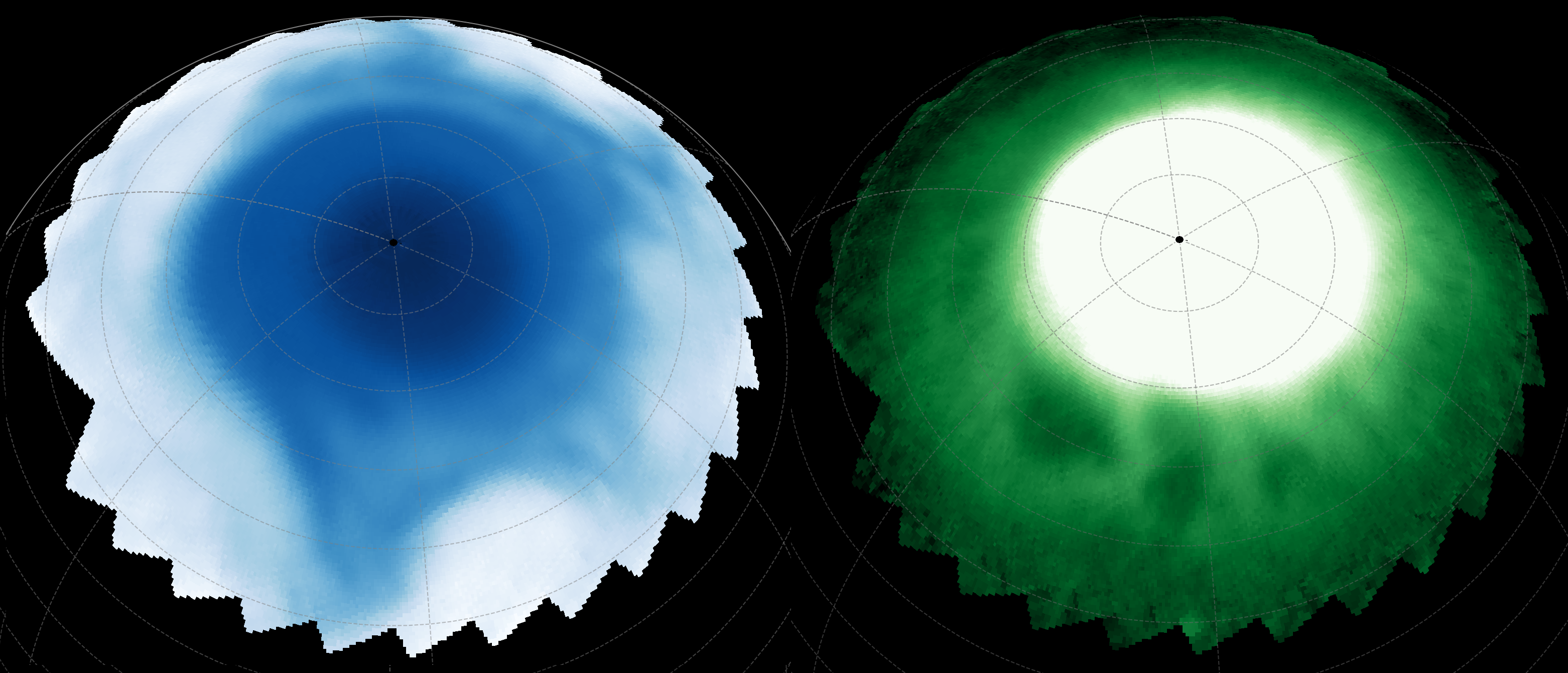
The imaages and movie were presented today at the Europlanet Science Congress (EPSC) 2024 in Berlin.

The 4 September gravity assist flyby was the fourth at Mercury and the seventh of nine planetary flybys overall. During its eight-year cruise to the smallest and innermost planet of the Solar System, BepiColombo makes one flyby at Earth, two at Venus and six at Mercury, to help steer itself on course for entering orbit around Mercury in 2026.

BepiColombo is an international collaboration between ESA and JAXA.

  • Image and video credit
    ESA/BepiColombo/MTM
  • LICENCE
    CC BY-SA 3.0 IGO or ESA Standard Licence 
    (content can be used under either licence)
  • Video acknowledgement
  • Image processing and video production by Mark McCaughrean