Francesca Miozzi, Ana-Catalina (Ina) Plesa and Agustín Sánchez-Lavega Honoured by Europlanet Career Medals 2026
Europlanet has announced the winners of its 2026 Career Medals, which are designed to honour outstanding contributions from planetary scientists at three stages of their careers.
Francesca Miozzi is awarded the Europlanet Early-Career Medal for her experimental work on the interiors of rocky planets and exoplanets. Her pioneering high pressure and temperature experiments suggest that magma oceans may dissolve substantial quantities of hydrogen and generate water during planet formation – a result with significant implications for planetary habitability and exoplanet demographics. Beyond her research, Miozzi is dedicated to mentoring and building collaborations to support the community.
Ana-Catalina (Ina) Plesa is awarded the Europlanet Mid-Career Medal, which honours the memory of Paolo Farinella (1953-2000), for her contributions to planetary geodynamics. Her work on decoding the interior structures and dynamic histories of Mercury, Venus, the Moon and Mars, and bridging numerical modelling with geophysical and geological observations, has led to significant advances in our understanding of planetary interiors and evolution. Her contributions to the community include mentorship, outreach and serving as Chair of ESA’s Solar System and Exploration Working Group and as a member of the Space Science Advisory Committee.
Agustín Sánchez-Lavega is awarded the Europlanet Lifetime Achievement Medal. As a planetary and atmospheric scientist, he has shaped the field in Europe over the last 35 years through his scientific research, university teaching and mentoring, service to the science community, and public outreach initiatives. His research into the atmospheric dynamics of Venus, Mars, the giant planets and exoplanets has combined observations, numerical modelling, theoretical assessments and support of missions, including Venus Express, Mars Express, Mars 2020, and Juice. His contributions have revealed the peculiar dynamics of major convective storms on Jupiter and Saturn, including the planetary-scale disturbance caused by Saturn’s Great White Spot. He has served as a member of multiple national and international scientific committees and working groups, and has been deeply involved in establishing a Spanish community of planetary scientists and building collaborations with amateur astronomers.
Julia de León, Chair of the Medal Award Committee said, ‘Now into its second edition, the Europlanet Career Medals recognise the contributions of three individuals at different stages of their careers who have demonstrated significant impacts, not just for planetary science, but for our wider community. We are proud to honour these recipients of the 2026 medals and have the opportunity to highlight their many achievements by presenting these awards.’
The awards were presented at the Europlanet Science Congress (EPSC) 2026, which is taking place at Amare, The Hague, Netherlands, from 6-11 September.
Europlanet Early-Career Medal Winner, Francesca Miozzi
Francesca Miozzi is a Lecturer at the Department of Earth and Planetary Sciences at ETH Zürich in Switzerland and a Marie Curie Global Fellow on the project ‘ExoDivers: Diving into the mineralogy and structure of exotic rocky exoplanets’.
By training, she is an experimental mineral physicist and petrologist, exposing minerals to extreme pressures and temperature to investigate planetary interiors. Miozzi has a PhD in planetary geology from Sorbonne University in France and has held postdoctoral positions at the Carnegie Institution for Science in the US and La Statale University in Italy.
Miozzi’s major research accomplishments to date relate to hydrogen solubility in a magma ocean, interior modeling of exoplanets, and the compositional determination of exoplanetary metallic cores. As one of very few experimentalists shaping the discussion of exoplanet interiors, she connects mineral physics, experimental petrology, interior modelling, and astronomical observation. Beyond her own results, Miozzi is a committed mentor and her community building activities include convening workshops and fostering collaboration across career stages and fields.
Europlanet Early-Career Medal citation: https://www.europlanet.org/europlanet-early-career-medal/
Europlanet Mid-Career Medal Winner, Ana Catalina Plesa
Ana-Catalina (Ina) Plesa is a Scientific Staff Member at the Department of Planetary Physics at the German Aerospace Center (DLR), Berlin. She has a PhD in Geosciences from the University of Münster in Germany. At DLR, she established a Junior Research Group in planetary physics and plays an active role in shaping research strategy at the interface of geophysics, numerical modelling, and mission science. Her work has been funded by DLR, the German Science Foundation and other German funding schemes.
Plesa’s 3D thermal evolution models are widely used as reference models within the planetary science community. She has conducted pivotal research on the long-term thermal evolution of Mars, being the first to couple three-dimensional crustal structure with fully-dynamic mantle evolution models. Her work has been instrumental in interpreting seismic data from the InSight mission and she serves as instrument lead scientist for the Venus Emissivity Mapper (VEM) aboard NASA’s VERITAS mission.
Alongside her scientific achievements, Plesa is deeply committed to community service and outreach. She currently serves as Chair of ESA’s Solar System and Exploration Working Group and as a member of the Space Science Advisory Committee. Her dedication to fostering talent has also been formally recognised through her selection as a Humboldt Scout, a distinction that enables her to nominate outstanding international researchers for Humboldt Fellowships.
The Europlanet Mid-Career Medal continues to honour the memory and legacy of the Italian scientist, Paolo Farinella (1953-2000), in whose name the Farinella Prize was awarded from 2011-2024.
Europlanet Mid-Career Medal citation: https://www.europlanet.org/europlanet-mid-career-medal/
Europlanet Lifetime Achievement Winner, Agustín Sánchez-Lavega
Agustín Sánchez-Lavega is Emeritus Professor at the University of the Basque Country (UPV/EHU) in Bilbao. He was awarded his PhD from UPV/EHU and worked at various facilities and institutions during the 1980s, including the Calar Alto Observatory (Centro Astronómico Hispano Alemán, CAHA). After his return to Bilbao, he founded and led the Planetary Sciences Group at UPV/EHU, which is now one of the largest research groups in Planetary Science in Spain. He has been the Principal Investigator (PI) of 47 Research Projects funded by UPV-EHU, the Bizkaia Provincial Council, the Basque Government, Spanish Ministries, the European Union and the European Space Agency.
His research interests span the dynamics of the atmospheres of Venus and Mars, extending to the giant planets and exoplanets, and leverage synergies between observations, numerical modelling and theoretical assessments. He has supported multiple planetary missions by ESA and NASA, including Venus Express, Mars-2020, JUICE, Mars-Express. Sánchez-Lavega’s major research achievements relate to the observation and analysis of cloud structure, morphology and a variety of dynamical phenomena in the atmospheres of Venus, Mars, Jupiter and Saturn. In particular, he revealed the peculiar dynamics of major convective storms on Jupiter and Saturn, and Saturn’s Great White Spot planetary-scale disturbance.
Sánchez-Lavega has served as a member of the Solar System Working Group of the European Space Agency (ESA), and the Spanish National Astronomical Committee, as a manager of the Spanish National Astronomy and Astrophysics Research Program, and as a member of the Scientific Committee for the European Extremely Large Telescope (ESO). He contributed to establishing a Spanish community of planetary science that later integrated into the Europlanet Spain and Portugal Regional Hub, and he participated in EC-funded Europlanet programmes to develop synergies with the global community amateur astronomers around the world.
He has taught courses at universities across Spain and Europe and is the founder of the Space Classroom and the Master’s degree in Space Science and Technology at the University of the Basque Country. A second edition of his University textbook, ‘An Introduction to Planetary Atmospheres’, is currently in preparation.
He has also been honoured by the Spanish Royal Physics Society in 2010 and 2014, the Basque Country Government (Premio Euskadi) in 2016, the European Geophysical Union (David Bates medal) in 2020, and as a Fellow of the American Geophysical Union in 2025.
Europlanet Lifetime Achievement Medal citation: https://www.europlanet.org/europlanet-lifetime-achievement-medal/
Further information
The Europlanet Medals, launched in 2025, honour outstanding contributions to scientific excellence, community building, and outreach from individuals at three different stages of their scientific careers, covering the subjects addressed by the Europlanet Science Congress (EPSC):
- Terrestrial Planets
- Outer Planet Systems
- Missions, Instrumentation, Techniques, Modelling
- Small Bodies (comets, KBOs, rings, asteroids, meteorites, dust)
- Exoplanets, Origins of Planetary Systems and Astrobiology
The categories are based on the scientific age of a researcher at time of nomination, which is calculated from the year of the last degree in scientific education (MSc, PhD) without counting parental leave, health leave, or time working primarily outside science. Each of the inaugural Europlanet Medal winners receives a plaque and a registration waiver for the EPSC-DPS 2025 Joint Meeting in Helsinki, where they will give a medal lecture.
Images
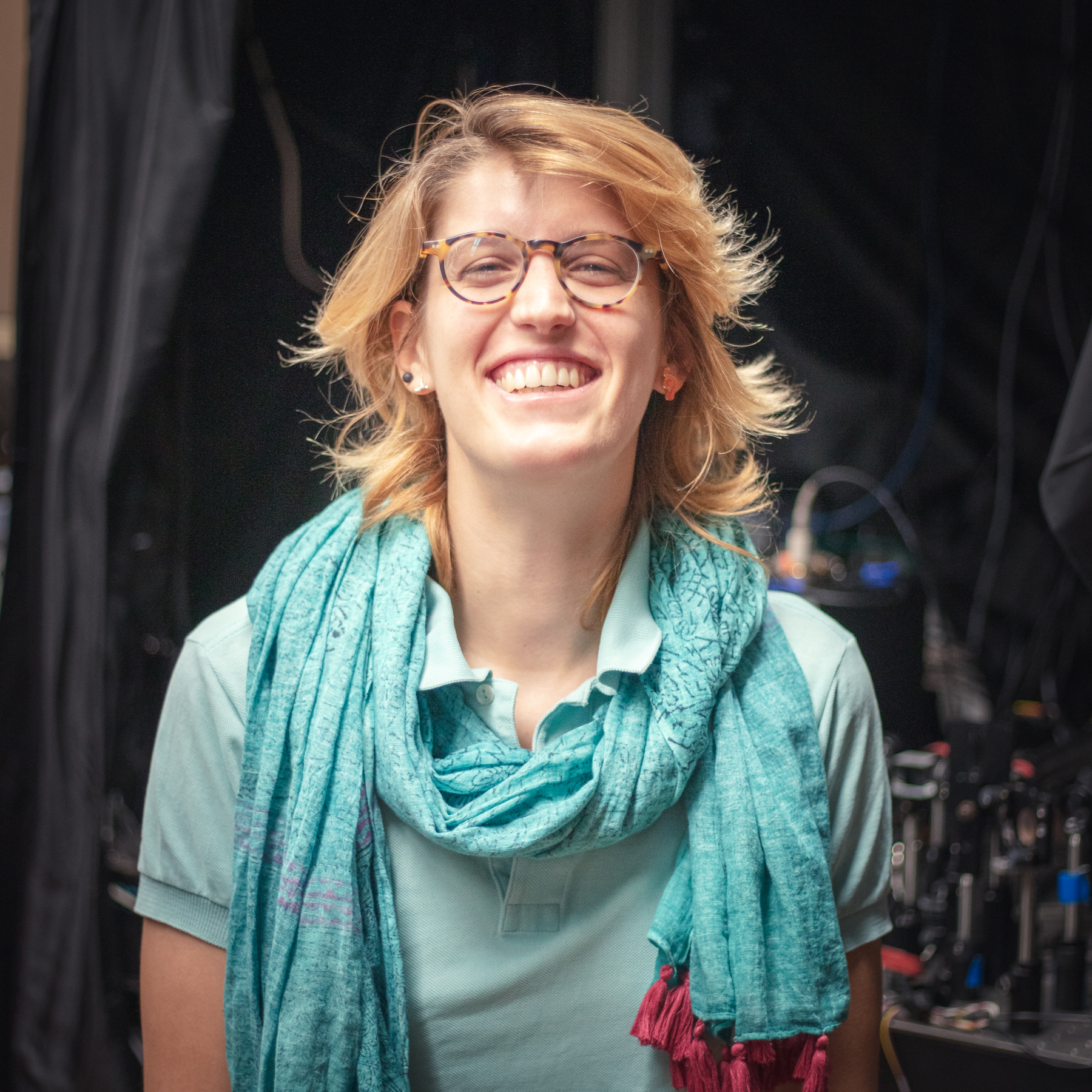
Francesca Miozzi, winner of the Europlanet Early-Career Medal 2026. Credit: K Cain, Carnegie Science.
https://www.europlanet.org/wp-content/uploads/2026/08/EC-Francesca_Miozzi_square.webp
Ana-Catalina (Ina) Plesa, winner of the Europlanet Mid-Career Medal 2026. Credit: A-C Plesa.
https://www.europlanet.org/wp-content/uploads/2026/08/MC-Ana-Catalina-Plesa_square.webp
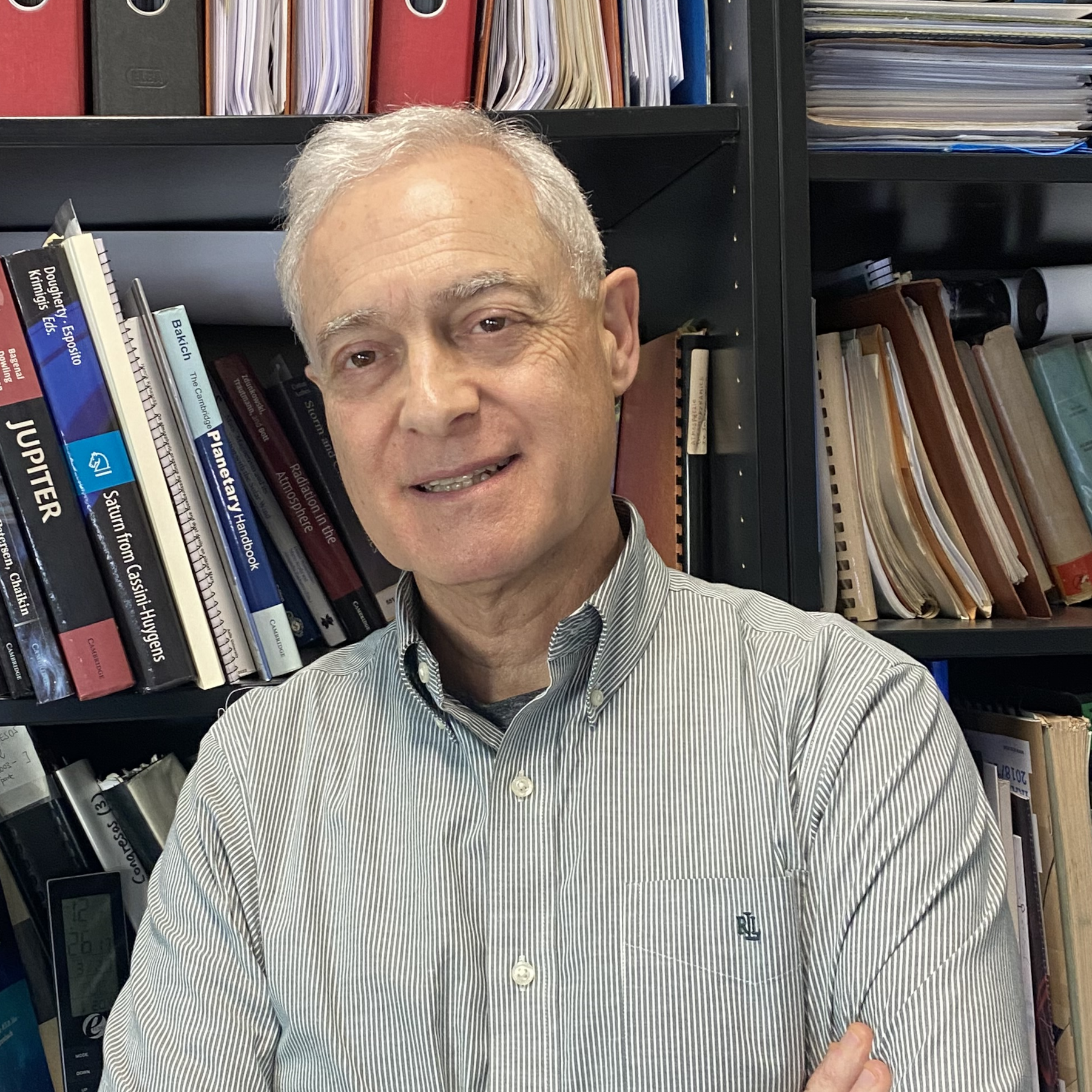
Agustín Sánchez-Lavega is awarded the Europlanet Lifetime Achievement Medal. Credit: A Sánchez-Lavega.
https://www.europlanet.org/wp-content/uploads/2026/08/LA-Agustin-Sanchez-Lavega_square.webp
Contacts
EPSC2026 Press Office
press@europlanet.org
+44 7756 034243
Notes for Editors
About the Europlanet Science Congress (EPSC)
The Europlanet Science Congress (EPSC), established in 2006 as the European Planetary Science Congress, is currently the largest annual planetary science meeting in the world. It covers the entire range of planetary sciences, with an extensive mix of talks, workshops and poster sessions, as well as providing a unique space for networking and exchanges of experiences. It is the annual meeting of the Europlanet association.
Follow on social media (Bluesky, Instagram and LinkedIn) with the hashtag #EPSC2026 for updates on the meeting.
EPSC2026 is sponsored by The Hague and Partners, Springer, the Space: Science & Technology journal, and the American Astronomical Society’s Planetary Science Journal (PSJ).
About Europlanet
Europlanet (www.europlanet.org) is a non-profit association and membership organisation that provides the planetary science community with access to research infrastructure, services and training. The Europlanet Association Sans But Lucratif (AISBL), established in 2023, builds on the heritage of a series of projects funded by the European Commission between 2005 and 2024 (Grant Numbers 871149, 654208, 228319 and RICA-CT-2004-001637) to support the planetary science community in Europe and around the world.