Europlanet Transnational Access Call 2026 – Free Access to Facilities
Europlanet has launched a new call for Transnational Access (TA), which enables researchers who are members of Europlanet (individual members or staff working for organisational members) to visit participating facilities that offer simulation and analysis capabilities relevant to planetary science.
The Europlanet TA Programme 2026 offers access to 25 facilities in ten internationally renowned research centres in Europe and South Korea. The facilities are tailored for the simulation or characterisation of planetary conditions and materials. The programme supports all travel and local accommodation costs for researchers during their visit to participating facilities.
If you are interested in submitting an application to the Europlanet TA Call 2026, check out the call page to find more information about the call and how to submit your application. Please note that you must contact the facility to discuss the feasibility of your proposal before submitting your application. The call will close on 16 March 2026.
You should plan for your visits to take place between the end of April and December 2026. Please note that some facilities are only available in certain months, or have pre-requirements for applications. See the individual facility pages for details.
Building on the European Commission-funded TA programme from 2009-2024, Europlanet now offers a sustainable programme of annual TA calls funded through membership subscriptions.
For the 2026 Call, we are delight to welcome new institutions and/or new facilities that will be offered for Transnational Access through Europlanet for the first time. These include:
New Year’s Day 2026 is Europlanet’s 21st birthday. To celebrate, we highlight 21 things that Europlanet has achieved since its foundation on 1 January 2005.
The Europlanet Science Congress
Opening ceremony of EPSC-DPS2025. Credit: Europlanet.
First held in Berlin in 2006, the Europlanet Science Congress (EPSC) is the largest annual meeting on planetary science in Europe and regularly attracts over 1200 participants. Its interdisciplinary, interactive and adaptive format makes EPSC an ideal place for the global planetary community to share ideas and build new connections. Joint meetings with the American Astronomical Society’s Division of Planetary Sciences (DPS) and the European Astrobiology Network Association (EANA) have brought together even bigger international and cross-disciplinary audiences, with the recent EPSC-DPS2025 in Helskinki becoming the largest planetary meeting to date in Europe with 1800 participants.
Research and Technology Infrastructure
The Laboratory of Electron Induced Fluorescence at Comenius University. Credit: Comenius University.
Europlanet provides access to state-of-the-art research and technology infrastructure (RTI) to support planetary science and space exploration. The distributed RTI includes facilities for the simulation of planetary environments, analysis of planetary samples, testing and development of space technologies, and support of interdisciplinary studies. Our Transnational Access (TA) programme is designed to allow researchers from anywhere in the world, and at all career stages, to have access to facilities to support scientific and technological excellence in planetary/space research and to foster international collaborations. To date, Europlanet has funded over 600 research visits, amounting to in excess of 5,500 days of access (15 years), involving over 800 individual researchers accessing 23 laboratories (with over 80 individual facilities), 12 planetary analogue field sites and 17 telescopes.
Europlanet is a grass-roots organisation, supported by individual members since 2018 and organisational members since 2025. Membership benefits include discounted fees for EPSC, access to facilities, expert exchanges, webinars, training, workshops, funding schemes and much more. Join now to help us continue our mission to support the planetary community around the world.
Participants at EPEC Annual Week 2025. Credit: EPEC.
The Europlanet Early Career (EPEC) network is organised by early-career researchers for early-career researchers, and includes volunteers from across the Europlanet international community. The EPEC network is open to all students, doctoral candidates and early-career planetary scientists and space professionals whose last degree (e.g. MSc or PhD) was obtained a maximum of 7 years ago (excluding parental leave, serious illness and similar delays).
EPEC’s activities, including Annual Week and EPEC@EPSC, aim to form a strong network between young professionals by organising early-career-relevant events and by engaging in different projects amongst different focus areas (outreach, diversity, early career support). As early careers comprise over half Europlanet’s individual members and attendees at EPSC, EPEC ensures that the (scientifically) young members of our community have a clear voice within Europlanet to shape the future of planetary and space sciences and engineering.
The launch of the Europlanet Colombia Regional Hub in November 2025. Credit: Europlanet Colombia.
Europlanet’s Regional Hubs support the development of planetary science at a national and regional level, particularly in countries and areas that are currently under-represented within the community. Our Hub Committees organise networking events and workshops to support the research community, as well as to build links with amateur astronomers, industrial partners, policymakers, educators, the media and the wider public. In addition to 10 European Regional Hubs, a Colombian Regional Hub was established in 2025 to support the community in Colombia and Latin America.
Projects
The launch of the European Planetology Network (EuroPlaNet) in 2005. Credit: Europlanet.
Europlanet was founded as a Coordination Action funded by the European Commission (EC) in 2005-2008 to promote networking, support the sharing of resources and overcome fragmentation in the European planetary science community. Through a series of further EC grants awarded between 2009 and 2024, Europlanet has subsequently developed into a global distributed research infrastructure that offers coordinated access to services and facilities spread over 5 continents, supporting a community of thousands of users in academia, industry and in the wider community. In total, the EC has invested €28 million in Europlanet to support the planetary community.
Europlanet has received funding from the European Commission under Grant Numbers 871149, 654208, 228319 and RICA-CT-2004-001637.
VESPA
Superimposed olivine map from OMEGA / Mars-Express in N Syrtis Major area (Jezero crater is at the bottom), displayed in the Aladin service and accessed through VESPA. Credit: Aladin.
VESPA (Virtual European Solar and Planetary Access) is a web-based search interface to identify and access planetary science and heliophysics data provided by the science community. Developed through EC-funded Europlanet projects, and hosted and maintained by the Observatory of Paris, VESPA is freely available to researchers and the general public. The VESPA portal supports user-friendly searching on metadata associated with generic observation conditions (such as target, instrument, time/space/spectral coverages, illumination conditions, etc) and metadata specific to each dataset (such as instrumental parameters) via the EPN-TAP protocol, which is now a standard of the International Virtual Observatory Alliance (IVOA) for Solar system data. Nearly 250 EPN-TAP data services of various size are declared in the IVOA registry, of which 94 are currently validated and accessible via the portal – including ESA’s Planetary Science Archive (PSA). VESPA also offers an easy solution for small teams to share newly-derived data from a publication or a research project.
SPIDER
Europlanet’s SPIDER Planetary Space Weather Services provide contextual information on predictions and alerts for planetary space weather analysis and payload or spacecraft operations. SPIDER enables researchers to take advantage of data from a suite of missions at different points in the Solar System. Applications of SPIDER’s tools have led to several high-impact publications, and have been used to support planning of the BepiColombo and Juice missions. Opportunities identified through SPIDER for synergistic observations by BepiColombo during its cruise phase with the Solar Orbiter and Solar Parker Probe missions have also been implemented by ESA and JAXA.
GMAP and Winter School
GMAP Winter School Banner 2026.
The Geological Mapping (GMAP) activity provides a complete infrastructure for the geological mapping of planetary bodies. As well as everything needed to create planetary maps, GMAP provides guidelines and insights on how to produce effective mapping products for scientific exploitation, as well as information on how to display and archive results in a structured way.
GMAP supports researchers who are interested in learning how to build their own mapping products, as well as mappers who want to learn how to incorporate other types of data analysis into their products.
One of GMAP’s major successes has been the establishment of the annual Geology & Planetary Mapping Winter School. Now in its fifth iteration, the Winter School provides training for anyone interested in planetary mapping to build knowledge and skills in planetary mapping. Participants can follow synchronously or asynchronously to accommodate different time zones. The 2026 edition will run from 26-30 January 2026.
Amateur astronomer, Florence Libotte (centre) with astronomers Erika Pakštienė (left) and Gražina Tautvaišienė (right) at the Moletai Observatory, Lithuania.
The Europlanet Telescope Network brings together medium and small telescopes to facilitate and coordinate observations related to planetary science. Founded in 2020, the telescope network has awarded 256.5 observing nights and supported 44 projects on planetary topics from near Earth objects to exoplanets, as well as astrophysical subjects including black holes and binary star systems. As well as supporting the professional scientific community, the Europlanet telescope Network has provided access and training for amateur astronomers to enable them to contribute to planetary research. Since the end of the EC-funded project, the Europlanet Telescope Network has maintained a list of telescopes willing to offer observing time to the community. The Europlanet Telescope Network currently unites 21 observatories with 32 telescopes in 16 countries.
Europlanet holds monthly webinars on a range of topics from science to policy, diversity and outreach. Quarterly webinars are also co-organised with the Science Team of the ESA Juice mission.
Europlanet webinars provide quarterly updates on the JUICE mission on its long journey to reach and explore Jupiter and its icy moons. Credit: ESA/ATG medialab/NASA/JPL/J Nichols/U Leicester/U Arizona/DLR.
Group photo of in-person participants at ERIM 2023 in Bratislava, Slovakia. Credit: Europlanet/J-D Bodénan.
In addition to EPSC and EPEC Annual Week, Europlanet organises a range of meetings, summer schools, workshops and training sessions to support the community. Our interactive online Teams Days, held 2-3 times per year, are an opportunity for the community to provide input and feedback into Europlanet’s strategy and operations. The Europlanet Research Infrastructure Meeting (ERIM) in 2023 comprised a series of interactive workshops with the aim of promoting collaboration across the Europlanet community. More recently, policy workshops organised in partnership with other research infrastructures have helped share information on upcoming opportunities and best practice for distributed RIs.
In total, over the past two decades, Europlanet has provided training for over 7,500 members of the planetary community, with a particular focus on early career researchers.
Join hundreds of other Europlanet members on our Discord server to keep up with news, events, job opportunities and to connect with colleagues around the world. The server is designed with a variety of channels to facilitate discussions and interactions, including text channels, discussion forums and voice channels. We also hold regular informal catch ups and science discussion ‘hangouts’.
Europlanet is committed to building a diverse, inclusive planetary science and ensuring that individuals within that community experience equal opportunity, regardless of gender, disability, ethnic origin, religion or belief, sexual orientation, marital status, age, nationality or socioeconomic background. The Europlanet Diversity Committee acts as a strategic task force to advise, coordinate and champion activities across Europlanet that further the association’s commitment to equality, diversity and inclusivity. As well as activities around EPSC, the Diversity Committee organises events to raise awareness of diversity, inclusivity and accessibility in the planetary community, such as through the Planetary Science Wiki Edit-a-thon.
Outreach
Outreach and education have been a core part of Europlanet initiatives since its foundation the early 2000s. Our objective is to support the planetary science community at a grass roots level to do more public engagement and educational activities, and to share best practice, training and resources to increase the impact of those efforts. Over 20 public engagement and education projects have been supported with more than 135,000€ of seed funding by Europlanet.
The Outreach Working Group coordinates activities, such as EPSC Goes Live for Schools, funding programmes, sharing of best practice and the annual prize for Public Engagement.
Policy and Industry
Europlanet exhibition in the European Parliament. Credit: Europlanet.
Europlanet engagement with policy makers and industry aim to build collaborations and create synergies between cutting-edge science and the technological challenges of planetary science and exploration.
Europlanet has organised and participated in briefings, events, conference sessions (e.g. at EPSC) and other opportunities to engage policy makers in the European Parliament and the European Commission with planetary science, as well as engage with high-level representatives of ESA, NASA and other national and international space agencies. Organising events within the European Parliament has proved an effective platform to develop relationships with MEPs and other stakeholders, enabling the community to feed into discussions on future funding and policies relevant to planetary science.
Industry engagement activities have included organising technology foresight workshops, collaborations with space industry trade associations, developing contacts and networks within industry, participating in industry conferences and events, and convening industry and policy sessions at EPSC.
Europlanet’s distributed infrastructure offers industrial partners access to simulation and testing facilities for a range of environments that planetary and space missions may encounter through launch to their destination in orbit or on a planetary surface. By accessing Europlanet facilities, companies and SMEs can increase the value of their technology by increasing the Technology Readiness Level (TRL), understanding how instrumentation operates under realistic planetary conditions, or by identifying potential issues. Several of our RTI facilities are operated by commercial organisations.
Collaborations
Collaborations stimulated through Europlanet, and involving its beneficiaries, have led to several successful proposals for new projects funded through the European Commission and national agencies. From the development of Machine Learning tools to mobilising researchers in Africa, these external projects act as multipliers for the impact of Europlanet in many different communities.
Expert Exchanges
Expert exchange to observing the DART impact in Kenya. Credit: The Travelling Telescope.
Europlanet’s Expert Exchange Programme aims to support the mobilisation of the planetary community to share expertise and best practice and to prepare new facilities and services for integration into Europlanet’s research infrastructure. The programme provides funding for short visits (up to one week) and over the last two decades, more than 200 expert exchanges have been supported.
Topics for visits have included training on the use of instrumentation, short scientific projects, improvements to facilities and the development of outreach collaborations. Evaluation of the visits show that bringing individuals together to exchange expertise often leading to synergies that would not happen otherwise, particularly for researchers from under-represented countries. The programme has also supported the professional development of early career scientists, helping them to prepare for careers outside academia.
Tactile Mars exhibit from the Planets in Your Hand exhibition funded by Europlanet in 2017. Credit: Kosmas Gazeas.
Europlanet offers funding and bursaries to support the community in various ways. Each year, we provide over 100 bursaries for early career and researchers from under-represented countries to attend EPSC. The Committee Funding Scheme offers grants of up to 5000 € to support the scientific, community-building and outreach activities of our members.
Europlanet recognises the contributions of the planetary science community through a range of medals, prizes and other awards. The Europlanet Medals, launched in 2025, honour outstanding contributions from individuals of three different scientific career-stages to the subjects covered by the Europlanet Science Congress (EPSC). The Europlanet Prize for Public Engagement with Planetary Science is also awarded to individuals or groups who have developed innovative and socially impactful practices in planetary science communication and education. The EPSC Outstanding Poster Competition recognises the work of early career researchers at EPSC.
Impact
Fernando Gomez from Argentina participated in a Transnational Access visit to facilities at the Korean Basic Science Institute (KBSI). Credit: F Gomez.
Europlanet activities are evaluated against a framework of core indicators for assessing scientific, technological, education and training, economic, and social and societal impacts. Evaluation shows that the impact of activities to date have been particularly strong in the scientific, technological, education and training areas.
The 197 Transnational Access projects supported through the most-recent Europlanet 2024 RI project are expected to lead to over 300 publications and 400 conference presentations. Interviews and follow-up surveys show that over 90% of visitors are planning future collaborations with their host facility. In particular, early career researchers and students report that the TA programme provides them with opportunities – including collaboration and network-building – that would not otherwise have been available to them, thus accelerating their career development.
Upgrades to facilities have provided increasing support for local infrastructure and associated employment, and there has been at least one SME company that was developed as a result of the TA programme.
The new Europlanet Evaluation Unit now offers evaluation support and consultancy for external organisations that would like to develop an evaluation framework or implement an impact evaluation of their activities.
Teamwork
Europlanet’s existence and continued activities would not be possible without the support of many individuals and organisations. In particular, we would like to thank our Executive Board, Committees and Working Groups for their huge investment of time and energy in making Europlanet a thriving and vibrant community. We thank our individual and organisational members for supporting us and participating in our activities. We are also indebted to the European Commission for funding over the years, as well as our project officers at the EC for their support, guidance and advice.
Europlanet 2024 RI has received funding from the European Union’s Horizon 2020 research and innovation programme under grant agreement No 871149.
Call Launched for Europlanet – Korean Distinguished Scholar Invitation Programme
The Korean Basic Science Institute (KBSI) is offering Europlanet members the opportunity to spend an extended period (10-15 months) in Korea to carry out a research project. A call is now open for applications to the Europlanet – Korean Distinguished Scholar Invitation Programme, which is funded by the National Research Foundation (NRF) of Korea. This is a rolling call – applications will be reviewed on receipt.
In order to qualify for the Europlanet – Korean Distinguished Scholar Invitation Programme, applicants should have a permanent position or be recently retired.
Applications will be evaluated through an independent peer review process. While the programme is designed to primarily support planetary science (and Earth sciences), applications from other research disciplines may also be considered based on innovation and potential scientific and technological impact.
This call will support visits starting in mid-2026. Depending on whether the opportunities are filled in the first round, a further call may be announced in the summer of 2026 for visits to take place in 2027.
Find out more about the programme, the facilities that will be accessible to participants, and the application process on the Call Page.
Europlanet Impact Case Study #2: Atomki – A Facility’s Story
The Institute for Nuclear Research (Atomki) is Hungary’s national centre of accelerator-based nuclear and atomic physics.
At present, Atomki employs 200 persons. It is a non-profit institution funded from national and European sources with a track record of extensive international collaboration and hosting numerous (100’s) foreign visitors. The Atomki Accelerator Centre (AAC) incorporates five ion beam facilities with various particle, charge and intensity applied to diverse issues from cultural heritage to modelling the solar system.
Atomki’s association with Europlanet originated through a personal contact between Bela Sulik, head of Atomki’s Section of Atomic and Molecular Physics, and Europlanet’s coordinator, Nigel Mason, who worked together in the early 2000s on an EU-funded research infrastructure project for small accelerators and a COST action studying radiation on living things. Bela and Nigel maintained contact over the next 15 years or so, through discussions on atomic collisions.
When Atomki installed a new Tandetron accelerator in 2018, Nigel and other members of the Europlanet team visited Hungary. This visit resulted in a plan to build an astrophysics/astrochemistry beamline that could provide irradiation measurements on analogue Solar System ices for ion energy and ion species over the range of the solar wind and low energy tail of galactic cosmic rays.
The Ice Chamber for Astrophysics/Astrochemistry (ICA) at Atomki was installed in 2019, and was ready for the first Transnational Access (TA) visits in 2020 through the Europlanet 2024 RI project. Europlanet researchers (from senior members of staff to students) supported the Atomki team in preparing the facility for TA participation by sharing expertise and training. Due to the pandemic, several of the first visits were virtual, but physical visits resumed as travel restrictions lifted. It became the Europlanet 2024 RI project’s most over-subscribed TA facility.
A second chamber, supplied by from Queens University Belfast, was installed through a Europlanet 2024 RI Joint Research Activity in 2021.
The facilities are open to international users as part of the Atomki Solar Wind Simulator (SOWS) facility and through Europlanet’s ongoing TA Programme.
From 2025, the facilities have also been included in a major national grant from the Hungarian Scientific Research Fund (OTKA). The new project, entitled ‘Laboratory Investigation of Astrophysically Relevant Ices and Other Materials’, will use the facilities to study physical and chemical changes induced by the ionising radiation in ices found in the interstellar medium and on planetary/lunar surfaces, as well as materials tested for potential use in lunar-based structures. The grant supports two postdoctoral positions and PhD students over the next four years.
“When I leave the field, I feel that in Atomki we have something which is on the European scale, an active laboratory. And we are going to become really a hub in this field of astrophysics/astrochemistry.”
Europlanet Evaluation Shows Networking and Collaboration Pave the Way to High Impact Science: Case Study Featured in Nature Astronomy
Evaluation of the impact of the most recent €10-million Europlanet project funded by the European Commission (EC) has been featured as a case study in the journal Nature Astronomy, published today.
The Europlanet 2024 Research Infrastructure (RI) project, which ran between 1 February 2020 and 31 July 2024, provided access to the world’s largest coordinated collection of planetary simulation and analysis facilities, virtual access to data services and tools, funding for upgrades to facilities and programmes, and a range of activities to support the community though networking, training, professional development and access to a telescope network. The project, which involved over 50 partners, was one of the most complex distributed research infrastructures ever funded by the EC.
From proposal stage, an Impact Evaluation Officer – the social scientist Jen DeWitt – was recruited and embedded in the project to delve into and document its results, outcomes and longer-term impacts.
Lonneke Roelofs from the Netherlands visited the Mars Chamber at the Open University, UK, through the Europlanet 2024 RI Transnational Access Programme. Credit: L Roelofs.
The comment piece in Nature Astronomy highlights how having robust evaluation built into a project from the beginning leads to high-impact science and an outwards looking ethos that benefits the whole planetary community. Key findings from the evaluation also show that the networking and personal contacts associated with participation in the project’s activities, particularly the Transnational Access visits to laboratories and field sites, lead to better science, new avenues of research and long-lasting collaborations that would not have otherwise occurred.
“It’s never a straightforward pipeline between funding going in and good science coming out. Many things happen in the middle, and it’s important to understand what those factors are and how they affect the quality and longer-term impacts of the science itself, as well as the researchers doing the work and the wider communities around them,” explained DeWitt. “For students and early-career researchers starting out, these impacts are particularly important as they provide opportunities that would otherwise not be available to them and accelerate their careers.”
The evaluation of Europlanet 2024 RI was structured around five impact areas defined in the Organisation for Economic Co-operation and Development (OECD) reference framework for evaluating research infrastructures, including scientific, technological, training and education, economic and societal impacts. Together with the project management team and activity leads, DeWitt defined key performance indicators that were mapped onto strategic objectives within the impact areas, and these were regularly reviewed, refined and updated over the course of the project. As well as quantitative metrics, like numbers of users and publications, DeWitt also gathered qualitative feedback through open-ended questions in surveys and via interviews.
Europlanet 2024 RI networking workshop. Credit: A Fratti.
Nigel Mason, the Coordinator of Europlanet 2024 RI and its predecessor RI project said: “This project was the last in a series that have received €28 million funding over 20 years from the EC. Although we had collected the metrics required by the EC for all past projects, this time, we wanted a more in-depth understanding of the results and outcomes, in both the short and longer term. To do that, we needed to bring in someone with the right expertise to work with us right from the start.
“Having a dedicated evaluator who had the time and expertise to gather more in-depth feedback meant that we could see how interactions with users developed over time and how the different strands of the project came together and functioned as a whole to support the community.”
The evaluation – and the management of the project itself – was complicated by the world events of 2020-24, including the pandemic, wars in Ukraine and Ethiopia, and the associated financial and societal challenges. Many activities required temporary or permanent adaptations in response to lockdowns, travel restrictions, health issues and personnel changes. Some barriers to impact remained, particularly with respect to widening participation from parts of the community that are under-represented in planetary science, where face-to-face participation and hosting events locally have been shown to be particularly important.
Nonetheless, the evaluation showed impact in all areas monitored, particularly with respect to scientific and training. The project has resulted in over 250 publications and conference presentations to date, and the mentoring, expert exchanges, training programmes and summer schools were all highlighted as being particularly important for early careers and researchers from under-represented countries during the pandemic. Over 90% of Transnational Access visits have resulted in ongoing research collaborations, and two thirds of participants reported that they followed up new avenues of research as a result of their visit.
Understanding what did and did not work for users and how both users and project partners benefited over time were key to delivering a successful project and defining what should come next.
“This evaluation is not just important in explaining to the European Commission – and the public taxpayers – about how their money has been spent and why the results have been beneficial to science and society. It has also had a vital practical use in helping us to identify where we should prioritise limited resources going forwards,” said Europlanet Vice-President, Anita Heward. “Europlanet is now a self-sustaining non-profit association and, if we are to continue to support the planetary community, we need to know where Europlanet’s activities have the biggest impact and best value for money. The evaluation has helped us do this in a robust, evidence-driven way.”
The importance of collaboration and networking in delivering high-impact planetary science was a key finding, with the evaluation helping to identify exactly how and why they are important.
“These results show that the popular stereotypes of scientists as lone geniuses working in isolation are diametrically opposite to how good science happens in practice. Success in research comes through building networks, talking, listening, learning and collaborating with colleagues – especially when it happens at an international and cross-border level. When we are talking to the next generation about careers in science, or to policy makers, the strength and importance of community is something that we should highlight and be really proud of,” said DeWitt.
DeWitt, J., Heward, A. & Mason, N.J. Insights into evaluating a research project through an impact case study of a pan-European research infrastructure. Nat Astron9, 1415–1417 (2025). https://doi.org/10.1038/s41550-025-02684-7
Europlanet 2024 RI has received funding from the European Union’s Horizon 2020 research and innovation programme under grant agreement No 871149.
EPSC-DPS2025: Study Questions Ocean Origin of Organics in Enceladus’s Plumes
Joint Meeting of the Europlanet Science Congress and the American Astronomical Society’s Division for Planetary Science (EPSC-DPS2025) Press Release
EMBARGOED FOR 08:00 EEST (05:00 UTC) ON TUESDAY, 09 SEPTEMBER 2025
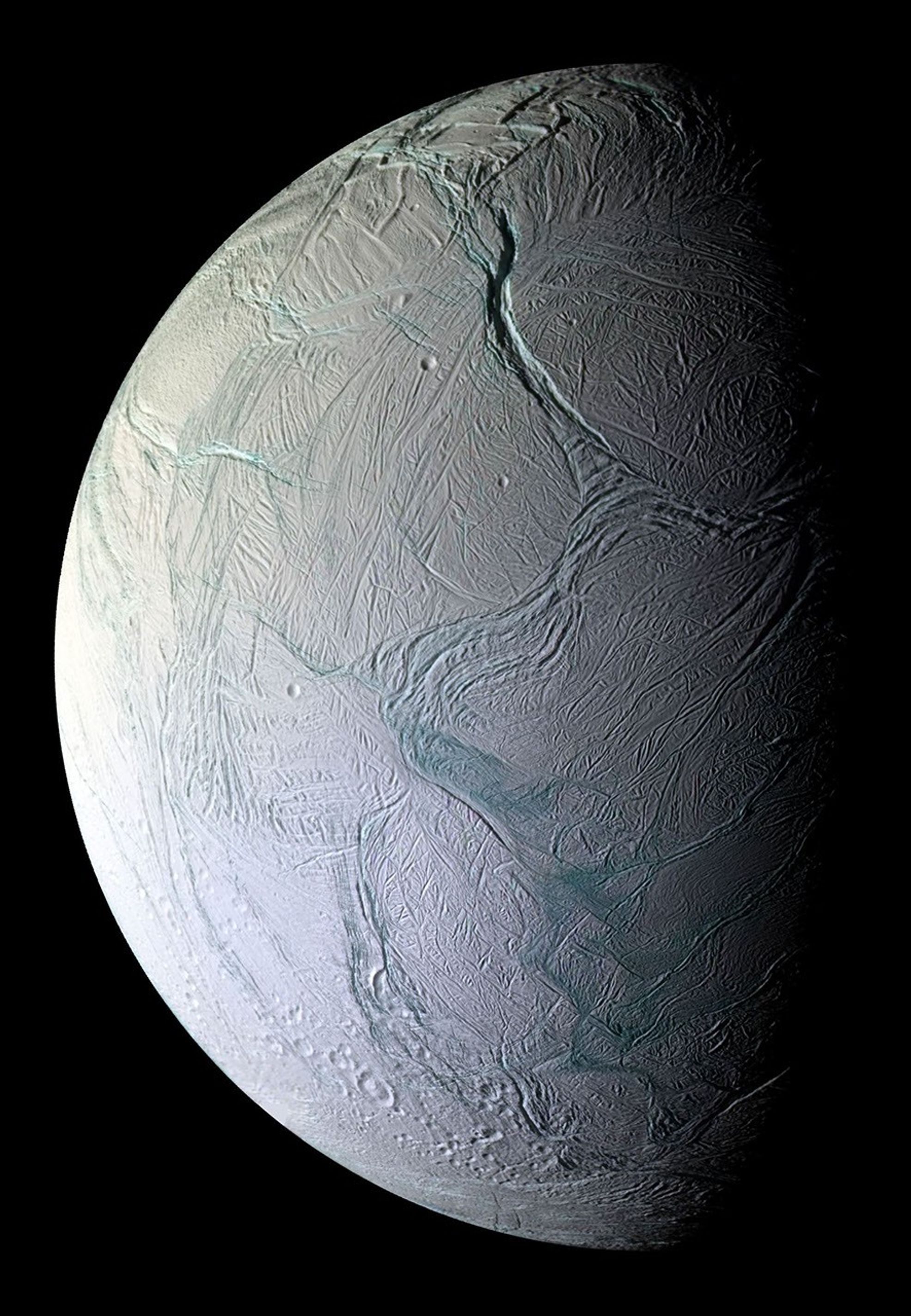
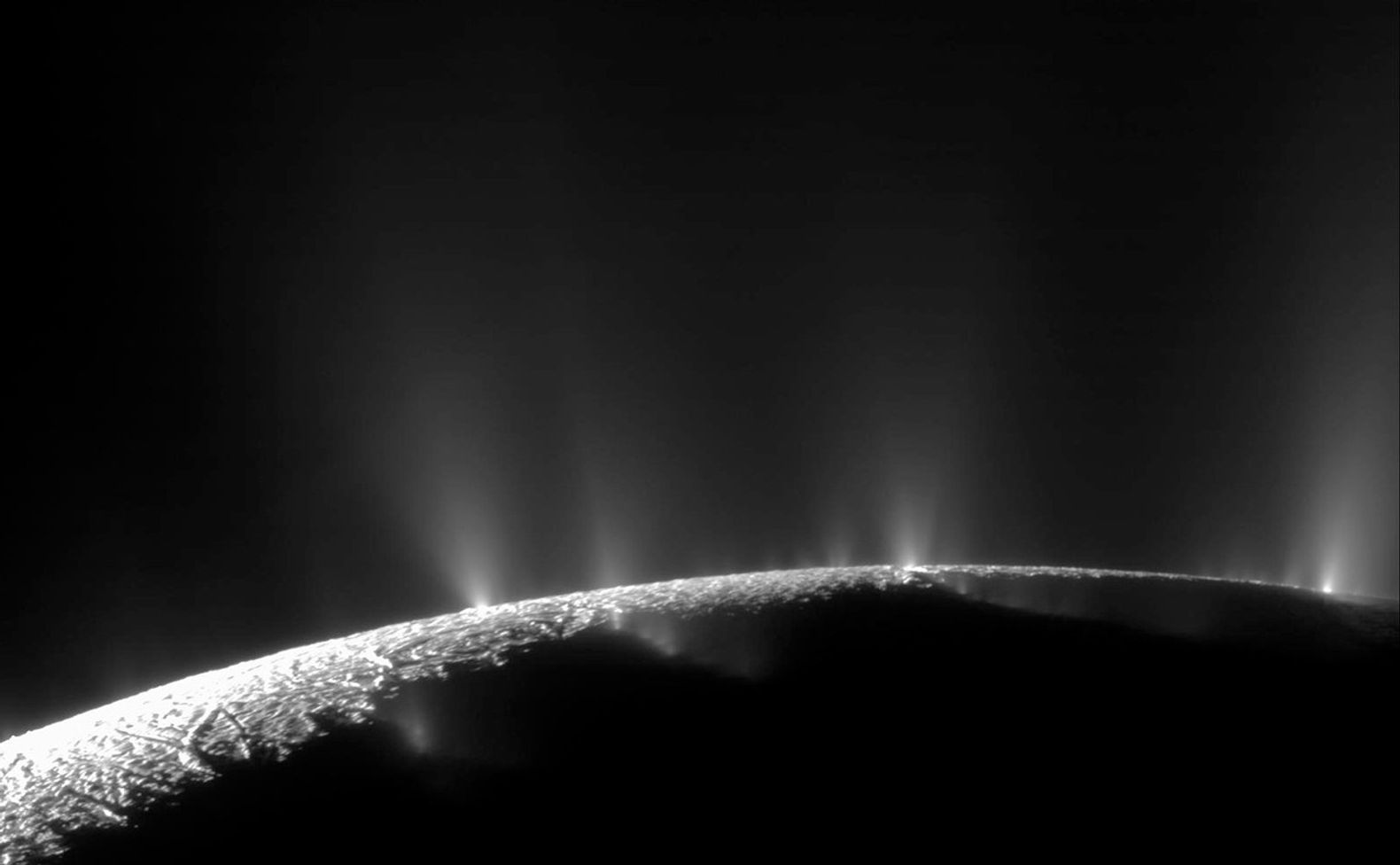
Organic molecules detected in the watery plumes that spew out from cracks in the surface of Enceladus could be formed through exposure to radiation on Saturn’s icy moon, rather than originating from deep within its sub-surface ocean. The findings, presented during the EPSC–DPS2025 Joint Meeting in Helsinki this week, have repercussions for assessing the habitability of Enceladus’s ocean.
‘While the identification of complex organic molecules in Enceladus’s environment remains an important clue in assessing the moon’s habitability, the results demonstrate that radiation-driven chemistry on the surface and in the plumes could also create these molecules,’ said Dr Grace Richards, of the Istituto Nazionale di Astrofisica e Planetologia Spaziale (INAF) in Rome, who presented the results at the meeting.
The plumes were discovered in 2005 by NASA’s Cassini spacecraft. They emanate from long fractures called ‘tiger stripes’ that are located in Enceladus’s south polar region. The water comes from a sub-surface ocean, and the energy to heat the ocean and produce the plumes is the result of gravitational tidal forces from massive Saturn flexing Enceladus’s interior.
Cassini flew through the plumes, ‘tasting’ some of the molecules within them and finding them to be rich in salts as well as containing a variety of organic compounds. As organic compounds, dissolved in a subsurface ocean of water, could build into prebiotic molecules that are the precursors to life, these findings were of great interest to astrobiologists.
However, results of experiments by Richards and her colleagues show that the exposure to radiation trapped in Saturn’s powerful magnetosphere could trigger the formation of these organic compounds on Enceladus’s icy surface instead. This calls into question their astrobiological relevance.
Richards, with funding from Europlanet, visited facilities at the HUN-REN Institute for Nuclear Physics in Hungary, where she and colleagues simulated the composition of ice on the surface and in the walls of Enceladus’s tiger stripes. This ice contained water, carbon dioxide, methane and ammonia and was cooled to -200 degrees Celsius. Richards’s team then bombarded the ice with ions – atoms and molecules stripped of an electron – to replicate the radiation environment around Enceladus. The ions reacted with the icy components, creating a whole swathe of molecular species, including carbon monoxide, cyanate and ammonium. They also produced molecular precursors to amino acids, chains of which form proteins that drive metabolic reactions, repair cells and convey nutrients in lifeforms.
Some of these compounds have previously been detected on the surface of Enceladus, but others have also been identified in the plumes.
‘Molecules considered prebiotic could plausibly form in situ through radiation processing, rather than necessarily originating from the subsurface ocean,’ said Richards. ‘Although this doesn’t rule out the possibility that Enceladus’s ocean may be habitable, it does mean we need to be cautious in making that assumption just because of the composition of the plumes.’
Understanding how to differentiate between ocean-derived organics and molecules formed by radiation interacting with the surface and the tiger stripes will be highly challenging. More data from future missions will be required, such as a proposed Enceladus mission that is currently under consideration as part of the Voyage 2050 recommendations for the European Space Agency (ESA)’s science programme up until the middle of the century.
Further information
EPSC-DPS2025-264 Water-Group Ion Irradiation Studies of Enceladus Surface Analogues
Grace Richards, Richárd Rácz, Sándor Kovács, Victoria Pearson, Geraint Morgan, Manish Patel, Simon Sheridan, Duncan Mifsud, Béla Sulik, Sándor Biri and Zoltán Juhász, https://doi.org/10.5194/epsc-dps2025-264
This study was supported by the Europlanet 2024 RI Transnational Access programme, which received funding from the European Union’s Horizon 2020 research and innovation programme under grant agreement No 871149. Funding was also received from the COST Actions CA20129 MultIChem and CA22133 PLANETS, supported by COST (European Cooperation in Science and Technology). Grace Richards is grateful for doctoral funding from the Research England ‘Expanding Excellence in England’ fund (grant code 124.18).
Images
An artist’s impression of plumes erupting onto the surface of Enceladus. Its fellow moon Titan is seen in the sky, and the distant Sun beyond. Image credit: ESA/Science Office.
Grace Richards Istituto Nazionale di Astrofisica (INAF), Rome, Italy grace.richards@inaf.it
EPSC-DPS2025 Press Office press@europlanet.org
Notes for Editors
About the Joint Meeting of the Europlanet Science Congress and the Division of Planetary Sciences (EPSC-DPS)
The Europlanet Science Congress (EPSC), established in 2006 as the European Planetary Science Congress, is the largest planetary science meeting in Europe. It covers the entire range of planetary sciences, with an extensive mix of talks, workshops and poster sessions, as well as providing a unique space for networking and exchanges of experiences.
EPSC joined forces for the first time with the American Astronomical Society’s Division for Planetary Sciences (DPS) for a joint meeting in Nantes, France, in 2011. This was followed by DPS-EPSC 2016 in Pasadena, EPSC-DPS 2019 in Geneva, and the return to the United States for the DPS-EPSC 2023 meeting in San Antonio. This year will mark the third iteration of a joint European-based meeting. The intent of the joint meetings is not only to connect the European and North American planetary science communities, but also to consolidate two major meetings and motivate planetary scientists from all over the globe to attend.
Follow on social media (Bluesky, X and LinkedIn) with the hashtag #EPSC-DPS2025 for updates on the meeting.
About Europlanet
Europlanet (europlanet.org) is a non-profit association and membership organisationthat provides the planetary science community with access to research infrastructure, services and training. The Europlanet Association Sans But Lucratif (AISBL), established in 2023, builds on the heritage of a series of projects funded by the European Commission between 2005 and 2024 (Grant Numbers 871149, 654208, 228319 and RICA-CT-2004-001637) to support the planetary science community in Europe and around the world.
About the DPS
The Division for Planetary Sciences (DPS), founded in 1968, is the largest special-interest Division of the American Astronomical Society (AAS). Members of the DPS study the bodies of our own solar system, from planets and moons to comets and asteroids, and all other solar-system objects and processes. With the discovery that planets exist around other stars, the DPS has expanded its scope to include the study of extrasolar planetary systems as well. The American Astronomical Society (AAS), established in 1899, is the major organization of professional astronomers in North America. The mission of the AAS is to enhance and share humanity’s scientific understanding of the universe as a diverse and inclusive astronomical community, which it achieves through publishing, meeting organization, science advocacy, education and outreach, and training and professional development.
Jessie Hogan (The Open University, UK) and Nimisha Verma (DLR, Germany), Co-Chairs of the Europlanet Early Career (EPEC) Network, give a status update and describe future plans to expand EPEC’s community and activities.
MoonIndex: A Tool to Democratise Prospecting for Minerals on the Moon
Javier Eduardo Suárez Valencia of the University of Padova (Italy) reports how Europlanet’s development of an open-source tool to study the mineralogy of the Moon has led to the discovery of new lunar features.
The Insiders’ Guide to Industry Engagement
Anita Heward, Editor of the Europlanet Magazine, introduces a special focus on industry and the importance of academia-industrial links for the planetary science community.
Planetary Perspectives: Knowledge Transfer
In this edition of Planetary Perspectives, Geraint (Taff) Morgan shares insights on working with industry and knowledge transfer.
Climbing the Mountain of Knowledge Transfer
Elena Benedetto (University of Geneva/NCCR PlanetS, Switzerland) explores how the NCCR PlanetS Technology and Innovation Platform (TIP) has helped shape innovation, industry relations and instrumentation development for the Swiss community of planetary sciences.
Mauve: An Ultraviolet Trailblazer for Commercial Science Satellites Made in Europe
Yoga Barrathwaj Raman Mohan and the team at Blue Skies Space (UK and Italy) describe how the company is taking a new approach to delivering data from science satellites to the global science community.
A Laboratory’s Journey into Space
Mihály Veres, former CEO of Isotoptech, describes how the development of a company to provide research and development, manufacturing and laboratory measurement services has supported research activities from nuclear power to the heart of our Solar System.
Tumbleweed Rovers – A New Paradigm of Martian Exploration
James Kingsnorth, Head of Science at Team Tumbleweed (Netherlands), describes how technological innovation by a startup could drive large-scale, low-cost exploration of the Red Planet.
Spacetek Technology: From Academia to Industrial Innovation
Maximilian Rothenberger, Chief Executive Officer (CEO)/Head of Sales and Jürg Jost, Chief Technology Officer (CTO)/Co-Founder of Spacetek Technology AG (Switzerland), describe how a university spin-out has become a leading innovator in both industrial and space technologies.
Commkit – Challenge: Inspire the Next Generation
In his column on science communication, Thibaut Roger (University of Bern/NCCR PlanetS, Switzerland) discusses how competitions and challenges can link education, outreach and industry.
The Last Word – Shaping Our Planetary Identity
Stavro Lambrov Ivanovski, Vice President of Europlanet, reflects on two decades of activities and the road ahead for Europlanet.
Europlanet Transnational Access Pilot Call 2025 – Approved Visits
Europlanet’s Transnational Access (TA) programme enables researchers to visit facilities that offer simulation and analysis capabilities relevant to planetary science. In February, Europlanet opened a call for a pilot for a sustainable Europlanet TA programme that it can operate annually, independent of funding from external sources (EC grants).
Sixteen applications from researchers in ten countries were received in the pilot call, with five visits to facilities approved. The successful applications are as follows:
25-EPN-P-3: Experimental Characterisation and Model Validation of a Tumbleweed Rover under simulated Mars Surface Environment. PI: J Kingsnorth, Team Tumbleweed, Netherlands.
25-EPN-P-12: Unveiling Sulfur Chemistry in Cometary Atmospheres: Electron-Impact Cross Sections of CS2 for Accurate Abundance Measurements. PI: D Bodewits, Auburn University, USA.
25-EPN-P-16: Nanoscale preservation of organic materials in Mars-analogue lakeshore carbonates: implications for Perseverance and Mars Sample Return. PI: K Hickman-Lewis, NHM, London, UK.
Visits will take place from May-July 2025, and a report will be presented at the joint meeting of the Europlanet Science Congress and the Division of Planetary Sciences (EPSC-DPS2025) in Helsinki from 7-12 September 2025.
Europlanet Transnational Access Pilot Call 2025 – Free Access to Facilities
Europlanet has launched a new call for Transnational Access (TA), which enables researchers who are members of Europlanet to visit participating facilities that offer simulation and analysis capabilities relevant to planetary science.
The Europlanet TA Pilot Programme 2025 offers access to eight facilities in five internationally renowned research centres in Europe, as well as six facilities in South Korea, for the simulation or characterisation of planetary conditions and materials. The programme supports all travel and local accommodation costs for researchers during their visit to participating facilities.
Building on the European Commission-funded TA programme from 2009-2024, this new call is a pilot for a sustainable TA programme that Europlanet will offer the community annually going forwards.
If you are interested in submitting an application to the Europlanet TA Pilot Call 2025, check out the call page to find more information about the call and how to submit your application. Please note that you must contact the TA facility to discuss the feasibility of your proposal before submitting your application. The call will close on 21 March 2025.
Your visits should take place between 1 May and 31 July 2025.
A report on the pilot programme will be presented at the joint meeting of the Europlanet Science Congress and the Division of Planetary Sciences (EPSC-DPS2025) in Helsinki from 7-12 September 2025.
Report Summary: Microbial activity leaves fingerprints in the sedimentary record. Through its metabolism microbes catalyse reactions, thus recycling minerals, dissolved chemical species and gases. This produces changes in the isotopic and trace elements ratios and changes in crystal mineral fabrics, that can be preserved in the sedimentary record. This signals of biological activity, when differentiated from abiotically controlled processes, are known as biosignatures., and are a part of the toolbox of geobiological and astrobiological research. The main question here is how can textural and chemical biogenic signatures be clearly differentiated from abiotically mediated processes? The study of ancient deposits is problematic, in that primary signatures have likely been modified through changes in the chemical environment during diagenetic processes. In contrast, the investigation of modern analogues, where processes can be studied in situ and where secondary alteration is incipient to absent, can help to differentiate between biotically and abiotically controlled signatures in the sedimentary record.
In this study we explored the chemical isotope signature within microbially-related sedimentary carbonates, including: stromatolites, oncoids/pisoids and thrombolites. We focused on carbon isotopes in different microtextures to recognise isotope signatures at the micro-nano-scale with the aim of recognising chemically versus biologically precipitated minerals and organic components.
22-EPN3-015: Trace Element Partitioning Between (Mg,Ca)S and Highly Reduced Magmas – Implications for the Volatile Budget and Thermal Evolution of Mercury
Visit by Laurie Llado and Yishen Zhang of the University of Liege (Belgium) to TA2 Facility 21 – OU NanoSIMS 50L (UK). Dates of visit: 31 July – 18 August 2022
Report Summary: Mercury’s magma ocean is thought to have contained abundant dissolved sulfur, which would have formed sulfides once the magma ocean reached sulfide saturation. Due to the low concentrations of Fe2+ in the silicate portion of Mercury and S speciation at low fO2, it is likely that crystallisation of the magma ocean produced minerals of the MgS-CaS solid solution. In this study, we aim at calculating the U, Th, and K trace element partitioning between (Mg,Ca)S sulfides and their equilibrium silicate melt to better understand the thermal evolution of Mercury.
To this end, the U, Th, and K trace element compositions of ultra-small (Mg,Ca)S crystals (3-15 μm) produced in experiments performed under highly reduced conditions were measured using the Open University NanoSIMS (UK). Preliminary results shows that U and Th partition coefficients of MgCaS crystals are lower than U and Th partition coefficients in CaS and FeS. Further investigation is required to confirm these preliminary results and to determine more accurately the U, Th and K partition coefficients. Nevertheless, the acquired U/Mg and Th/Mg ratios and theirs related partition coefficients will be used to provide comprehensive knowledge about the thermal evolution of Mercury.
20-EPN2-114: Microbial Adaptation in the Hypersaline Environment of Sua Pan Evaporator Ponds in Botswana and Implications for Search for Life on Mars (Part 2 – Microbial Characterisation)
Report Summary: The search for life on other planets, first of all Mars, is necessary informed by terrestrial biology. Studies of microorganisms on Earth expanded the limits of life to such an extent that many environments on Earth, previously thought to be uninhabitable, were found to harbor life. Some of these environments overlap with extraterrestrial planetary environments in some physical and chemical conditions. Because they contain life on Earth, similar environments can sustain life elsewhere in the Universe.
On Earth, the distribution of hypersaline environment is largely reported and mainly in arid environments like deserts. Among them, the Makgadikgadi salt pans (which include the Nxai, Ntwetwe and Sua pans), located in north central Botswana are considered one of the largest in the world, where the salts concentration is up to 21% of NaCl. These conditions may be compared with those detected on Mars.
This Europlanet project will provide valuable information about the limit of life on Earth, identifying the habitable environment for microorganisms in Makgadikgadi Salt Pans similar to the evaporitic basins or playa described in different areas of the Martian surface, such as Arabia Terrae and Meridiani Planum. In addition, metagenomics results allow us to investigate the genomic traits involved in microbial adaptation to extreme conditions on Earth, which have implications for the prospect of life on other planets since it is possible that life as behaves as it happened in the Salt Pans on Earth. These data will expand our knowledge about the habitability of Mars and will support future robotic and Mars sample return missions.
22-EPN3-036: Investigating Titanium and Chromium Isotopes in Unusual Achondrite NWA 8564
Visit by Julia Cartwright of University of Alabama (USA) to TA2.14 ETH Zurich Geo- and Cosmochemistry Isotope Facility(Switzerland). Dates of visit: 10-22 July 2023
Report Summary: We pursued high-precision chromium (Cr) and titanium (Ti) isotopic analysis to better refine the parent body of little-studied unusual achondrite Northwest Africa (NWA) 8564. While originally classified as a cumulate eucrite, NWA 8564 displayed unusual lead (Pb) data, suggestive of contributions from an exotic component, thus calling into question its assumed parent body, asteroid 4-Vesta. In this work, we sampled, prepared, and dissolved materials from NWA 8564, eucrites Juvinas and Tirhert, alongside diogenite NWA 7831 and a terrestrial standard to determine the parentage of NWA 8564.
Samples were selected, sampled and sent to ETHZ to be crushed and taken through dissolution and column chemistry. As Cr and Ti isotope analysis require different schedules, the chemistry and analysis stages were staggered for efficiency (e.g., three Ti columns and the first stages of Cr column cleaning were performed prior to Ti arrival). During the visit, the Cr separation procedure was carried out and preliminary analyses were performed after the visit. Eluted Ti aliquots were assessed for content and subsequently diluted for MC-ICP-MS analysis in week 1. Following data assessment/reduction, further aliquots were prepared through week 2, resulting in ~4 sessions of Ti data. The preliminary results show Ti and Cr isotope values for NWA 8564 within the range of eucrites. This suggests that NWA 8564 originates from Vesta, and must have experienced a significant event on Vesta that affected the Pb isotope data. This may include remelting associated with a large impact, potentially linked to the large, ancient basins at Vesta’s south pole.
Report summary: The main goals of the 2023 visit were to study the electron impact emission cross sections, spectral features, and dissociation thresholds of formamide (CH3NO) vapour. The expected products of CH3NO – atomic hydrogen, CO, CN, CH, NH. The present experiments are part of a campaign to understand diagnostic electron-impact driven emission and ionisation of molecules present in astrophysical environments.
During the visit we first determined the experimental conditions especially the suitable range of molecular beam pressures low enough to ensure binary collisions with electrons but high enough to ensure reasonable signal-to-noise ratio. Then we performed spectral measurements at various wavelength regions and identified the basic spectral features. It was unusually difficult to determine suitable experimental conditions due to unstable formamide vapour pressure in the system. During the visit we had to slightly modify the gas inlet system of the apparatus. Therefore, further experimental measurements will be performed later in cooperation with the Comenius University group.
Report Summary: The extraction of carbon from stony and iron meteorites for 14C/12C accelerator mass spectrometry was tested using a commercial LECO inductive furnace apparatus.
Extraction conditions and chemicals such as gases, fluxes (iron, titanium) were investigated for their influence on blank levels, cross-contamination and quantitative extraction. Further systematic investigations are still needed to find the ideal extraction conditions. Additionally, off-line, CO2 cleaning from SOx seems to be mandatory for reliable results. Test measurements with the gas ion source of the 50 kV LEA system, are promising to overcome “dead” carbon addition to carbon released from 50-100 mg meteorite.
22-EPN3-027: Dust-Carbon-Climate Feedbacks Tested Through Detailed Independent Dating of Arctic Wind-Blown Dust Sequences on Greenland (Part 2 – Laboratory Analyses)
Report Summary: Over a 10 day visit to the TA facility a total of 67 (45 macrofossils and 22 bulk sediment samples) radiocarbon ages were obtained from loess samples taken around Kangerlussuaq in western Greenland. This represents the largest dataset on such sediments in Greenland, and complements our existing luminescence and radiocarbon analyses on similar or duplicate samples. The aim of the work is to develop reliable independent age models for loess accumulation in Greenland, and thereby allow analysis of past climate, permafrost and dust over the last c. 6-7 thousand years. In particular, our aim was to test the cause of the offsets between luminescence and radiocarbon dating uncovered in our previous work, which represents a significant obstacle to developing age models for Greenlandic loess.
The new data represent a significant step towards resolving this. A first outcome is that macrofossil dating in these sediments seems extremely problematic, with most yielding post bomb ages indicating significant modern carbon contamination. A second outcome is that the high and low temperature bulk carbon dating shows more promise, and reveals extremely young ages (last 150 yrs to post bomb) for the upper c. 15-20 cm of sediment in the profiles. This is reinforced by the luminescence data, and suggest extremely rapid recent accumulation and high dust storm activity in the region. Finally, we will use the new ages to derive robust age models for past climate reconstructions in west Greenland, an area currently undergoing rapid climate change.
20-EPN2-031: Determination of the Timing of the Final Deglaciation and the Depth of Subglacial Erosion Using In-Situ Produced Cosmogenic 14C in Combination with Existing Cosmogenic 10Be Data
Report Summary: Glacial landforms formed during the last deglaciation in several valleys of the Retezat Mts (Southern Carpathians) have been dated by in situ produced cosmogenic 10Be. A bias towards old exposure ages has hindered the age determination of the last deglaciation phases (Ruszkiczay-Rüdiger et al., 2021, Geomorphology, 107719).
The measurement of the concentrations of the short-lived in situ produced 14C concentrations in the framework of the TA visit enables us to estimate the true age of these landforms and also allows the quantification of the amount of inherited 10Be. This inherited nuclide inventory is used to estimate the depth of subglacial erosion during the last glacial phase, a parameter that was not yet quantified in the region yet. Sixteen quartz samples (mass: 4-5 g) were analysed in the framework of this project in the Isotoptech AMS Laboratory (Debrecen, HU). All samples gave a reliable C yield (between 40-10 ug/sample). A special Gas ion source interface (GIS) and accelerator mass spectrometer (AMS) coupling technique enabled us to quantify the 14C/12C ratio in the small sized CO2 samples. AMS 14C sample preparation and analyses was controlled by reference material preparations and parallel analyses. The resulted 14C data (fractionModern) now can be used for a more realistic exposure age determination and estimation of the depth of subglacial erosion in the Retezat Mts. This is the first application of the 10Be-14C nuclide pair in Eastern Central Europe.
22-EPN3-110: Clumped Isotope Thermometry of Travertines in the Tauern Window (European Alps) – Significance for Past Seismicity and Risk Assessment of the Brenner Base Tunnel
Report summary: In the European Eastern Alps, travertines precipitated from springs with superambient temperature are very rare. Travertines show fabrics distinct from ambient-temperature spring limestones. We had identified three fossil travertine deposits in the Navis Valley, a valley between 1005 m a.s.l. (debouch) and a watershed at ~2300–2600 m a.s.l. The travertines are located at different altitudes (1816 m, 1706 m, 1228 m), and consist of stacked laminae 1.5–4 mm thick of radial-fibrous calcite. In active travertines, such fabrics characterise crystallisation at ~15-25°C. The Navis fossil travertines post-date the Last Glacial Maximum, as shown by four U/Th ages between 10.95 ± 0.08 to 9.94 ± 0.09 ka BP 1950 AD.
Clumped isotope thermometry (Δ47-thermometry) indicates that the travertine of each location precipitated at superambient temperatures well-above the mean annual air temperature in the recharge area. The travertine-depositing waters probably rose along a steep-dipping fault system in the rock substrate, whereby the activation of these faults may have been related to seismic activity. In the subsurface of the study area, faults associated with highly mineralised warm waters were encountered also in excavation of the Brenner Base Tunnel. Our results provide the first quantitative approach with respect to formation temperature and numerical age to the rare travertine deposits of the Eastern Alps, and may alert geologists to identify this specific type of deposit as a ‘warning hint’ for potential episodes of active faulting. This is relevant to seismic hazard assessment of buildings such as the Brenner Base Tunnel.
Report Summary: The aim of this project is to investigate the carbon isotopic variation in perennial cave ice in different phases, for the determination of fractionation processes and estimation of the carbon source (organic or inorganic). To do so, we aim of using two types of samples, the first from extracted ice from perennial cave glacier and ice created in laboratory conditions. We measured δ13C in gases trapped as “bubbles” in the ice mainly CO2, in dissolved carbon in the ice as HCO3 and CO3, and in the cryogenic cave carbonates.
Our hypothesis presumes that isotopic fractionation of carbon could shift an inorganic signature towards a more organic one, thus making it difficult to assess the origin of carbon, hence misinterpreting the origin.
In total 36 measurements have been performed on carbon-13. Our preliminary data on the fractionation of carbon-13 show that during freezing the bubbles “concentrate” the light isotopic ratios while the most enriched values were found in the cave carbonates. Thus confirming our hypothesis. This is the first study that described isotopic values of carbon-13 in the different phases of the cave ice, however more laboratory experiments are needed to better constrain the isotopic fractionation process.
Report Summary: The objective of the experiments was to obtain a spectral library of biomolecules such as amino acids in water ice in context of icy bodies of Solar System.
We performed a series of measurements obtaining reflectance spectra of glycine –water ice mixtures in the VIS-NIR range (0.4-4.2 μm) at the temperature range of 110-250 K and at three different concentrations, using Cold Surface Spectroscopy Facility (CSS) setup at IPAG. Glycine – water ice mixtures were studied in two different mixing modes (inter and intra mixing) to get the spectral variations due to dissolving amino acids into water. R
eflectance spectra of pure glycine and pure water ice were also obtained for reference. Reflectance spectra for a shocked glycine sample (obtained from HISTA facility at PRL) was also studied to understand the effect of shock induced chemistry. These measurements will support to find the spectral signature of amino acids on icy bodies of Solar System.
Report Summary: During this project funded through the Europlanet 2024 RI 3rd call, reflectance VIS-NIR spectra were collected at the CSS laboratory in Grenoble, France. Different temperatures were chosen to collect reflectance spectral data of 2 synthetic martian rocks analogues which were collected in the 1 – 4.8 μm range considering 3 different crystal-to-glass ratios and 3 different grain sizes.
We synthesised two magmatic melts having chemical compositions relatable to Gusev and Gale crater, on Mars. For each composition, one glass and two samples with different crystallisation degrees were analysed. Moreover, the spectra of three different grain size ranges (30-75 μm; 75-106 μm;106-150 μm) for each composition were collected.
The different degrees of crystallisation affect first the type of identified absorption feature and secondly the slope of reflectance spectra with important and interesting changes. Increasing crystallinity causes slopes of spectra to gradually shift from positive for glasses towards flat-negative for crystalline material. On the other hand, grain size influences reflectance intensity and slope, as increasing grain size results in lower reflectance values and flatter slopes. No loss of characteristic spectral is observed with changing grain size.
These results provide further information on the spectral response of synthesised rock samples, especially for what concerns glass-bearing materials, that can be used for modelling of spectral information coming from rocky bodies in the Solar system, especially for Mars. The relationships that will be observed could be used by the European and international scientific community, to interpret spectra obtained by remote sensing and field investigations of volcanic terrains on rocky bodies in terms of i) rock composition, ii) magmatic evolution, iii) rheological properties/cooling rates of magmas and iv) possible geodynamic source.
Europlanet 2024 RI has received funding from the European Union’s Horizon 2020 research and innovation programme under grant agreement No 871149.
Europlanet AISBL (Association Internationale Sans But Lucratif – 0800.634.634) is hosted by the Department of Planetary Atmospheres of the Royal Belgian Institute for Space Aeronomy (BIRA-IASB), Avenue Circulaire 3, B-1180 Brussels, Belgium.