
Europlanet Distributed Research and Technology Infrastructure (RTI) Facility – DLR Sample Analysis Laboratory (SAL)

Average Transnational Access (TA) visit: 5 days
Preferred timeframe for TA visits: August to December
The Sample Analysis Laboratory (SAL) provides a comprehensive range of instrumentation for structural, geochemical, mineralogical and elemental analysis at one location in a clean room environment allowing efficient analysis with a minimal disturbance to sensitive material. The research focus is on extraterrestrial material in the form of meteorites and returned samples, as well as analogue material for planetary bodies. The facility is located in the same building as the Planetary Spectroscopy Laboratory, allowing combined analysis at the two facilities.
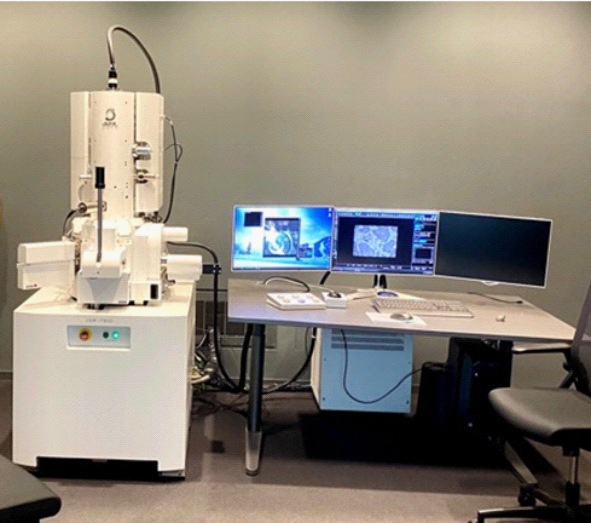
The main analytical instruments already purchased for the laboratory are: a field-emission scanning electron microscope (FE-SEM), a field-emission electron microprobe analyser (FE-EMPA), an X-ray diffractometer (XRD), a Fourier Transform Infrared microscope, and a digital microscope.
The FE-EMPA is equipped with 5 wavelength dispersive x-ray spectrometers (WDS) with the interchangeable crystals TAPL/J, LDE1L/2, PETL/J/H and LIF/L/H, enabling a comprehensive coverage of elements and flexibility and efficiency in elemental mapping. An energy dispersive x-ray spectrometer (EDS) is also installed for rapid elemental mapping and identification of target areas.
The FE-SEM is equipped with an EDS detector for non-destructive rapid compositional analysis, and elemental mapping of samples. An additional backscattered electron (BSE) detector enables high-resolution compositional imaging, while the secondary electron (SE) detector allows high-resolution imaging for detailed surface topographical measurements.
The XRD has Bragg-Brentano geometry, which can be switched to parallel beam geometry, and a Cu kα source with a 1Der detector. The sample form is flexible, from powders to larger solid objects, also allowing non-destructive measurements of returned samples. Localised μ-XRD analyses can be performed by reducing the beam spot size down to 140μm.
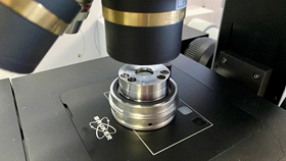
For spectral mapping of small samples, a Fourier Transform vis-IR-microscope (Bruker Hyperion 2000) connected with a Brucker Vertex 80V spectrometer will be available, allowing spectral measurements into the mid-infrared. The system has an automated X,Y,Z stage and allows measurements down to a spatial resolution of 50 μm. This instrument is a key part of the facility, enabling initial spectral characterisation of samples with minimal sample manipulation. Local infrared spectra enable identification of minerals and regions of interest. A Keyence VHX-7000 3D microscope allows rapid detailed imaging of sample surfaces, including uneven surfaces, by automated stitching of images in different focal planes, resulting in a quasi-3D representation of samples. This allows quick estimation of sample sizes as well as the dimensions of larger surface features.
Sample preparation facilities are also available on site.
Contact
You must get in touch with the host facility to discuss the technical feasibility of your proposal before submitting an application. If you do not contact the host, your proposal will not be approved.
Dr. Stephen Patrick Garland, DLR Institute of Space Research, Rutherfordstraße 2, 12489 Berlin, Germany.
Images



Publications
- S. P. Garland, et al. “The Sample Analysis Laboratory (SAL) at the German Aerospace Center (DLR) Berlin: a cutting-edge laboratory for extraterrestrial material analysis,” Infrared Remote Sensing and Instrumentation XXXIII, 136120E (17 September 2025); https://doi.org/10.1117/12.3064383
- Hamann et al. In preparation
- Van den Neucker et al. In preparation
Due to the facility being new, related papers are still in preparation.
