Europlanet has opened a call for funding proposals of up to 5000 € to support the activities of its members. Proposals should be submitted by the Chair (or designated representative) of a Europlanet Regional Hub, Committee or Working Group (WG).
The deadline for the call is 16 March 2026. Projects proposed in the current call should be completed by the end of 2026.
To find out more about the call and application process, please see the call page.
You can also find out about projects funded in previous rounds of this scheme here.
‘Impact, Industry Engagement, Research Security and Dual Use’ Workshop at Industriens Hus, Copenhagen
Around 30 representatives of a diverse range of research infrastructures gathered at Industriens Hus, Copenhagen, Denmark and online from 20 – 21 October 2025 for a hybrid workshop ahead of the Research and Technology Infrastructures (RTI) Summit 2025.
The meeting, which was co-organised by Aarhus University, the European Science Foundation and Europlanet, included a workshop on impact evaluation. Presentations and discussions covered industry engagement, research security and Dual Use, as well as upcoming opportunities within Horizon Europe and an update on a new journal focused on RIs.
The session also included an update on a White Paper on Distributed Research Infrastructures, which was discussed at the previous workshop in Krakow in June 2025. The title of the White Paper has been updated to: ‘Towards an Inclusive Framework for Europe’s Research Infrastructures: Embracing diversity in form, theme, and scale.’
In line with feedback from the Krakow meeting, additional adjustments have been made to reflect that issues in visibility in European RI policy for many RIs do not specifically originate from the size but more from the form and the prioritisation of the ESFRI Roadmap RIs and ERICs. The White Paper concludes that: ‘A resilient, adaptable, and dynamic research ecosystem requires strategic support for all RIs.’ The new version has been submitted to the European publication platform Open Research Europe (ORE) for final review.
Images
Presentations
Horizon Europe Updates – Nigel Mason (Europlanet / University of Kent)
Tumbleweed Rover Tests Demonstrate Transformative Technology for Low-Cost Mars Exploration
Joint Meeting of the Europlanet Science Congress and the American Astronomical Society’s Division for Planetary Science (EPSC-DPS2025) Press Release
A swarm of spherical rovers, blown by the wind like tumbleweeds, could enable large-scale and low-cost exploration of the martian surface, according to results presented at the Joint Meeting of the Europlanet Science Congress and the Division for Planetary Sciences (EPSC-DPS) 2025.
Recent experiments in a state-of-the-art wind tunnel and field tests in a quarry demonstrate that the rovers could be set in motion and navigate over various terrains in conditions analogous to those found on Mars.
Tumbleweed rovers are lightweight, 5-metre-diameter spherical robots designed to harness the power of martian winds for mobility. Swarms of the rovers could spread across the Red Planet, autonomously gathering environmental data and providing an unprecedented, simultaneous view of atmospheric and surface processes from different locations on Mars. A final, stationary phase would involve collapsing the rovers into permanent measurement stations dotted around the surface of Mars, providing long-term scientific measurements and potential infrastructure for future missions.
“Recent wind-tunnel and field campaigns have been a turning point in the Tumbleweed rover’s development,” said James Kingsnorth, Head of Science at Team Tumbleweed, who presented the results at EPSC-DPS2025 in Helsinki. “We now have experimental validation that Tumbleweed rovers could indeed operate and collect scientific data on Mars.”
In July 2025, Team Tumbleweed conducted a week-long experimental campaign, supported by Europlanet, at Aarhus University’s Planetary Environment Facility. Using scaled prototypes with 30-, 40- and 50-centimetre diameters, the team carried out static and dynamic tests in a wind tunnel with a variety of wind speeds and ground surfaces under a low atmospheric pressure of 17 millibars.
Results showed that wind speeds of 9-10 metres per second were sufficient to set the rover in motion over a range of Mars-like terrains including smooth and rough surfaces, sand, pebbles and boulder fields. Onboard instruments successfully recorded data during tumbling and the rover’s behaviour matched fluid-dynamics modelling, validating simulations. The scale-model prototypes were able to climb up a slope of 11.5 degrees in the chamber – equivalent to approximately 30 degrees on Mars – demonstrating that the rover could traverse even unfavourable slopes.
“Experiments with the prototypes in the Aarhus Wind Tunnel have provided big insights into how Tumbleweed rovers would operate on Mars,” said Mário João Carvalho de Pinto Balsemão, Team Tumbleweed’s Mission Scientist, who led the experimental campaign. “The results are conservative, as the weights of the scaled prototypes used in the experiments are exaggerated compared to the real thing, so the threshold wind speeds for setting the rovers rolling could be even less.”
Near-surface winds on Mars are currently not well understood due to the relatively sparse data collection. While data from rovers and landers on the surface show average wind speeds are generally in single digits, wind-generated vibrations recorded by NASA’s Insight mission over more than two martian years, as well as measurements gathered during the flights of the Ingenuity helicopter, show that higher wind speeds can occur near the surface quite frequently.
“Data from Insight suggests that in Mars’s northern hemisphere during summer, daytime wind speeds are characterised by a wide distribution and are positively skewed toward higher wind speeds of around 10 metres per second, and while the nights are calmer, speeds of more 10 metres per second can sometimes be reached,” said Balsemão. “The results from Aarhus support our modelling, which shows that an average Tumbleweed rover – following the daily shifts and day-night cycles of the wind – could travel about 422 kilometres over 100 martian sols, with an average overall speed of about 0.36 kilometres per hour. In favourable conditions, the maximum range could be as much as 2,800 kilometres.”
Back in April, a 2.7-metre-diameter rover prototype, the Tumbleweed Science Testbed, was deployed in field tests in an inactive quarry in Maastricht in the Netherlands. The rover’s modular payload bay carried a suite of off-the-shelf sensors including a camera, a magnetometer, an inertial measurement unit and a GPS. These experiments confirmed that the platform could successfully gather and process environmental data in real time while tumbling over natural terrain.
The organisation behind the rovers, Team Tumbleweed, is an interdisciplinary group of young, entrepreneurial scientists. With main branches in Vienna in Austria and Delft in the Netherlands, Team Tumbleweed brings together people from over 20 countries.
The next steps for the team will include integrating more sophisticated instruments into the Tumbleweed Science Testbed payload, including radiation sensors, soil probes and dust sensors, refining the rover’s dynamics models, and scaling up the platform to higher technology readiness levels (TRLs). A further field campaign will take place in the Atacama Desert, Chile, in November, during which at least two Science Testbed rovers will carry instruments supplied by researchers from external partner organisations and will test swarm coordination strategies in Mars-like environments.
Further Information
Abstract: EPSC-DPS2025-1775. Preliminary Feasibility Assessment of the Tumbleweed Rover Platform and Mission using the AU Planetary Environment Facility
James Kingsnorth, Mário de Pinto Balsemão, Abhimanyu Shanbhag, Luka Pikulić, Jonathan Merrison, Jens Iversen, Cristina Moisuc, Morgan Peterson, and Julian Rothenbuchner.
Abstract: EPSC-DPS2025-1779. A Swarm of Wind-Driven Tumbleweed Rovers for in-situ Mapping of Radiation, Water‑Equivalent Hydrogen and Magnetic Fields on Mars
James Kingsnorth, Mário de Pinto Balsemão, Abhimanyu Shanbhag, Luka Pikulić, Cristina Moisuc, Morgan Peterson, Gergana Bounova, and Julian Rothenbuchner.
Results of a simulation of a swarm of 90 Tumbleweed rovers, with red dots showing their randomised starting positions and blue dots showing their final resting points. Credit: Team Tumbleweed.
About the Joint Meeting of the Europlanet Science Congress and the Division of Planetary Sciences (EPSC-DPS)
The Europlanet Science Congress (EPSC), established in 2006 as the European Planetary Science Congress, is the largest planetary science meeting in Europe. It covers the entire range of planetary sciences, with an extensive mix of talks, workshops and poster sessions, as well as providing a unique space for networking and exchanges of experiences.
EPSC joined forces for the first time with the American Astronomical Society’s Division for Planetary Sciences (DPS) for a joint meeting in Nantes, France, in 2011. This was followed by DPS-EPSC 2016 in Pasadena, EPSC-DPS 2019 in Geneva, and the return to the United States for the DPS-EPSC 2023 meeting in San Antonio. This year marked the third iteration of a joint European-based meeting. The intent of the joint meetings is not only to connect the European and North American planetary science communities, but also to consolidate two major meetings and motivate planetary scientists from all over the globe to attend. With over 1800 participants joining in person and online, EPSC-DPS2025 is the largest planetary science meeting held to date in Europe. https://www.epsc-dps2025.eu
Follow on social media (Bluesky, X and LinkedIn) with the hashtag #EPSC-DPS2025 for updates on the meeting.
About Europlanet
Europlanet (europlanet.org) is a non-profit association and membership organisation that provides the planetary science community with access to research infrastructure, services and training. The Europlanet Association Sans But Lucratif (AISBL), established in 2023, builds on the heritage of a series of projects funded by the European Commission between 2005 and 2024 (Grant Numbers 871149, 654208, 228319 and RICA-CT-2004-001637) to support the planetary science community in Europe and around the world.
About the DPS
The Division for Planetary Sciences (DPS), founded in 1968, is the largest special-interest Division of the American Astronomical Society (AAS). Members of the DPS study the bodies of our own solar system, from planets and moons to comets and asteroids, and all other solar-system objects and processes. With the discovery that planets exist around other stars, the DPS has expanded its scope to include the study of extrasolar planetary systems as well. The American Astronomical Society (AAS), established in 1899, is the major organization of professional astronomers in North America. The mission of the AAS is to enhance and share humanity’s scientific understanding of the universe as a diverse and inclusive astronomical community, which it achieves through publishing, meeting organization, science advocacy, education and outreach, and training and professional development.
This workshop aims to provide an introduction to the fascinating world of tardigrades and their relevance in astrobiology.
Through a combination of lectures and hands-on activities, participants will explore the biology of these microorganisms, known for their ability to survive extreme conditions, from freezing temperatures to exposure to the vacuum of space. Their role in astrobiological research will be discussed, highlighting experiments conducted in space and their potential to aid in the search for extraterrestrial life. Water bears, also known as tardigrades, are very small, segmented animals. The largest species is just over one millimetre in length. Water bears live in temporary ponds and droplets of water in soil and on moist plants. They are known to survive under conditions that would kill most organisms – they can withstand temperatures ranging from -272 deg C to +150 deg C, they can be without water for a period of 10 years, and they are extremely resistant to radiation.
In addition to theoretical lectures, the workshop will include a field trip around the Molėtai Astronomical Observatory, where attendees will collect samples from potential tardigrade habitats. Later, in the laboratory, they will learn how to locate and isolate these organisms for microscopic observation, identifying their characteristics and structures while also learning how to cultivate tardigrades at home.
This workshop is designed for university students, researchers, and enthusiasts of microbiology and astrobiology, offering a unique opportunity to understand how extremophiles can provide insights into life on other planets. With a practical and accessible approach, participants will learn about tardigrades and experience their search and analysis firsthand in a real scientific environment.
Venue
2 days at the Molėtai Astronomical Observatory, the other 1 day in Vilnius, Vilnius University Life Sciences Center, Lithuania.
Participants
20 students from Europe will be selected to attend in person. Additionally, an unlimited number of online participants will be able to join.
Financial support
Trip Vilnius – Observatory, lodging and food in Molėtai observatory will be provided by Europlanet and Vilnius university for everyone.
The financial support for trip to and from Lithuania can be allocated by our partners:
ESA Academy Short Course Scholarship programme (up to €350 for citizens of an ESA Member State, Associate Member, or Canada) more details HERE
Embassy of Spain in Lithuania (up to €350 for participants from Spainish educational institutions)
Polish Institute in Lithuania (up to €200 for participants from Polish educational institutions)
Key dates:
Launch of the call for abstracts: 5 June 2025
Deadline to submit abstracts: 31 August 2025
Abstract selection announcement: 4 September 2025
Registration opening: 5 June 2025
Registration deadline: 31 August 2025
Workshop dates: 18-20 September 2025
* More information concerning the reimbursement will be provided for the selected participants personally.
Results of Europlanet Society Committee Funding Scheme 2025
The results have been announced of a call by the Europlanet Society to support funding proposals of €1000 to €5000 from its Regional Hubs, Committees and Working Groups and the Society Membership.
Six projects have been supported in 2025:
French Hub proposal: Lights, Camera, Early-Career Scientists in Action!(€3,500)
Audiences reached:Early-careers, under-represented states, planetary science community, other research communities, schools and the public.
“Lights, Camera, Early-Career Scientists in Action!” will showcase emerging scientists in a series of engaging 1-minute videos. Each early-career scientist (ECS) presents an “elevator pitch” highlighting their research, followed by another short film in which they share their experiences as ECS. Participants will receive expert guidance on on-camera presence, effective communication, and succinctly conveying the essence of their work.
This project aims to amplify ECS voices by creating accessible and compelling formats for science communication that will be shared on social media platforms. Equity, diversity, and inclusion (EDI) will be prioritised, ensuring that the produced films reflect these values by showcasing various voices and perspectives within the scientific community. Filming will take place in Grenoble, allowing us to feature ECS from diverse scientific fields, each offering unique insights and making significant contributions.
Encouraging ECS to share their research, experiences, and career paths serves a dual purpose: it enhances their communication skills while demystifying complex geoscience topics, effectively bridging the gap between scientific discovery and the public.
Ireland-UK Hub proposal: Open University Crew Mission to Mars Desert Research Station (MDRS), Utah (€5000)
Audiences reached:Early-careers, industry, under-represented states, planetary science community, other research communities, amateur community, schools and the public.
A group of early career researchers from the Open University have been funded to become analogue astronauts for two weeks as part of the Mars Desert Research Station (MDRS) crew mission in late Autumn 2025. The MDRS is a renowned facility in Utah operated by the Mars Society, designed to simulate the conditions and challenges of living and working on Mars. They welcome teams who’d like to conduct cutting-edge research and test new technologies that could support the future human exploration of Mars.
The crew includes Dan, a microbiologist investigating properties of microbial communities in a Martian analogue site who’s previously served as a crew member at MDRS, Mara an astrobiologist focusing on planetary protection, Ihor an engineer interested in energy concepts for Mars suits and Nisha (proposer), a planetary scientist studying lake geomorphology on Mars.
The diverse and multidisciplinary crew team comprises two PhD students from the UK, who are members of Europlanet, and two international doctorates from Portugal and Ukraine. The team will carry out publich and schools’ engagement as part of their mission.
Ireland-UK Hub proposal: Defining wet-dry cycles and the impact of desiccation in temporal Mars analogue environments (€4457)
Audiences reached:Early-careers, planetary science community and other research communities.
Toledo contains small, seasonal lagoons that are chemical analogues for Noachian Mars. Continual desiccation has eliminated Lake Tirez – samples from distinct timepoints also make this site a temporal analogue for the wet-to-dry transition of Mars (Details of this work were published in Nature by Fairen et al 2023). Based on geochemical, mineralogical, microbiological and isotopic data from the other lagoons from 2022, the neighbouring lagoon, Pena Hueca, is though to be also desiccating. This project will re-sample Pena Hueca and nearby lagoons to define the evolution of this potential desiccation, allowing the team to determine if changes in Lake Tirez arose from stochastic or deterministic events, furthering understanding of the desiccation on Mars.
Building on analogue research and OU-CAB collaborations, the team will work with Dr. Felip Gomez to sample this environment. This project represents a training opportunity for incoming PhD students, and an opportunity for co-supervision for a final year PhD student, preparing them for future leadership. Planetary science will be supported via generation of data underpinning a high impact paper.
The project will strengthen research collaborations between an internationally diverse team of researchers (Spain, Turkey, Bulgaria, UK). Further dissemination will be via a series of online videos for the MBG Genetics YouTube series and applying to participate in the Café Scientifique in Madrid in November. The profile of Europlanet would also be grown with a new audience via MBG genetics, engaging with early career researchers in Turkey.
Northern Hub proposal: Survivors of the Extreme: Tardigrades and the Quest for Extraterrestrial Life (€5000)
Audiences reached:Early-careers, under-represented states, amateur community, other research communities, planetary science community, schools and the public.
This workshop, which will take place on-site and online from 18 – 20 September 2025, aims to provide an introduction to the fascinating world of tardigrades and their relevance in astrobiology. Through a combination of lectures and hands-on activities, participants will explore the biology of these microorganisms, known for their ability to survive extreme conditions, from freezing temperatures to exposure to the vacuum of space. Their role in astrobiological research will be discussed, highlighting experiments conducted in space and their potential to aid in the search for extraterrestrial life.
In addition to theoretical lectures, the workshop will include a field trip around the Molėtai Astronomical Observatory, where attendees will collect samples from potential tardigrade habitats. Later, in the laboratory, they will learn how to locate and isolate these organisms for microscopic observation, identifying their characteristics and structures while also learning how to cultivate tardigrades at home.
15 students from Lithuania and five from the Northern Europe Hub will participate in person. Additionally, an unlimited number of online participants can join.
Audiences reached:Early-careers and planetary science community.
The Mercury Laboratory Community consists of researchers working with experiments linked to planet Mercury and to ESA/JAXA BepiColombo mission. The community consists mainly of researchers with affiliations in European institutes, but also with US and Japan colleagues. A first workshop was organised at DLR Berlin in 2024 and, with Europlanet support, a second will be organised in autumn 2025. The community has active working groups, and the current major topic is the preparing of a “Mercury Y” blind sample and its characterisations across the laboratories in the community. The results of this campaign will be presented in EPSC-DPS 2025 in Helsinki.
The workshop will involve multiple planetary science laboratories across Europe, developing the European role and creating internation links within Europe, and with US and Japan. Experimental laboratory activities are usually multi-discipline and have connections with industry and fields outside planetary sciences, too. Laboratories host PhD students and early-career researchers who can benefit from European-wide networking in the workshop and the Europlanet funding will be used to support their participation in the workshop, and in the community in general.
Spain-Portugal Hub proposal: Iberian Planetary Science & Solar System Exploration Congress (€5000)
Audiences reached:Early-careers, industry, under-represented states, planetary science community, other research communities, amateur community, policymakers, schools and the public.
An additional webinar will take place on 22 May, in collaboration with the IberoAmerican Space Agency Network, on asteroid stellar occultations.
The VIII Iberian Planetary Science & Solar System Exploration Congress (CPESS-8) will take place in Malaga from 26-30 May 2025. CPESS-8 is organised by the Iberian Hub of Europlanet, in collaboration with University of Malaga and will discuss the current state of planetary sciences in Spain and Portugal. The meeting will have a special focus on opportunities for scientific, technological and industrial collaborations at an international level, especially with Ibero-America, with representatives from Spain, Portugal and Latin America. The programme will include sessions on scientific policy with representatives from national Space & Research Agencies, technology sessions with a strong presence of the space industry, and scientific sessions from planetary research groups from the main public institutions. The programme will also include round tables on science-industry synergy, technology development for small missions and lunar exploration, debates on Ibero-American collaboration, early-career events in support of the new generation of researchers, collaboration with amateur astronomers and various education, public outreach and media events, which will enhance the accessibility and visibility of the congress and achieve a greater impact on society.
Meet the New Board Members of the Europlanet Society
The results of the elections of the Europlanet Society Executive Board were announced at the Europlanet General Assembly on Friday, 10 November. Eight new members of the Board were elected including a Vice-President, two Secretaries (co-position) and five new Board Members.
They join Ann Carine Vandaele, who takes up the mantle of President following her year as President-Elect (elected 2022), Treasurer Didier Moreau (elected 2021) and Vice President Angelo Pio Rossi (elected 2019 with a one year extended term to ensure that the turn-over of the Board is staggered).
Find out about their objectives and what they hope to achieve by serving on the Board of the Europlanet Society over the next four years.
Vice President
Stravro Ivanovski
Stavro Ivanovski, Vice-President (2023-2027)
The birth of the Europlanet Society has been followed by the establishment of a Society with long-term activities and values based on inclusiveness, high quality science and outreach, and a sustainable structure open to planetary scientists, amateurs and industry. From my perspective, the Society is not only an idea and platform that represents and connects planetary scientists and enthusiasts, but it is much more – a space driven by sharing ideas, paving apath for early-career scientists and building a self-functioning scientific forum seeking for new (financial) opportunities to address today’s planetary paradigms.
I am a researcher at INAF – Astronomical Observatory of Trieste and Adjunct Professor at the University of Trieste. My research focuses on small bodies and planetary magnetospheres in the Solar System. I am involved in various planetary ESA and NASA missions (e.g. DART/LICIACube, Rosetta, BepiColombo, Comet Interceptor, Hera, Ariel). As a graduated actor with theatre experience, I have a strong commitment to public engagement and outreach as well.
I joined Europlanet in 2017 through its research infrastructure project and since then I have been closely connected with Europlanet. Since 2020, I have acted as the Co-Chair of the Europlanet Science Congress (EPSC) Scientific Organising Committee (SOC). I am serving as the Chair of Italian Europlanet Regional Hub. Also, while chairing the EPSC Outreach in 2020, I was one of the creators of the “InspiredByOtherWorlds” art contest that invites everybody to submit all kinds of artworks inspired by planetary science. Furthermore, my experience within Europlanet includes leading the Machine Learning Work Package and acting as the INAF deputy within the Europlanet 2024 Research Infrastructure (RI) project.
As Vice-President, I will dedicate my efforts:
to maintain the high level scientific content of EPSC and related activities; to strengthen the position of the Society in different countries, for example, Italy and under-represented country such as Balkan countries;
to disseminate all current and future outreach initiatives; to improve the integration and visibility of Society within other scientific communities like astrochemistry and Origins of Life;
last, but not least, to investigate the modern Artificial Intelligence techniques to support the Europlanet Society activities.
Secretary – Co-position
Federica Duras
Federica Duras, Secretary (2023-2027)
As leader of the Outreach Working Group and as outreach officer in the Italian hub, I am thrilled to apply for the position of Secretary. This pivotal moment in Europlanet Society’s journey presents an exciting opportunity for fresh perspectives and new enthusiasm. In my role as the head of the Outreach Working Group, I have honed my organisational skills, ensuring seamless communication and collaboration among the team and among diverse teams. I could summarise my objectives for the Europlanet Society as follows:
Continue enhancing the Europlanet communication channels on a larger scale, fostering an interconnected Europlanet community with transparent information dissemination.
Building upon the success of the Outreach Working Group activities in the past years, I aspire to amplify Europlanet’s outreach efforts. This involves using modern communication tools and social media and exploring innovative ways to connect with a wider audience.
Strengthen the sense of unity and involvement within the Europlanet family. As I believe in the power of collective action, I am firmly convinced that through collaborative projects and shared initiatives we can engage our community also in this transition phase.
Edita Stonkute
Edita Stonkute, Secretary (2023-2027)
I am working at the Institute of Theoretical Physics and Astronomy of Vilnius University in Vilnius, Lithuania as a senior researcher and an associate professor. My scientific interests are focused on detailed chemical composition studies of Galactic stars (including planet-hosts) using high-resolution spectra. I am a member of the Lithuanian Astronomical Society, the European Astronomical Society, the International Astronomical Union and Europlanet Society.
Here, at Europlanet I’m responsible for coordinating the Mentoring programme. I hope my dedicated time and work to the Society will be valuable and I would like to be nominated as a Secretary.
Board Members
Julia de León
Julia de Leon, Board Member (2023-2027)
I am a planetary scientist with 20 years of experience in the field. My main interest is the near-Earth asteroid population (NEAs) and its physical, compositional and dynamical properties. As a consequence, my work has been strongly connected to planetary defense. I am mainly an observational researcher, working with both ground-based and space-based data. I have recently been part of the EU project NEOROCKS, focused in the characterisation of NEAs and with the participation of 14 European institutions. In addition, I have participated in at least two observational campaigns to study potentially hazardous asteroids, coordinated by the International Asteroid Warning Network (IAWN). Finally, I am/have been actively involved in several space missions to visit and study asteroids and other minor bodies (Rosetta, OSIRIS-REx, Hayabusa2, DART, Hera, MMX, DESTINY+, Lucy), led by the main space agencies (ESA, NASA, JAXA).
All this overall research experience has intensified my personal conviction that planetary science is a collaborative activity, and that it evolves and improves thanks to all this global collaborative effort. I would be honored to serve on the Executive Board of the Europlanet Society. This is an experienced, diverse, large, and strong society with a solid base in Europe but a global view. I will put all my gained experience in international collaborations at the service of the European planetary science community to enhance and promote global collaboration.
Livia Giacomini
Livia Giacomini, Board Member (2019-2023, 2023-2027)
Over the past years on the Executive Board, I’ve had the privilege to actively contribute to our Society’s activities, focusing on education, communication and policy initiatives. As I seek to continue my journey with Europlanet, my vision is to strengthen Europlanet visibility, working for its sustainability in the long term, strengthening our ties with international entities and finding ways to make the Society grow. I would also ensure that Europlanet remains at the forefront of innovation in education of planetary science and in the broader scientific domain. As the editor-in-chief of astroEDU, the IAU platform for peer reviewed educational activities, I believe I have valuable experiences and connections to pursue this objective for our Society. I am dedicated to serving as a bridge, connecting our history with the future that the community envisions.
Melissa Mirino
Melissa Mirino, Board Member (2023-2027)
I am currently the Co-Chair of the Europlanet Early Career Network, and I have been previously involved with Europlanet by managing the EPEC Communication WG. As such, I have been very active on committee matters. During my involvement with the organization, I have been always active in supporting Early Careers by organizing and managing activities such as the “EPEC Profiles”, the “#PlanetaryScience4All video contest” and the EPEC Podcast “Stairway to Space” to allow the young professionals to showcase their contribution within the field of Planetary Science. Additionally, I have supported many other activities (Outreach, Annual Weeks, Europlanet Magazine, EPSC, EPEC annual report) by collaborating with the Europlanet communication team.
My objectives would be:
rebuild the existing EPEC structure to make it a long-lasting organisation within Europlanet that supports early careers from any background,
to be a direct link between the Early Careers who join our Network and the Europlanet Board, by representing their interests and needs into our Society. I strongly believe that the direct presence of an Early Career among the Europlanet Board Members would largely benefit Europlanet by hearing the Early Career voice.
Leigh Fletcher
Leigh Fletcher, Board Member (2019-2023, 2023-2027)
I am a Professor of Planetary Science at the University of Leicester, specialising in the exploration of Giant Planet systems via a combination of ground-based observations, space telescopes, and visiting planetary spacecraft. I have been a member of the Europlanet community since the mid-2000s, and have always delighted in the opportunity offered by EPSC to meet with like-minded European planetary scientists. We have a thriving and diverse community, spanning the whole portfolio of planetary science, and the Europlanet Society provides a voice to our members, both across Europe and with the wider international community. It has been a pleasure to serve on the Board, and be a member of the Europlanet team, for the past four years. This experience has given me an insight into how the Society works, the key challenges it faces, and the opportunities that await in the years to come. The EPSC meetings are my topmost priority, being the premier networking and collaborative meeting for European planetary scientists. We should ensure these are held annually in Europe as a service to our community; costs are kept manageable to ensure wider representation; locations are kept accessible via public transportation with minimal carbon footprints; and virtual capabilities are maintained to improve access for those who may be unable to travel. We should continue to provide resources to our Early Career Network, particularly to enable exchanges of ideas and capabilities so that no one ever works in isolation. We should continue to use Europlanet as a conduit for interactions between amateur observers and professional planetary scientists. We should reintegrate the best of the European hubs back into the society, recognising the importance of local connections, but without stretching individual hubs too far. Above all, we should ensure that Europlanet activities and the thriving EPSC meetings are sustainable in the decades to come
Luca Montabone
Luca Montabone, Board Member (2023-2027)
An opportunity to do things together that would not be possible on their own. This is what I would like the Europlanet Society to represent for its members. The first time I heard about the concept of a European “virtual observatory” was at a meeting in London, when I was a postdoc at the University of Oxford, UK, after a PhD in Geophysics in Turin, Italy. Since then, several things have changed in the original EuroPlaNet as well as in my career, but the shared passion for planetary science and enthusiasm for new challenges have not changed! I worked for more than a decade on the physics of planetary atmospheres also at the Laboratoire de Météorologie Dynamique/CNRS in Paris, France, at The Open University in Milton Keynes, UK, and at the Space Science Institute in Boulder (CO), USA. Over the past few years, I have created a bridge between the academic and industry facets of planetary science in Europe. I am now running my own small enterprise in South-East France, collaborating with several international research institutions and ESA in satellite data analysis, modelling, and mission concepts for the atmosphere of Mars. The new reality of the Europlanet Society requires a variety of experiences and ideas to support the planetary science community in Europe and to build capacity elsewhere, all in a self-sustainable way. It now seems the right time for me to share my experience and ideas within the Executive Board and the Society at large. As one of the Board members, I will naturally focus my attention on the relations between the Society and the private sector (companies working on hardware, software, data analysis, etc.). Given my aptitude for training and public outreach, I will also look closely at the developments in these areas. Because policy can open up thriving directions for the Society, I would like to take on the challenge to engage with policy makers (European institutions, space agencies, etc.). However, I believe that only a community approach can succeed in moving the Europlanet Society towards its goal of becoming a self-sustained reference for the planetary science community itself, in Europe and beyond. Therefore, strengthening the role of the regional hubs, widening participation, inclusion and diversity are all key areas which I am particularly keen on. As for the other strategic areas (such as early career, research infrastructure, etc.), I am eager to work with Board members who will focus on them.
The Europlanet Summer School 2023 is being hosted by Vilnius University’s Moletai Astronomical Observatory (MAO) in Lithuania from 8-18 August.
For the first time, the School is taking place in hybrid format, with 20 participants from 10 countries attending on site and up to 30 people following online. The participants include early careers (right the way from high-school to BSc, MSc, PhD and postdoc) and amateur astronomers.
During the School, participants will gain hands-on experience observing with MAO’s 1.65m and 35/51cm-telescopes (weather permitting!) and training in analysing exoplanet transits, stellar spectra, atmospheric parameters and variability data. The programme includes training modules in communication skills and engaging with schools, as well as lectures on space and ground-based observations and machine learning.
Deividas Dudulis (high-school student and astrophotographer), who is participating in the Summer School, will be posting photos here.
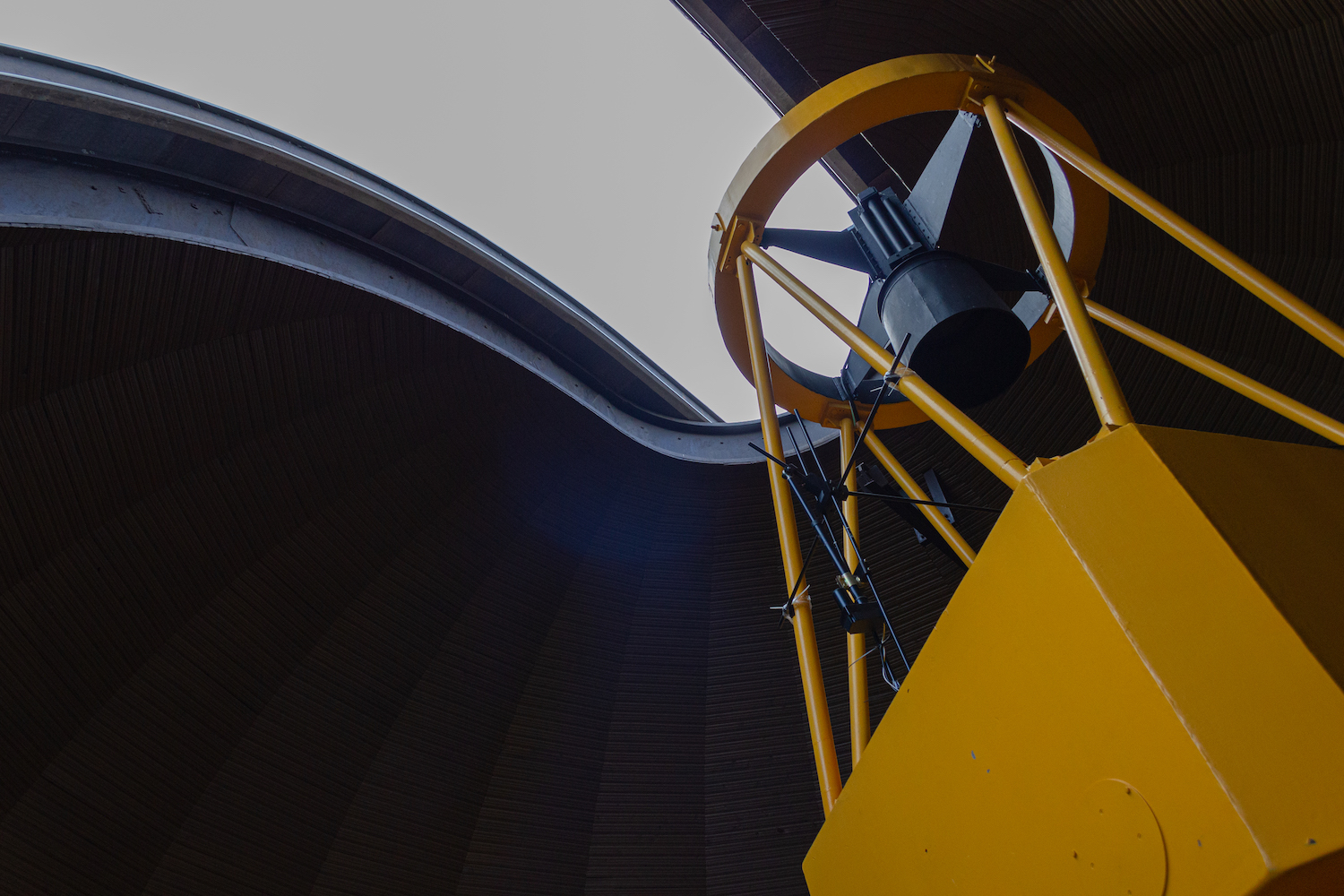
Tour of Molėtai Astronomical Observatory 1.65 m telescope. Credit: Deividas DudulisMolėtai Astronomical Observatory 1.65 m telescope. Credit: Deividas DudulisInside dome of Molėtai Astronomical Observatory 1.65 m telescope. Credit: Deividas Dudulis31/51 cm Maksutov-system Molėtai Astronomical Observatory telescope. Credit: Deividas Dudulis
Get involved the Europlanet Northern Regional Hub Activities
The Europlanet Northern Regional Hub will be at the Europlanet Research Infrastructure Meeting (ERIM) 2023 in Bratislava from 19-23 June.
The Europlanet Society Northern Hub (Left to right): Stefanus Schroder (Sweden), Erika Kaufmann (Sweden), Maria Hieta (Finland), Maria Genzer (Finland), Harri Haukka (Finland, Chair), Grazina Tautvaisiene (Lithuania, Vice Chair ), Veikko Makela (Finland), Jonathan P. Merrison (Denmark, former Chair)m Edita Stonkute (Lithuania), Heleri Ramler (Estonia), Stas Barabash (Sweden) and Yoshifumi Futaana (Sweden).
The Northern Europe Hub was established in 2019 to promote planetary science and related fields for the benefit of the Danish, Estonian, Finnish, Icelandic, Latvian, Lithuanian, Norwegian, Swedish and wider European community, within the Europlanet Society, however the pandemic situation suppressed activities very much.
The first face-to-face Europlanet Society Northern Europe Hub meeting took place on the 21st of September, 2022, during the Europlanet Science Congress in Granada.
Now, with the new Chair Harri Haukka (Finland) and Vice Chair Grazina Tautvaisiene (Lithuania) as well as with advises of the former Chair Jonathan P. Merrison (Denmark), the hub is organising an amateur training workshop in Spring of 2023 and other activities. New members are welcome to join the Europlanet Society and its Northern Europe Hub !
The Europlanet 2024 Research Infrastructure (RI) project and the Tartu Observatory of the University of Tartu are pleased to announce the international training workshop “Asteroid Research”. The aim of the workshop is to give participants a thorough, multidisciplinary introduction to the ground-based and space observations of asteroids. Participants will be given hands-on experience in CCD photometry and spectroscopy of asteroids using the telescopes of the Tartu Observatory and in analysing the observational data. The hands-on sessions will be accompanied by lectures from leading astronomers. The participants will also be trained in writing and submitting observing proposals to different facilities of the Europlanet Telescope Network, mentorship possibilities between professional astronomers and amateurs will be introduced.
The course is open to PhD and master students, early career scientists, and amateur astronomers from the Danish, Estonian, Finnish, Icelandic, Latvian, Lithuanian, Norwegian, Swedish, and wider European communities. Activities of professional astronomers and amateur astronomers will be merged in order to achieve more understanding between communities.
The deadline for applications for the full program is 1 June 2023 23:59:00 UTC. The deadline for application for the remote part of the program (LECTURES ONLY) is 1 August 2023 23:59:00 UTC. 20 selected participants will be provided free accommodation (in Tartu), transportation between accommodation and Tartu Observatory, meals and travel reimbursement up to 360€.
Let us show you how the Europlanet Society and its regional hubs can serve you. We will present you the benefits of joining the hubs and will gladly hear about your needs.
12:45 Welcome (Séverine Robert)
12:50 Why am I a member of the EPS? (Miguel Lopez Valverde)
12:55 Funded project: Mars Atlas (Henrik Hargitai)
13:05 Why am I a member of the EPS? (Jonathan Merrison)
The Europlanet Society Regional Hubs support the development of planetary science at a national and regional level, particularly in countries and areas that are currently under-represented within the community.
Our Hub Committees organise networking events and workshops to support the research community, as well as to build links with amateur astronomers, industrial partners, policymakers, educators, the media and the wider public. Europlanet Society members are welcome to participate in the activities of one or more Hubs.
Transnational Access Insight: Investigating Fingerprints of Life on the Greenland Ice Sheet
In this guest post, Laura Sánchez García of the Centro de Astrobiología (CAB, CSIC-INTA) describes her recent trip to Europlanet 2024 RI’s Kangerlussuaq Planetary Field Analogue Site in Greenland to investigate molecular and isotopic fingerprints of life on Greenland Ice Sheet (GrIS) cryo-ecosystems with astrobiological interest for icy worlds.
Glacial systems are interesting for studying habitability and the limits of life. They are extreme environments where microorganisms may survive prolonged exposure to sub-zero temperatures and background radiation over millions or billions of years. Glaciers and the surrounding icy “cryo” environments (permafrost, glacial lakes, or melting streams) can be used to study the development of microbial cryo-ecosystems and may have implications in the search for past or current life in icy worlds beyond the Earth.
In the Solar System, Jupiter’s moon Europa and Saturn’s moon Enceladus have been recognised as the icy worlds with highest likelihood to harbour life, largely because liquid water could be in contact with rocks. Both moons are believed to contain a global ocean of salty water under a rigid icy crust that would enable interaction between briny water and rocks, and allow the conditions for life to arise.
The permanent Greenland Ice Sheet (GrIS) is a potential analogue for such icy worlds, constituting an important historical record of microorganisms that can survive in extreme cold environments. Around the GrIS, different formations such as glacial lakes, permafrost, or further peat soils represent diverse stages of evolution of the GrIS and its thermal destabilisation.
We submitted a proposal to the second Transnational Access Call of Europlanet 2024 RI to visit the Kangerlussuaq Planetary Field Analogue Site in Greenland. In April 2021, we received the news that it had been successful, and our team’s visit took place from 19-29 July 2021.
Our project is an investigation of molecular and isotopic lipid biomarkers of microorganisms inhabiting different cryo-ecosystems at and around the GrIS. Through our results, we hope to obtain clues of a potential life development at an analogue site (ice sheet) of icy moons in our Solar System, and learn how ecosystems evolve (biological succession) when the ice cover retreats and gets exposed to the atmosphere (resulting in glacier-melting streams, bedrock-erosion sediments, lake sediments, glacial soils).
We searched for organics to study the molecular and isotopic composition of lipid biomarkers in environmental samples collected from different ecosystems in the Kangerlussuaq region on the west coast of Greenland, including:
The ice sheet cryo-environment,
Nearby glacier-influenced ecosystems in and around glacial lakes
Longer time-exposed and further-developed lake and soil ecosystems.
Ice sheet cryo-environment
For the ice sheet study,we chose an ice sheet region in the Issunguata Sermia glacier system. There, we spotted four sites for sampling ice cores:
One near the glacier front, where ice is relatively older and carries plenty of dark, grey, fine material from the bedrock erosion during the glacier advance.
Two a bit further northeast in the ice sheet, where the ice is relatively younger and looked like slightly cleaner (i.e. whiter).
One further north, in the highest height, where the ice looked cleanest (i.e. whitest).
In the four sites, ice cores were retrieved down to 50-80 cm depth with a manual ice driller and, when the driller didn’t go deep enough, we dug a surface of about 35×35 cm2 with a geologist’s hammer to collect as much ice as possible down to the deepest depth reached by the drill.
Together with the ice drills, we also collected additional samples from:
Melt water from a glacial stream flowing through the ice sheet.
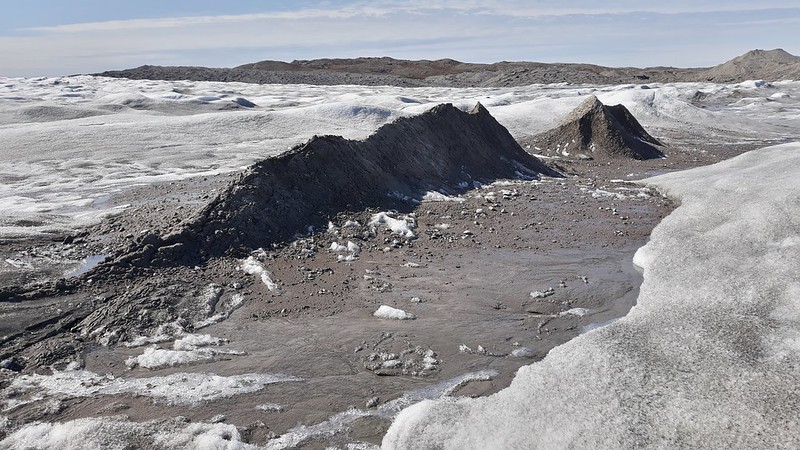
Dark grey sand-sized sediments (with pebbles and small stones) from hill of deposits on the ice sheet coming from the erosion of the bedrock during the glacier advance.
Dark blackish, fine sediments outcropping from an ice wedge, also coming from glacial erosion of the bedrock.
The four ice drills were melted and, together with the melt water sample, were filtrated through 0.7 μm pore-size glass fibre filters, to recover the particulate matter and look for total organic carbon and lipid biomarkers.
2) Nearby glacier-influenced ecosystems in and around glacial lakes
For the study of the glacial lakes study, we chose two different systems:
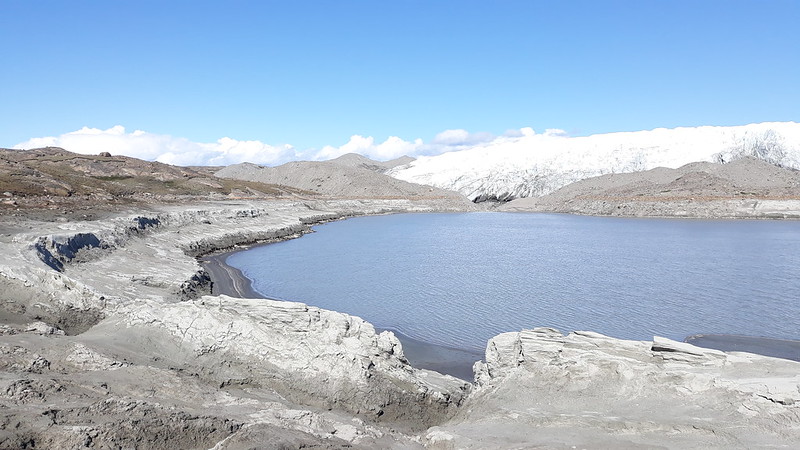
A glacial lake (GL1) about 200 m apart from an edge of the glacier Issunguata Sermia.
In this lake, we sampled a surface sediment from near the shore, together with sediments from an exposed “terrace” near the shore, where material at ground level represented the oldest and that at top of the terrace the youngest. The terrace was assumed to be composed of sediments accumulated in the past when the lake had a higher water level compared to today.
A multiple-lake system next to an edge of the glacier Issunguata Sermia.
The lake system is composed of four interconnected glacial lakes, where the first lake (GL2; closest to the glacier edge) receives water from the melting glacier and feeds the second lake (GL3), which in turns feeds the third (GL4), and this the fourth (GL5).
Here, we collected water (for chemical analysis) and surface sediments (for lipid biomarkers analysis) from the four lakes, and a 25 cm-deep sediment core only from the fourth lake (i.e. furthest from the glacier edge).
3) Longer time-exposed and further developed lacustrine and soil ecosystem
We aimed to assess the organic-composition differences between glacial and non-glacial lakes, so we also sampled a number of non-glacial lakes fed by meteoric (rain and surface runoff) water:
A small lake (L6): a lake about 1 km long and 0.5 km wide that is about 3 km apart from Issunguata Sermia.
Long Lake (L7): a relatively larger lake about 10 km long and 1.5 km wide that is about 11 km apart from the same glacier.
Salt Lake (SL): a lake about 600 m long and 500 m wide furthest from the glacier, and about 3-4 km apart from Kangerlussuaq.
In the three lakes, we sampled water (for chemistry analysis) and surface sediments near the shore. Then, for the small lake (L6) and Salt Lake (SL), we collected a sediment core of 14 and 34 cm depth, respectively. At the Salt Lake basin, we also collected samples from a terrace in the shore, corresponding to past sediment/peat material piling up at the lake shore.
4) Soil development on glacier retreatment
Finally, we wanted to learn about the soil development upon glacier retreatment, so we collected soil samples from a transect that included:
A young soil (poorly-vegetated so far) from recently exposed ground near the present margin of the Issunguata Sermia glacier.
A relatively older soil (more developed and vegetated) from the basin around the last lake of the four interconnected glacial-lakes system (i.e. GL5).
An even older soil (the most developed) from the Long Lake surroundings.
In order to get a glimpse of the fresh isotopic signatures from the vegetation contributing to the soil lipidic fingerprint, we also collected samples from the most representative vegetal specimens found in the studied area: sphagnum; grass; rounded-leave creeping plant with white flowers; orange, black, and pale-yellow lichens; and submerged and emergent macrophytes (from GL1). Most vegetal samples were collected from the surroundings of glacial lakes GL1 and GL4.
Following our return from Greenland, we are now starting on the analysis of samples and aim to publish our findings in a paper.
All photos from the trip
The BioGreen Transnational Access visit was supported by Europlanet 2024 Research Infrastrucutre and received funding from the European Union’s Horizon 2020 research and innovation programme under grant agreement No 871149.
Asteroid Photometry – Europlanet Virtual Summer School
16-27 August 2021
Europlanet 2024 Research Infrastructure is pleased to announce the virtual summer school Asteroid Photometry that will take place virtually hosted by Vilnius University (Lithuania) and A. Mickiewicz University, (Poland): 16-27 August 2021.
The aim of the course is to give participants a thorough, multidisciplinary introduction into the ground-based and space observations of asteroids. Participants will be given remote hands-on experience in CCD photometry of asteroids using the wide field Maksutov type telescope of the Molėtai Astronomical Observatory and in analysing the observational data. The hands-on sessions will be accompanied by lectures of leading astronomers. The participants will also be trained in writing and submitting observing proposals to different facilities of the Europlanet Telescope Network, mentorship possibilities between professional astronomers and amateurs will be introduced.
The course is open to doctoral candidates, master’s students, early career scientists, and amateur astronomers. Activities of professional astronomers and amateur astronomers will be merged in order to achieve more understanding between groups. The level of the school is orientated to PhD students and early career scientists, however amateur astronomers will be provided with the additional scientific support during lectures and observations.
Participants that show acceptable results on their assignments will get a diploma with 2.5 ECTS credits, which may be used as part of their degree studies at their home universities.
Please Note: The Europlanet 2024 RI project, which received funding from the European Union’s Horizon 2020 research and innovation programme under grant agreement No 871149, closed in July 2024. This archive page describes activities funded through the Europlanet 2024 RI project.
First successful observations at the Europlanet Telescope Network
One month after the first projects to observe at the Europlanet Telescope Network were granted in December, the first successful observations took place in January at the Moletai Observatoria in Lithuania.
The project “Reducing the selection effects in asteroid spins, shapes, and thermal parameters” is a long-term project aiming at determining physical parameters like spin, 3D shape, size, and thermal inertia of numerous asteroids that have been omitted by most of the previous studies. Their slow rotation and small amplitudes of brightness variations make them difficult targets for photometric observations, thus creating an observing selection effect.
Through coordinated observations from multiple sites, the project is gradually decreasing bias. This results in detailed spin and shape models based on high-quality photometric datasets of these asteroids observed at various viewing geometries.
Additionally, the models are being scaled in size down to 5% precision by thermophysical modelling with infrared data obtained from space, and fitting the shape models to stellar occultations by asteroids (Marciniak et al. 2018, and 2019: Astronomy Astrophys. 610, A7; and 625, A139). The new photometric observations, as shown in the image, gathered recently at Moletai Observatory, complemented with data from other sites, will result in fully covered lightcurves for five asteroids with rotation periods up to 38 hours, and should soon lead to the determination of spin and shape models of these challenging targets.
While this project already successfully observed its targets, further observations at the Europlanet Telescope Network are soon to come. Additionally, the second Science Advisory Board meeting was already taking place at the end of January to evaluate three more projects that want to exploit the small telescopes network. While the decision on the funding of these proposals will be announced soon, we are in the meantime inviting interested observers to apply with their project to the NA2 Call for Observations at the Europlanet Telescope Network.
Illustration showing how the 58 km sized asteroid Ljuba changes its position relative to stars within 5 hours. The images were obtained on the 35/51 cm telescope at the Moletai Observatory of Vilnius University in 2021.
Europlanet 2024 RI has received funding from the European Union’s Horizon 2020 research and innovation programme under grant agreement No 871149.
Europlanet AISBL (Association Internationale Sans But Lucratif – 0800.634.634) is hosted by the Department of Planetary Atmospheres of the Royal Belgian Institute for Space Aeronomy (BIRA-IASB), Avenue Circulaire 3, B-1180 Brussels, Belgium.