


Europlanet has been celebrating its 21st birthday in 2026 with a plethora of events, training schools, awards and activities to support the international planetary community. ‘In Focus’ gives a digest of recent news and events from the association.
Europlanet News | Community News
Europlanet Science Congress (EPSC) 2026
Read article in the fully formatted PDF of the Europlanet Magazine.

The Europlanet Science Congress (EPSC) is coming to the Netherlands for the first time. From 6-11 September 2026, EPSC will take place in The Hague, the city where Christiaan Huygens was born, and within walking distance of the observation tower where Hans Lipperhey demonstrated the first telescope. Amare, the arts venue that is hosting the meeting, is a dynamic space in the heart of the city, close to the Dutch Parliament, over 100 embassies and the iconic Mauritshuis Museum. The social event will bring conference participants to the beach and a programme of public events around the city will include a piano concert and a scale Solar System walking trail. ‘EPSC Goes Live for Schools’ will also bring cuttingedge science and engineering into classrooms in the area.
The Local Organising Committee (LOC) is co-chaired by Sebastiaan de Vet, of TU Delft and the Netherlands Platform for Planetary Science, and Inge Loes ten Kate, of Utrecht University and the Origins Centre. The LOC connects researchers from the main academic groups across the Netherlands who are working on planetary interiors, surface processes, materials, atmospheres and habitability (see article on page 28).
EPSC2026 builds on the success of last year’s Joint Meeting with the American Astronomical Society’s Division of Planetary Sciences, EPSCDPS2025, which welcomed 1803 participants in Helsinki and online, making it the largest planetary meeting ever held in Europe. This year, over 1250 abstracts have been submitted, putting EPSC2026 on course to be the largest stand-alone edition of the meeting to date. The conference programme includes 126 scientific sessions, keynote talks and debates, morning briefings, splinter workshops, community events and dedicated activities for early career participants.

Venues for EPSC in 2028 and 2029
Read article in the fully formatted PDF of the Europlanet Magazine.


The EPSC Executive Committee has selected the venues for Europlanet’s final two conferences of this decade.
In 2028, EPSC will take place at Padova Congress from 17-22 September, returning to Italy for the first time since the 2010 event in Rome. The Local Organising Committee (LOC) will be hosted by the Department of Geosciences at the University of Padova and the Astronomical Observatory of Padova at the National Institute of Astrophysics (INAF).
Padova has a long and illustrious history as a major hub for Italian planetary science. Galileo Galilei (1564-1642) taught at the University of Padova, as did Giuseppe “Bepi” Colombo (1920-1984), after whom the ESA-JAXA mission is named. As BepiColombo will be midway through its three-year phase of operations at Mercury in 2028, and many of the LOC are involved in the mission, Padova is a particularly fitting location for EPSC2028.
EPSC209 will be held at the Messe Congress Graz (MCG) from 9-14 September 2029. The first Austrian edition of EPSC will be led by the Space Research Institute (IWF) of the Austrian Academy of Sciences (ÖAW) in collaboration with Joanneum Research Forschungsgesellschaft mbH (JR). IWF has contributed to more than 40 space missions over the past 50 years, and is a cornerstone of European space science. In having a LOC co-led by an industrial partner for the first time, EPSC2029 will have a strong focus on innovation and applied research, with JR providing links to the commercial sector.
New Organisational Membership of Europlanet
Read article in the fully formatted PDF of the Europlanet Magazine.
Since Europlanet launched its organisational membership programme in December 2024, 17 organisations have joined up from countries across Europe, Asia and South America. The membership consists of a diverse range of organisations, from the Italian National Institute for Astrophysics (INAF) and German Space Agency (DLR), to the ISIS Neutron and Muon Source in the UK (page 37), the Joint Institute for Very Long Baseline Interferometry ERIC (JIVE) in the Netherlands, and the CorpoLaguna non-profit association in Colombia, which is supporting the new Europlanet Colombia Regional Hub.
Benefits for organisational members and their staff include discounts and bursaries for Europlanet events, opportunities to share facilities and develop collaborations with an international user community, and mechanisms to help shape policy relevant to planetary research and exploration. Organisational Members will also be able to participate through Europlanet in future European Commission funding bids (see Last Word, page 50).
Membership costs are tiered, with reduced rates available for organisations and researchers in under-represented states. Through the support of its individual and organisational members, the Europlanet non-profit association is able to sustain its activities, provide new services and continue its mission to support the planetary community. Find out more about joining Europlanet’s growing community of Organisational Members: bit.ly/EuroplanetOrganisation
Read article in the fully formatted PDF of the Europlanet Magazine.
Europlanet Executive Board Elections 2025


Three members of the Europlanet Executive Board were elected at the General Assembly on 9 September 2025 in Helsinki. They will serve a four-year term until September 2029.
Stéphane Erard is a planetary scientist at the Laboratory for Instrumentation and Research in Astrophysics (LIRA) at the Observatory of Paris, working on the origin and evolution of terrestrial planets and small bodies. Since joining the Europlanet Research Infrastructure project in 2009, he has led efforts to make Solar System data openly available, including coordinating the VESPA data access service, a cornerstone of Europlanet’s digital infrastructure. As a member of the Europlanet Executive Board he aims to work to strengthen data services for researchers and Pro-Am collaborations, consolidate links with space agencies, institutions and infrastructures such as the European Open Science Cloud (EOSC), and support inclusivity and early-career researchers.
Grace Richards is a postdoctoral researcher at the Institute for Space Astrophysics and Planetology (IAPS) of the National Institute of Astrophysics (INAF) in Italy. Grace has been actively involved in Europlanet for several years, through EPEC, the Transnational Access programme, and educational, outreach and communications activities. Her priorities in joining the board are to strengthen links between EPEC and the Board, to ensure that early careers have a voice in Europlanet leadership, and to raise awareness among early career researchers of resources that can help their career progression.
Séverine Robert is a planetary scientist working on planetary atmospheres at the Royal Belgian Institute for Space Aeronomy (BIRA/ IASB) in Brussels. For the past five years, she has been actively involved in the Europlanet Regional Hubs. In joining the Executive Board, she aims to support Europlanet in sustaining its long-term activities, ensuring geographical inclusivity, fostering synergies through the Regional Hubs, and encouraging the participation of early-career researchers.
bit.ly/EuroplanetExecutiveBoard
Read article in the fully formatted PDF of the Europlanet Magazine.
EPEC Co-Chair – Thomas O’Sullivan
Thomas O’Sullivan has joined Nimisha Verma as co-chair of the Europlanet Early Career (EPEC) Network, taking up the role from Jessie Hogan, who served from 2023-2025. Thomas is a PhD candidate at the Freie Universit.t Berlin in Germany. His research aims to characterise the chemistry and habitability of icy ocean worlds in the outer Solar System, and to understand spacecraft sampling through laboratory and computational approaches.
Thomas first became involved with Europlanet in 2024, serving as the early careers officer for the Germany Regional Hub and joining the EPEC organising team for EPSC-DPS2025. As an enthusiastic supporter of international collaboration in science, Thomas brings the experience of working in several different countries across the world to his co-leadership of EPEC. He looks forwards to working with early-career planetary scientists in Europe and beyond.
Europlanet Webinars

Read article in the fully formatted PDF of the Europlanet Magazine.
Europlanet hosts webinars on the last Tuesday of every month on topics ranging from scientific mission results to career development and funding opportunities. Recent themes include organics at Enceladus, clouds on Venus, and practical steps to making conferences more accessible. A collaboration with the European Space Agency (ESA) to run a quarterly series of webinars with a special focus on Juice is now in its second year. Guest speakers from the mission team give insights on the science Juice is doing during its journey and look ahead to when the main mission to study Jupiter’s icy moons will begin in July 2031. Webinars are recorded and can be found on YouTube:
bit.ly/EuroplanetWebinarSeries
Europlanet Transnational Access Programme 2026
Read article in the fully formatted PDF of the Europlanet Magazine.

Transnational Access (TA) to Europlanet’s Distributed Research and Technology Infrastructure (RTI) enables members from one country to use state-of-the-art facilities operated by an organisational member of Europlanet in another country. The mobility programme supports research visits to laboratories for the simulation or characterisation of planetary conditions and materials. The first Europlanet TA call of 2026 offered access to 25 facilities in ten internationally-renowned research centres in Europe and South Korea. Forty applications were received and nine visits were awarded. The programme supports all travel and local accommodation costs for participating researchers and pays an access contribution to the facility, where required. The visits will take place between 1 May and 31 December 2026, with a second call opening in the autumn of 2026 for visits to take place in 2027.
Europlanet Transnational Access
Europlanet Prize for Public Engagement
Read article in the fully formatted PDF of the Europlanet Magazine.
The Europlanet Prize for Public Engagement 2026 has been awarded to CosmoAmautas for their work to reach underserved communities and to create a national network of astronomy and planetary science enthusiasts in Peru.
EPEC Podcast
Read article in the fully formatted PDF of the Europlanet Magazine.
The EPEC Podcast is back! Presented by Sarah Cader, a PhD candidate at the University of Trento in Italy, the podcast is a mix of interviews, showcases of science and sciencearts collaborations, reports on research and events, and updates on opportunities for early career researchers in planetary science. The first episode meets the EPEC Co-chairs, Nimisha Verma and Tom O’Sullivan, and gives an introduction to Europlanet and EPEC. Upcoming episodes will report on EPEC Annual Week and EPSC2026 in The Hague.
Europlanet Medals
Read article in the fully formatted PDF of the Europlanet Magazine.
The winners of the Europlanet Career Medals 2026 have been announced. In awarding the three medals, Europlanet aims to recognise outstanding contributions by planetary scientists at different stages of their careers. The recipients of the second edition of the medals will give medal lectures and be presented with awards at EPSC2026 in The Hague.
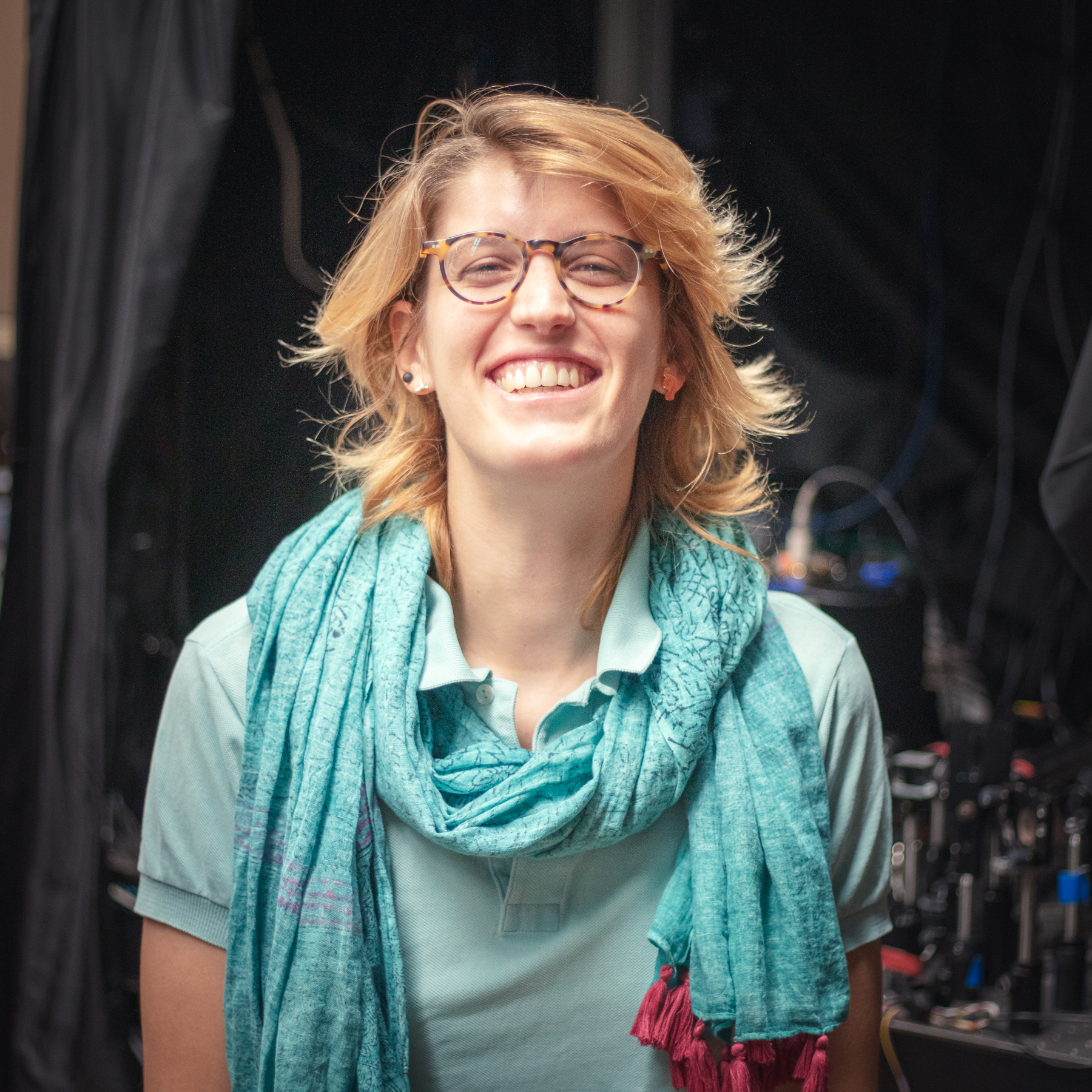

The Europlanet Early-Career Medal is awarded to Francesca Miozzi for her experimental work on the interiors of rocky planets and exoplanets. Her recent high-pressure experiments suggest that magma oceans may dissolve substantial quantities of hydrogen and generate water during planet formation, a significant result with implications for planetary habitability and exoplanet demographics. Miozzi is also a dedicated mentor and community builder, convening workshops and fostering collaboration across career stages and fields.
The Europlanet Mid-Career Medal, which honours the memory of Paolo Farinella (1953-2000), is awarded to Ana-Catalina (Ina) Plesa for her contributions to planetary geodynamics. Her work on decoding the interior structures and dynamic histories of Mercury, Venus, the Moon and Mars, and bridging numerical modelling with geophysical and geological observations, has led to significant advances in our understanding of planetary interiors and evolution. She currently serves as Chair of ESA’s Solar System and Exploration Working Group and as a member of the Space Science Advisory Committee. Her dedication to fostering talent has also been recognised through her selection as a Humboldt Scout, which enables her to nominate researchers for Humboldt Fellowships.
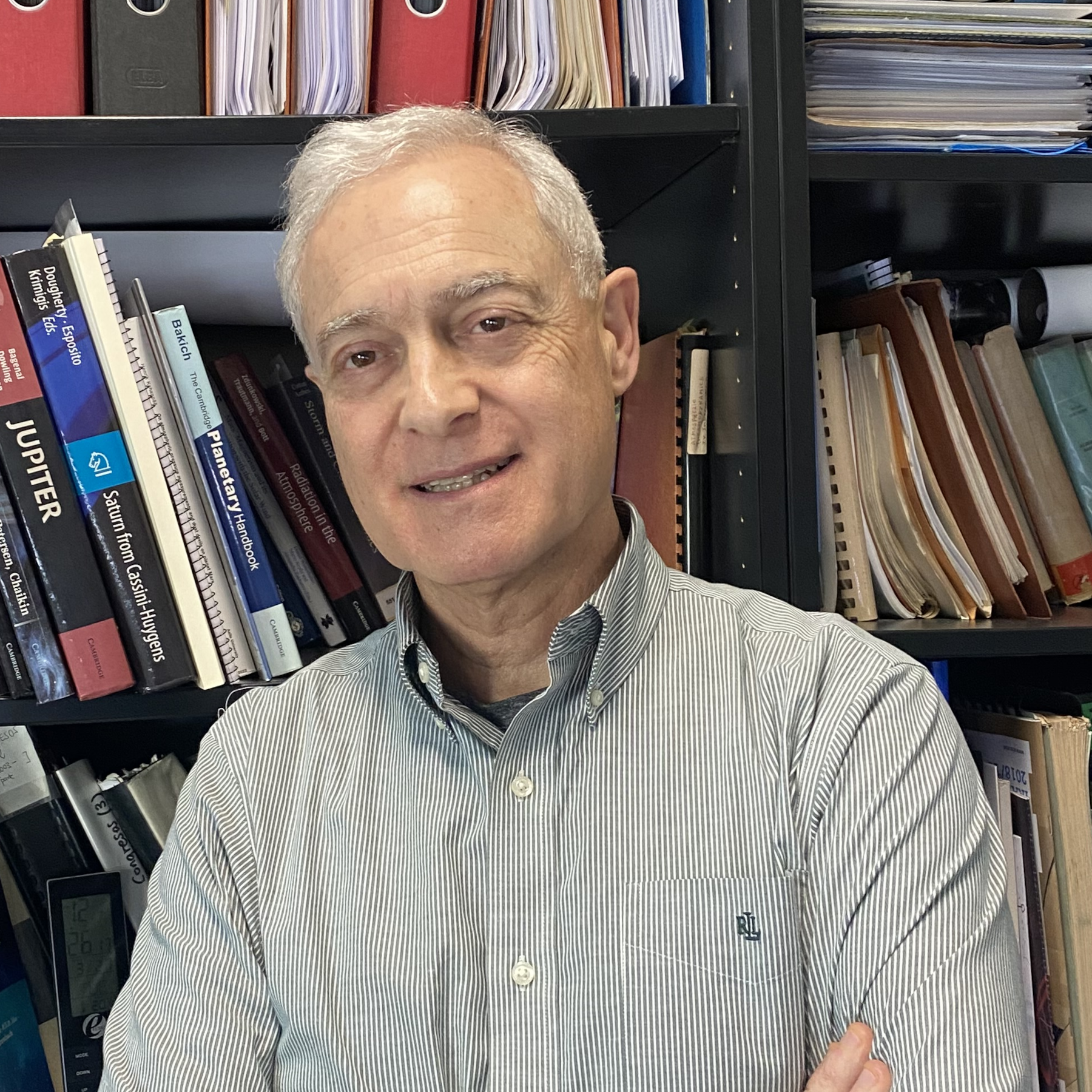
Finally, the 2026 Europlanet Lifetime Achievement Medal is awarded to Agustín Sánchez-Lavega. As a planetary and atmospheric scientist, he has shaped the field in Europe over the last 35 years through his scientific research, university teaching and mentoring, service to the science community, and public outreach initiatives. His research into the atmospheric dynamics of Venus, Mars, the giant planets and exoplanets has combined observations, numerical modelling, theoretical assessments and support of missions, including Venus Express, Mars Express, Mars 2020, and Juice. His contributions have revealed the peculiar dynamics of major convective storms on Jupiter and Saturn, including the planetaryscale disturbance caused by Saturn’s Great White Spot. He has served as a member of national and international scientific committees and working groups, supports the active pro-am collaborations in Spain, and has been deeply involved in establishing a Spanish community of planetary science that now underpins the Europlanet Regional Hub for Spain and Portugal.
Find out more about the Europlanet Medals
Europlanet Teams Days
Read article in the fully formatted PDF of the Europlanet Magazine.
Europlanet Teams Days are biannual opportunities for the Europlanet community to come together online to share ideas and brainstorm how Europlanet can best serve the planetary science community. Three editions of Europlanet Teams Days have been held to date, each using a fast-paced format of interactive group activities, facilitated dialogues, and breakout discussions that harness the input of Europlanet’s members and voluntary structures, including the Regional Hubs, Committees and Working Groups.
The latest edition on 20 May 2026 focused on funding, with sessions that highlighted projects supported through Europlanet’s current schemes, presented upcoming opportunities and invited the community’s ideas on how to shape future funding rounds.
The next Europlanet Teams Day will be held on 20 November and will focus on building the community of Europlanet facilities.
More about Europlanet Teams Days
Europlanet Facility Meets
Read article in the fully formatted PDF of the Europlanet Magazine.

Europlanet will hold its first Facility Meets event on 18-19 January 2027. The event will be hosted by the ISIS Neutron and Muon Source at Harwell, UK. The aim of Europlanet Facility Meets, which are anticipated to take place biannually, is to bring together facilities and users from academia and industry to exchange knowledge, foster collaboration and develop new avenues of interdisciplinary research.
Registration will open in September 2026.
bit.ly/EuroplanetFacilityMeets
Incoming EPSC Vice-Chair
Read article in the fully formatted PDF of the Europlanet Magazine.

Wladimir Neumann is the Incoming Vice-Chair of the EPSC Executive Committee. He will start to take on the leadership of the organising body for Europlanet’s annual meeting following EPSC2026. He follows Noah Jäggi, who will continue to support EPSC as Outgoing Chair over the coming year.
As a lecturer and thesis supervisor at the Institute of Geodesy, Technische Universität (TU) Berlin and the Macau University of Science and Technology (MUST), Wladimir is committed to building collaborations at the interface between the community and next-generation scientists. He has been involved in EPSC since 2018 as session convener and as part of the Scientific Organising Committee (SOC) in 2023. Wladimir also has over a decade’s experience in organising sessions at the Annual Meteoritical Society Meeting and workshops at the International Space Science Institute (ISSI), and has a strong interest in outreach
EPEC Annual Week 2026
Read article in the fully formatted PDF of the Europlanet Magazine.

The Europlanet Early Career (EPEC) Network hosted its 8th Annual Week at the Laboratoire de Planétologie et Géosciences at the Université de Nantes from 25-29 May 2026. EPEC Annual Week is a yearly conference intended to give early career researchers and professionals a taste of academic conferences and a chance to meet like-minded colleagues beyond their home country.
In the 2026 edition, braving the heatwave in Nantes, participants followed a programme of science talks across a broad range of topics from icy moons to space debris, participated in a workshop on science communication, and asked questions to experts from industry during a discussion panel. Annual Week continues to grow, with over 40 participants joining this year. EPEC is now looking ahead to the EPEC@EPSC events that will run in The Hague at EPSC2026, and its latest collaborative symposium with AbGradE (Astrobiology Graduates in Europe).
For more information about EPEC, Annual Week, and other activities, visit: europlanet. org/early-careers-network.
Europlanet Evaluation Featured in Nature Astronomy
Read article in the fully formatted PDF of the Europlanet Magazine.
Evaluation of the impact of the Europlanet 2024 Research Infrastructure (RI), a €10 million project funded by the European Commission (EC), has been featured as a case study in the journal Nature Astronomy. The Europlanet 2024 RI project provided access to the world’s largest coordinated collection of planetary simulation and analysis facilities, virtual access to data services and tools, funding for upgrades to facilities and programmes, and a range of activities to support the community. From the proposal stage, a social scientist, Jen DeWitt, was recruited as Impact Evaluation Officer and embedded in the project to delve into and document its results, outcomes and longer-term impacts.
The comment piece in Nature Astronomy highlights how having robust evaluation built into a project from the beginning leads to high-impact science and an outwards looking ethos that benefits the whole planetary community. Key findings from the evaluation also show that the networking and personal contacts associated with participation in the project’s activities, particularly the Transnational Access visits to laboratories and field sites, lead to better science, new avenues of research and long-lasting collaborations that would not have otherwise occurred.
Europlanet has now established an Evaluation Unit that not only oversees impact evaluation of its own activities, but offers evaluation support and consultancy for external organisations who would like to develop an evaluation framework or implement an impact evaluation of their activities.
GMAP Winter School 2026
Read article in the fully formatted PDF of the Europlanet Magazine.

The Europlanet GMAP Winter School took place from 26-30 January 2026. The Winter School, which allows both synchronous and asynchronous participation, is a flagship annual event for Europlanet to provide training on the production of planetary geological maps of a range of Solar System bodies.
Building on past editions, the 2026 school covered introductory knowledge about coordinate reference systems, software tools and planetary data, the geology of key features on Mars, Earth and the Moon, and feasibility studies for future exploration. The school had 312 registered participants and 64 attendees went on to receive certificates in recognition of their work in creating high-quality planetary mapping products. The GMAP Winter School was co-funded by Europlanet and the Dipartimento di Geoscienze, Università Degli Studi Di Padova. Registration for the next Winter School will open at the end of 2026.
OPTICON Alliance Calls for Observing Time
Read article in the fully formatted PDF of the Europlanet Magazine.

The Europlanet Telescope Network has joined forces with the OPTICON Alliance to support access to optical facilities. Observers from the planetary community are encouraged to apply. A call in March 2026 attracted applications, with 17 proposals awarded observing time. A further call will be launched in the autumn of 2026.

Community News
Launch of Europlanet Colombia
Read article in the fully formatted PDF of the Europlanet Magazine.

Our first Regional Hub outside Europe, Europlanet Colombia, was launched on 8 November 2025 with an event at the Maloka Interactive Science and Technology Centre in Bogotá. The aim of Europlanet Colombia is to promote collaborative networks that will drive the region’s scientific future and strengthen high-impact research. This new Europlanet contact point in Colombia will foster collaboration on cutting-edge projects across a wide range of disciplines related to planetary science, astrobiology and astrochemistry, astronomical instrumentation, education and outreach, heritage astronomy and indigenous knowledge systems.
The inauguration event highlighted some of the most significant national research initiatives that relate to planetary science. The 120 attendees had opportunities to find out more about Europlanet and engage with Colombians who work in the field. Speakers from Universidad del Valle and Pontificia Universidad Javeriana travelled from Cali to attend. Members of RECA Educación, winners of the Europlanet Prize for Public Engagement 2025, gave a presentation on their work to engage schools and students across Colombia. Video messages were also sent by members of the international planetary community and Europlanet.
https://europlanetcolombia.org
Winners of Europlanet Iberian Awards
Read article in the fully formatted PDF of the Europlanet Magazine.
The Europlanet Iberian Hub has announced the winners of this year’s early-career and amateur prizes. The Abraham Zacut Prize for best PhD thesis has been awarded jointly to Amadeo Castro González (thesis title: Exoplanet Exploration in the Context of the PLATO Mission: From Detection to Population Studies) and Asier Munguira Ruiz (thesis title: Characterisation of the Planetary Boundary Layer of Mars with MEDA Data from the Perseverance Rover). The Pedro Nunes Prize for best Master’s thesis has been awarded to Isabel Santos de Sousa (thesis title: Sustainable Space Habitats: Cyanobacterial Biomass as Feedstock for Fungal Biotechnology). The Europlanet Iberian Solar System Amateur Astronomy Award has gone to Pau Montplet Sanz for his contributions to the planetary science community, including high resolution imaging of Solar System objects, meteor observations and public outreach activities.


Hungarian Astronauts in London
Read article in the fully formatted PDF of the Europlanet Magazine.
In March, Europlanet joined the HUNREN Hungarian Research Network at Space-Comm Expo Europe in London, one of Europe’s leading events for the space research and industry sector. Visitors had the opportunity to meet and hear from the Hungarian astronaut, Tibor Kapu, who flew on the Axiom-4 mission in 2025, and his back-up, Gyula Cserényi. The two astronauts and representatives of HUN-REN and the HUNOR Hungarian Space Programme also participated in an event at the Hungarian Embassy in London on 5 March. A panel discussion on building national space capability and fostering international partnerships was hosted by the Hungarian Ambassador and moderated by Europlanet’s Nigel Mason
Europlanet Ireland and UK Hub Research Visit Prize
Read article in the fully formatted PDF of the Europlanet Magazine.
The Europlanet Ireland and UK Hub has launched a prize of up to €1,000 to support a research visit by a planetary or space scientist travelling to another institution within Ireland and the UK.
The inaugural prize was awarded to Holly Raynor, a PhD candidate at Birkbeck, University of London. Holly’s PhD focuses on the operational capabilities of instruments aboard the Rosalind Franklin rover, with the goal of developing and informing future science operations for the mission. The award will support a visit by Holly to Aberystwyth University, where she will collect data from a set of analogue samples using the Aberystwyth University PanCam Emulator (AUPE) and spectrometers covering the spectral range of the Enfys instrument. A key aim of this work is to quantify how the rover’s instruments overlap and enhance each other’s outputs, enabling flexible and reactive geological analysis within the mission’s limited resource constraints.
Get Set for Asteroids2029
Read article in the fully formatted PDF of the Europlanet Magazine.
This year’s Asteroid Day – 30th June 2026 – marked the launch of a worldwide initiative to support the UN International Year of Asteroid Awareness and Planetary Defence in 2029. Inspired by the close flyby of asteroid (99942) Apophis on 13 April 2029, space agencies, scientific institutions, educational organisations and communication networks are collaborating on events and activities to raise global awareness of asteroids, promote planetary defence, and celebrate international collaboration in understanding and protecting Earth.
Apophis poses no danger of hitting Earth but, at its closest approach of 32 000 kilometres, it will skim closer to Earth than satellites in geostationary orbit. Around 2 billion people from parts of Europe, Africa and Asia will potentially be able to see it with the naked eye in the night sky. The International Year of Asteroid Awareness and Planetary Defence 2029 (referred to colloquially as Asteroids2029) was proclaimed by the UN General Assembly in 2024 with Resolution 79/86 to take advantage of the unique occasion of the close approach of asteroid Apophis with the Earth.
Planning for activities for Asteroids2029 is underway and will take place locally, nationally, regionally and internationally. The initiative aims to raise awareness of asteroids as scientific treasure troves for understanding the formation of the Solar System, and highlight the international collaborations already underway to monitor and mitigate asteroid impact risks. Keep an eye on the Asteroids2029 website to find out how you can get involved.
Astrobiology Workshop in Lithuania
Read article in the fully formatted PDF of the Europlanet Magazine.
Tardigrades, also known as ‘water bears’ or ‘moss piglets’, are the first and – so far – the only animals to have survived in open space.
On 18-20 September 2025, the Molėtai Astronomical Observatory of Vilnius University (VU) hosted an international Astrobiology Workshop in which students from 11 countries and a variety of scientific backgrounds came together to learn about tardigrades, collect them in the field and study them in the laboratory.
The workshop was supported through the Europlanet Committee Funding Scheme 2025, with sponsorship from European Space Agency’s Academy, the Embassy of Spain in Lithuania and the Polish Institute in Vilnius.
ACM 2026 in Poznań
Read article in the fully formatted PDF of the Europlanet Magazine.
The Asteroids, Comets and Meteors (ACM) conference takes place at a different location around the world every three years. From 6-10 July 2026, it was hosted at the Centre for Innovative Education at the Poznań University of Technology in Poland. The conference brought together over 600 researchers to discuss asteroids, comets and meteors in a welcoming environment with a strong focus on collaboration and community building.
The Europlanet Central Europe Hub sponsored conference waivers for three early-career participants and Europlanet had an exhibition stand at the meeting. The new images and results from the flyby of asteroid Torifune by JAXA’s Hayabusa2# mission, which took place on the first day of the conference, were among many highlights of the week.
On the final day, excursions for participants included a trip to the Earth Museum, located at the Faculty of Geographical and Geological Sciences of the Adam Mickiewicz University (AMU), and the Morasko Meteorite Nature Reserve, the site of well-preserved meteorite craters formed by an iron meteorite fall over 5,000 years ago. A consortium involving AMU, other universities in Poznań and regional organisations, are working on plans to build a science centre close to the site and are now actively seeking donations of artefacts. The next ACM will take place in Macau, China, in 2029.
EAS 2026
Read article in the fully formatted PDF of the Europlanet Magazine.
The European Astronomical Society (EAS) annual meeting 2026 took place from 29 June – 3 July at the Swiss Convention Centre in Lausanne, Switzerland, with over 1500 participants.
Europlanet was presented in the community sessions and had a stand in the exhibition. This drew attention with a comet scent dispenser that attracted diverse responses from visitors, ranging from jasmine and mushrooms to Grandma’s house and trains in Eastern European countries. The stand was crewed by the Europlanet Executive Office team and Swiss colleagues, whose registrations were supported by the Europlanet Switzerland Hub.
EAS 2026 also hosted a planning meeting for the proposed European Astrosciences Forum (EAF), which aims to create a discussion platform for agencies, networks and infrastructures in the astronomy, astroparticle physics and space sciences domain. Further planning sessions will be held in the autumn.
Europlanet Committee Funding Scheme Awards 2026
Read article in the fully formatted PDF of the Europlanet Magazine.

Europlanet’s scheme to support funding proposals of €1000 to €5000 from its Regional Hubs, Committees, Working Groups and Members has approved seven projects in 2026:
- €3800 – Software for analysing comet images. Europlanet funding is being used to help upgrade the KOPR software tool, which supports the planning and processing of comet observations and the export of data to international databases. Nearly 12,000 observations have already been submitted to the Comet OBServation (COBS) database through this tool. Following the updates, a series of three training workshops will be held for observers. The work is also supported by the Czech Society for Interplanetary Matter non-profit association. (Submitted by the Central Europe Hub.)
- €1410 – Strengthening the Europlanet Community in Colombia. A workshop on planetary science, astrobiology and astrochemistry was supported by Europlanet funding in May 2026 in Colombia. The workshop was held simultaneously in Bogotá and Cali, with a programme that included scientific talks, networking sessions and educational activities. The events brought together students, researchers and professionals interested in planetary sciences and astrobiology, supporting the development of a Europlanet community in Colombia. (Submitted by Europlanet Colombia.)
- €3250 – Summer School on Machine Learning in Solar and Planetary Research. A three-day Europlanet Summer School will be held on Machine Learning (ML) in solar and planetary research, jointly organised by EPEC and the Europlanet ML Working Group (WG). The event will run in parallel with the annual Workshop on Solar Influences on the Magnetosphere, Ionosphere and Atmosphere in Primorsko, Bulgaria from 16-18 September 2026. The school targets early-career scientists and will combine lectures with hands-on practical sessions. Core topics will include the use of ML for solar activity and space-weather forecasting, planetary imaging and spectral analysis, and geospatial data fusion. (Submitted by EPEC.)
- €3000 – Industry-Academia Pairing Scheme. This project will pilot an industry-academia pairing scheme inspired by the European Geosciences Union’s science-policy pairing model. Early-career scientists from the Europlanet community will be matched with industrial hosts or mentors in a country other than their own. Visits of up to one week will take place at the industrial host’s facilities and will offer a structured, short-term immersion in an industrial environment, with eligible travel and subsistence costs covered by Europlanet. (Submitted by the Industry WG)
- €4000 – PETRAS Summer School 2026. The Planetology, Exploration, Terrestrial analogues, Robotics, Astrobiology and Spectroscopy (PETRAS) summer school is an annual educational event that takes place on the island of Vulcano in the Aeolian archipelago, Italy. The programme combines lectures and field campaigns that offer participants an overview of planetary sciences from a theoretical and practical point of view. The 2026 edition took place from 27 May – 01 June 2026. Europlanet funding supported the accommodation costs for early-career researchers participating as speakers. (Submitted by the Italy Hub.)
- €5000 – Inspiring the Next Generation of Nordic-Baltic Women in Planetary Science. Europlanet funding is supporting the Liisi Oterma Medal, a new award recognising outstanding contributions by women in planetary science in the Nordic- Baltic region. Named after the Finnish astronomer Liisi Oterma, a pioneer in the study of comets and asteroids and the first woman in Finland to obtain a PhD in astronomy, the medal aims to celebrate scientific excellence and provide role models for early-career researchers. The project will also expand the AstrónomAs travelling exhibition, which has already been successfully presented in Lithuania and Estonia. New panels will be developed to highlight pioneering and contemporary women astronomers from Nordic and Baltic countries. The exhibition will be translated where necessary and printed for display in universities, research institutes, science centres and public venues across the region. (Submitted by the Northern Hub.)
- €3260 – Europlanet Workshop on the Tumbleweed Mars Rover. Europlanet funding will support a one-day interactive workshop at the University of Oslo designed to engage early-career researchers and MSc students in the future of distributed planetary exploration using wind-driven ‘Tumbleweed’ rovers. The event will combine Marsrelated and interdisciplinary science with hands-on mission design, offering participants a practical understanding of how swarm-based rover architectures can expand planetary surface investigations. Participants will work in groups to brainstorm and assemble a prototype ‘payload bay’ tailored for a Tumbleweed mission. Each payload bay will be evaluated using a scaled Tumbleweed prototype, and the best-performing team will receive a prize. (Submitted by the Northern Hub.)
- €1300 – XXVII Congreso Estatal de Astronomía (CEA). The XXVII CEA Astronomy Congress will be organised by the Sabadell Astronomical Society in Sabadell on 9-12 October 2026, with over 300 amateur and professional attendees expected to attend from Spain and neighbouring countries. The meeting aims to advance amateur observation techniques and serve as a platform to boost public engagement. With three solar eclipses visible from Spain in 2026- 2028, it will be a timely opportunity to share results from the first eclipse and discuss lessons learned for the next ones. Europlanet funding will enable reduced registration fees for young astronomers, supporting participation by students and early‑career amateurs. (Submitted by the Spain-Portugal Hub).
- €5000 – Probing Haumea’s Rings and Shape: A Global Observation Campaign for the 4 May 2026 Stellar Occultation. On 4 May 2026 a stellar occultation by the dwarf planet Haumea offered a rare opportunity to study this trans- Neptunian system and its remarkable ring structure. Researchers at the Instituto de Astrofisica de Andalucia (IAA-CSIC) led an international observing campaign across Europe, the Middle East and Asia to record the event. Multiple coordinated observations were made along the shadow path and shared through an Occultation Portal, enabling remote participation and data sharing by observers worldwide. Results are now being analysed and will be used to probe the structure and optical depth of Haumea’s rings, improve constraints on the triaxial shape of the body, and search for additional rings or satellites. The campaign fostered collaboration between researchers, the wider astronomy community and the public. Europlanet funding supported logistical coordination of local observing stations, travel for key amateur observers to optimal locations, and campaign organisation activities. (Submitted by the Spain- Portugal Hub).
Solar Eclipse 2026
Read article in the fully formatted PDF of the Europlanet Magazine.
On 12 August 2026, the first total solar eclipse for mainland Europe since 1999 was visible from parts of Russia, Greenland, Iceland and Spain. Members of the Europlanet community are invited to share their images of the eclipse at EPSC2026.
Annual Meeting Launched for German Planetary Community
Read article in the fully formatted PDF of the Europlanet Magazine.
The German Society for Planetary Research (DGP), which launched in May 2025, and the Europlanet Germany Regional Hub organised their first annual planetary science conference (DGP 2026) from 16- 18 March 2026 in Berlin. The 212 participants at the inaugural meeting included members of DGP and Europlanet, as well as researchers from the wider planetary science community and space industry. The aim for the annual meeting is to establish an inclusive forum for everyone engaged in planetary sciences in Germany, including Solar System science, exoplanet research and space engineering.
Remembering Riccardo Pozzobon
Read article in the fully formatted PDF of the Europlanet Magazine.
The planetary community was deeply shocked and saddened by the loss of Riccardo Pozzobon in a tragic accident while on a research trip to the Mendenhall Glacier, Alaska, on 2 September 2025.
Riccardo graduated in Geology and Technical Geology in Padova in 2010 and, after obtaining his PhD, specialised in the field of planetary geology. A talented and inspirational researcher, Riccardo participated in numerous international missions, published significant studies, including discoveries on lunar lava tubes, and was a lecturer in the Digital Geological Mapping at the University of Padova. He was also an instructor in the PANGEA training course for astronauts at the European Space Agency.
For Europlanet, he was a key driver of the Geological Mapping (GMAP) activity and, in particular, the GMAP Winter School. The online Winter School, established during Covid in 2021, is now a flagship event in the Europlanet calendar, attracting hundreds of participants each year. In May, a lecture theatre in the University of Padova’s Earth Sciences Complex was dedicated in his honour, and the asteroid 86029 Riccardopozzobon has also been named in his memory. Riccardo’s commitment to curiosity, collaboration and community-building is still strongly felt within Europlanet.
He is very much missed.
