
Growing Tea on the Moon?

Parmida Abdollahi (University of Kent, UK) explains why tea may hold the key to growing crops in space.
Read article in the fully formatted PDF of the Europlanet Magazine.
If humans are serious about becoming a multi-planet species, then growing plants in space becomes a necessity. Along with rockets, habitats and high-tech suits, humans will need a reliable source of food to survive on the Moon or Mars. For decades, astronauts have relied on prepackaged meals shipped from Earth. That works for short-term missions, but for long stays or deep space travel, it quickly becomes impractical as every kilogramme launched into space costs a surprising amount of money, fuel and precious cargo space.
Early space missions used to be largely about endurance. They focused on questions such as:
- Could humans survive launch?
- Could we function in microgravity?
- Could we even make it back alive?
Those questions, while not fully closed, are no longer the central challenge. The frontier has shifted toward sustainability, and sustainability, whether on Earth or beyond, inevitably leads back to growing plants.
Now, the key question for humans going into space is whether we can stay there long term. In the context of systems that can operate for months, years or even indefinitely without constant resupply from Earth, plants become more than just food: they are the foundation for creating long-term settlements on the Moon and, eventually, on Mars. This makes the work on growing tea in lunar and martian simulants at the University of Kent anything but trivial.
What if astronauts could grow their own food?
The idea of space agriculture is now becoming a serious focus of research. You cannot build a long-term human presence on the Moon or Mars if every calorie, every litre of water, and every breath of oxygen has to be launched from Earth. Plants could not only provide fresh food for the crew, but they could also play a much bigger role. Growing plants in space can help recycle carbon dioxide into oxygen, contribute to water purification, and create a more liveable environment overall, all of which are major challenges of spending time on space missions.
In the closed systems needed for space habitats, plants could be essential for solving some of those issues, as well as contributing to the astronaut’s mental health. Living in space is physically demanding and psychologically intense. Confined spaces, isolation, and distance from Earth can take a huge toll on a person’s psyche, and something as small as caring for a plant, watching it grow, and tending to it daily can offer a sense of routine and connection to life on Earth. Even though this may sound minor, in a space mission it is significant and can have tremendous benefits.
One problem remains: plants are not perfect machines and growing them in space would be very difficult. You can’t just put seeds in soil and wait for them to grow; you need to build an entire ecosystem from scratch in a place where none of the usual rules apply. However, this could be more helpful than it might sound initially. The adaptability that plants provide is extremely valuable to research. This makes plants a great option for studying sustaining life beyond the Earth, as we can learn how they adapt to different environments, making their slight unpredictability a huge advantage.
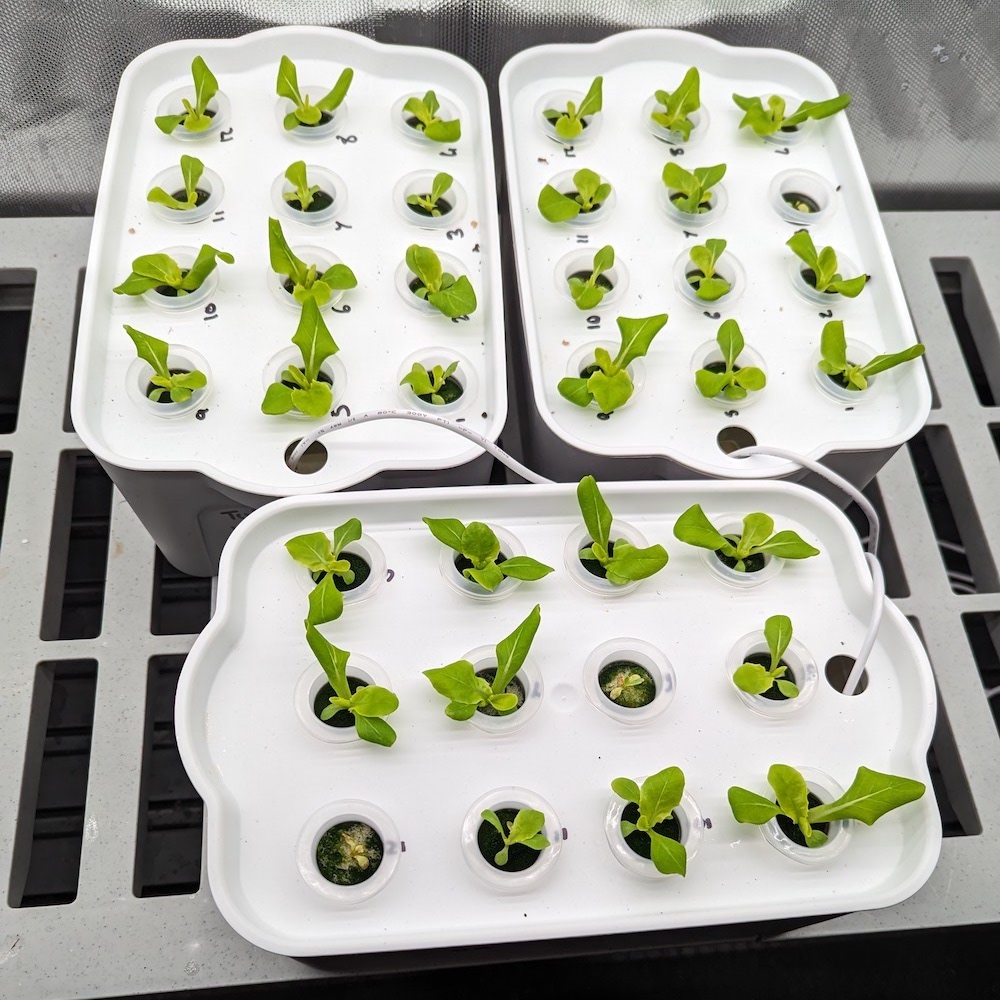
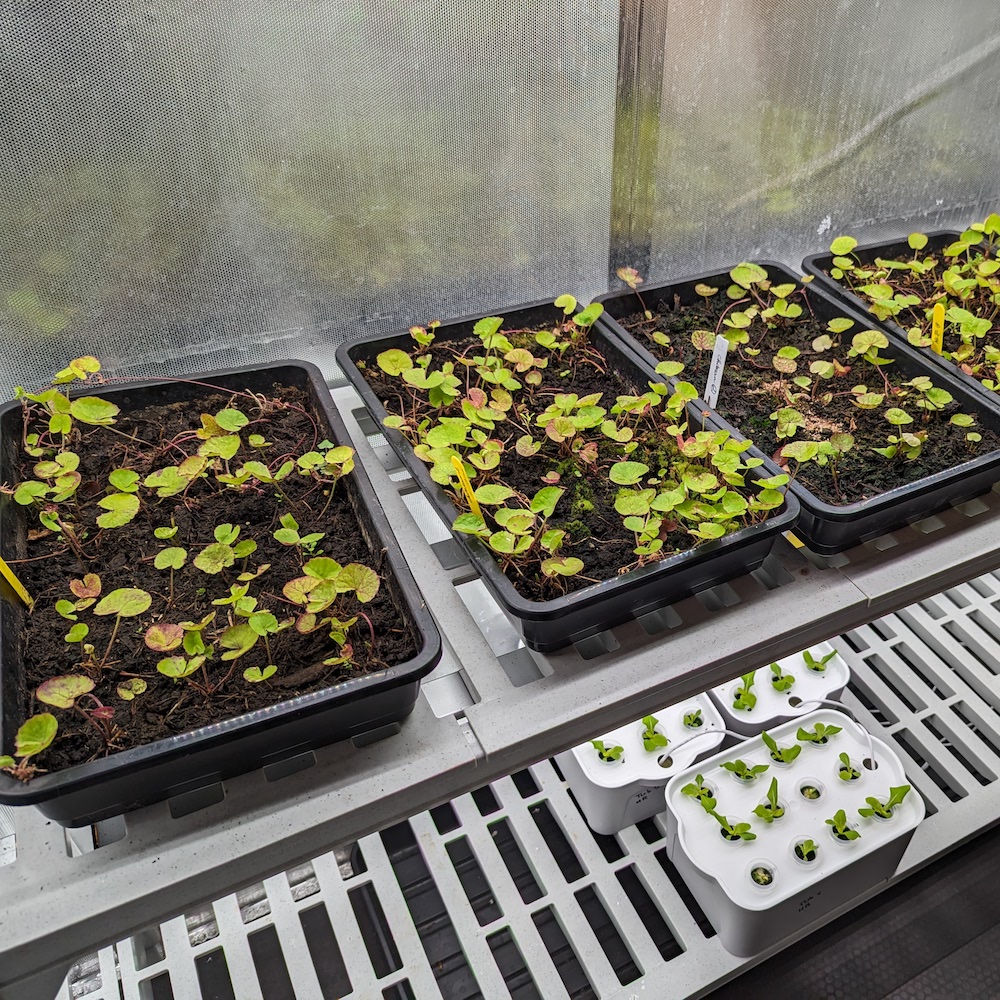


Space soil?
One of the more striking takeaways from this type of research is just how unsuitable extraterrestrial environments really are. Both Mars and the Moon are fundamentally hostile environments for life. What we call soil on Earth is the product of billions of years of biological and geological interaction. It’s alive in a very real sense. However, on Mars or the Moon, there are no rich mixes of organic matter, microbes and nutrients. Instead, their surfaces are covered in regolith, which is a dusty, rocky material formed by millions of years of impacts and weathering. Lunar and martian regolith are effectively sterile and not exactly plant-friendly. Regolith contains very little of what plants need to grow, and it can include elements that are quite harmful as well. Moreover, its physical structure can make things even more difficult, as some types of regolith don’t hold water well, while others might trap too much water. Both conditions are harmful for plant growth, so managing moisture becomes tricky. For this reason, basic plant survival is very much worth paying attention to.
One of the more subtle implications of this research is that space agriculture may end up looking nothing like agriculture on Earth. We tend to picture farming as fields, soil and sunlight, and associate it with different seasons. But in space, none of those assumptions necessarily hold. Light could be artificial, water will be tightly controlled, and soil may be heavily modified or partially replaced with engineered systems. Since we can’t easily run large-scale farming experiments on the Moon or Mars – yet – scientists use martian and lunar soil simulants. These are Earth-made materials designed to mimic the real thing as closely as possible. In that sense, experiments with regolith are as much about understanding limitations as they are about finding solutions to address some of the aforementioned challenges.
Fundamental questions need to be considered. Do we adapt the plants to the environment, or the environment to the plants? And do we rely on natural processes, or engineer around them? The answers are likely to be a mix of both scenarios, relying on natural processes while engineering some aspects of the system. Techniques like seed treatments, controlled growth chambers, and gradual soil conditioning are all points to consider for a hybrid approach.
Why tea?
At first glance, tea might seem like an odd choice. It’s not a calorie-rich staple like potatoes or wheat, and it can’t sustain astronauts on its own. However, the plant used to make tea, Camellia sinensis, is a useful test subject. It grows relatively slowly, which makes any changes to its growth easier to track over time. More importantly, it’s both resilient and sensitive. Tea is tough enough to survive in challenging conditions, such as extraterrestrial soil, but responsive enough to environmental stresses to show clear signs when something isn’t right. That combination makes tea ideal for such experiments because, if a plant is struggling, it shows. Likewise, if the plant is adapting well, researchers can see that too.
It might be easy to underestimate experiments on space agriculture because they operate on such a small scale. Plants grown in controlled conditions don’t feel like a revolution. However, understanding how a single species responds to stress can inform how we approach entire ecosystems in the future. Learning how water behaves in simulated lunar soil might influence the design of future habitats. Even something as niche as seed treatments could become standard practice in off-world agriculture. There’s also a cumulative effect: each experiment answers a very specific and narrow question but, together, they can build an entire framework for how to approach agriculture in space settings. Over time, that framework starts to resemble something practical.
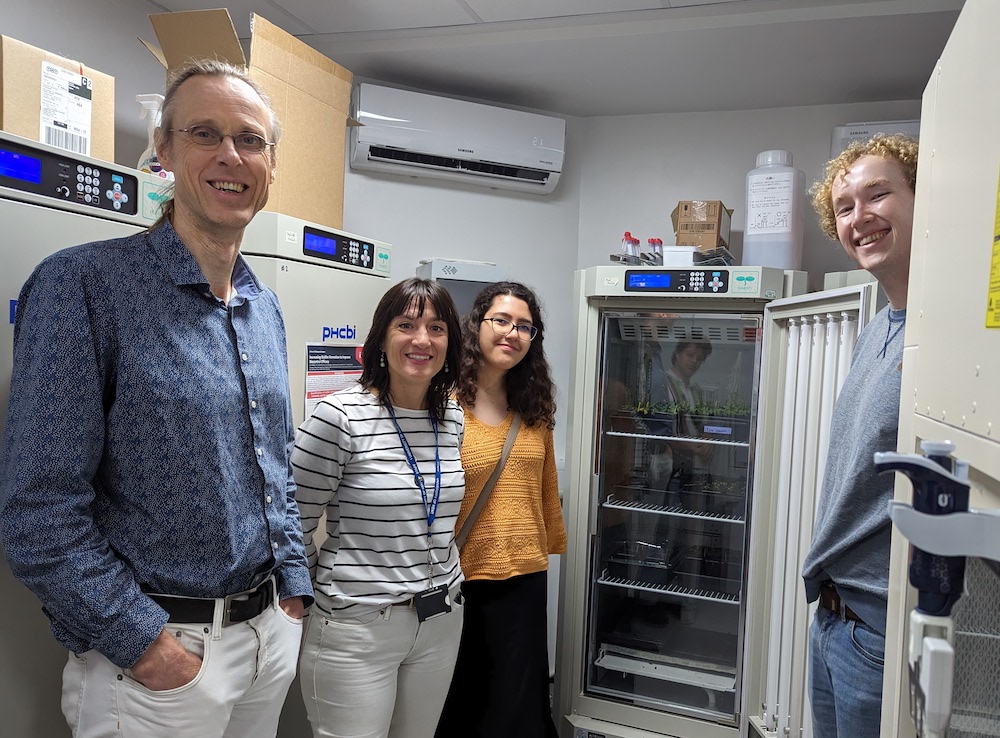

Putting tea to the test
In initial experiments, the University of Kent team grew tea plants in two types of simulants: one based on martian soil and the other based on lunar regolith. For comparison, more familiar growing media like compost were also used.
The contrast in results was immediate and dramatic. In the martian simulant, the plants struggled from the very start. Growth was stunted, leaves failed to expand properly and, over time, the plants began to deteriorate. The environment was simply too hostile, lacking in nutrients and possibly too chemically challenging for the plants to cope. The lunar simulant, however, offered a more nuanced picture: the plants didn’t thrive, but they did survive. It was a modest success, but an important one: it suggested that lunar regolith, while far from ideal, might be workable under controlled conditions.
Survival, even at a minimal level, suggests that lunar regolith might be somewhat practical for future research – if not in raw form, but as part of a controlled and carefully managed system. It hints that the Moon could serve as a testing ground for off-world agriculture in a way that Mars, at least initially, cannot. The fact that tea plants could persist, to some extent, in lunar-like material suggests that future space farmers might not need to start entirely from zero. The failure in martian simulant is just as important. It’s a reminder that not all extraterrestrial environments are equally adaptable and that some may require far more intervention than others.
Can plants change the soil?
One particularly interesting question is whether plants might actually improve these hostile materials over time. On Earth, soil is not a static substance and is constantly being shaped by biological activity. Roots break up soil particles, microbes transform chemicals, and organic matter gradually builds up. Over time, this creates the rich, fertile environments that terrestrial agriculture depends on. Could something similar happen in space? To explore this and gain more data, an analysis can be carried out of the simulants before and after plant growth, looking for subtle changes in regolith structure and composition. Even small shifts could be important: if plants can begin to ‘condition’ regolith, making it slightly more Packets of lunar and martian simulant. suitable for future growth, that could be a key step toward sustainable space farming.
Beyond tea: growing food that matters
Of course, astronauts can’t live on tea alone. As a result, alongside these experiments, the team has also been studying crops that are more directly useful sources of food.
This might sound ambitious but unpromising, due to the dry, lifeless and stubbornly compact nature of the soil. But, with a bit of care, lunar regolith can support life. When seeds of familiar crops like leafy greens or small root vegetables are planted in lunar simulant, they can give surprising and encouraging results. Experiments with various species have revealed both the promise and the several issues for growing plants long term. Such challenges included roots struggling to penetrate the soil, while limited water retention demands precise irrigation. Still, each small green shoot pushing through the simulants represents a step towards sustainable life-support systems for future space habitats, where growing fresh food could be critical. Water drains unpredictably, roots meet resistance, and every stage of growth needs precise attention. However, the idea that future astronauts might one day harvest fresh salads grown in lunar soil is indeed very promising.
A small step toward a big future
Taken together, these experiments paint a mixed picture of space agriculture. Growing plants in raw martian soil – at least in its current form – looks extremely difficult. Lunar regolith, on the other hand, may offer a starting point, even if it requires careful management and likely some modification.
What’s encouraging is that growth is possible at all. Even limited success suggests that, with the right combination of techniques – choosing suitable plants, treating seeds, managing water, and perhaps altering the soil itself – farming beyond Earth could become viable.
Future space farms will probably look very different from anything we see on Earth, relying on controlled environments and carefully engineered systems. But the basic principle remains the same: plants grow, adapt and support human life.
Beyond being food, plants have the potential to bring a piece of Earth’s living rhythm to a place that has never known it, turning an alien landscape into something a little more like home.
Parmida Abdollahi is a final year Physics student. She has been working on a project initiated by Prof Nigel Mason and Dr Sara Lopez-Gomollon at the University of Kent and Dr Maarten Roos-Serote of Lightcurve Films to test crop viability and tea cultivation in martian and lunar regolith simulant.