EAS Annual Meeting Subsidised Participation for Early-Careers
The Europlanet Switzerland Hub is offering a subsidy for the participation of Swiss-based early-career scientists in the 2026 Annual Meeting of the European Astronomical Society (EAS), to be held in Lausanne from 29 June – 03 July 2026. The application deadline is Wednesday 22 April 23:59 CEST using the form below. For any question, please contact the Hub Chair at thibaut.roger@unibe.ch. You can find more information about the EAS Annual Meeting, including its schedule, on its website.
What does this call cover?
This call only covers early-bird (before 27 April) registration fees for early-careers to participate in the European Astronomical Society Annual Meeting 2026 in Lausanne. More info on registration for the conference can be found here.
Transportation and catering are not covered.
Any other annex fees are not covered either.
In exchange, the recipients will support the operation of the Europlanet stand at EAS Annual Meeting for 2 mornings or afternoons (for a total of up to 8h).
Guidelines for submitting a Hub funding request
Budget
The total envelope for this call is 1000€. This corresponds to a maximum of 2 recipients.
The evaluation committee reserves the right to attribute only part of this total budget.
Currently residing or working in Switzerland and Liechtenstein
An early-career scientist – i.e. Master’s student, PhD candidate, or researcher with <7 years since their last degree.
Scope of the initiative
Enables Swiss-based early-career researchers to take the opportunity of the EAS Annual Meeting 2026 taking place in Switzerland.
Provide them with an opportunity to network with researchers from across Europe and many scientific domains, and exchange scientific knowledge with them.
Provide support for the Europlanet stand operations during EAS Annual Meeting 2026.
Evaluation
The evaluation panel will be composed of two members of the Europlanet Executive Board/Office and the Switzerland Hub Chair.
Submission and answer
The call is open until 22 April 2026 at 23:59 CEST. Late or incomplete applications will not be considered.
Answers will be provided by 24 April 2026 23:59 CEST at the latest, to allow recipients to register for the conference before the early-bird deadline (27 April 2026).
Europlanet has opened a call for funding proposals of up to 5000 € to support the activities of its members. Proposals should be submitted by the Chair (or designated representative) of a Europlanet Regional Hub, Committee or Working Group (WG).
The deadline for the call is 16 March 2026. Projects proposed in the current call should be completed by the end of 2026.
To find out more about the call and application process, please see the call page.
You can also find out about projects funded in previous rounds of this scheme here.
EPSC-DPS2025: Bringing the Digital Revolution to Direct Exoplanet Imaging with PLACID’s LCD Technology
Joint Meeting of the Europlanet Science Congress and the American Astronomical Society’s Division for Planetary Science (EPSC-DPS2025) Press Release
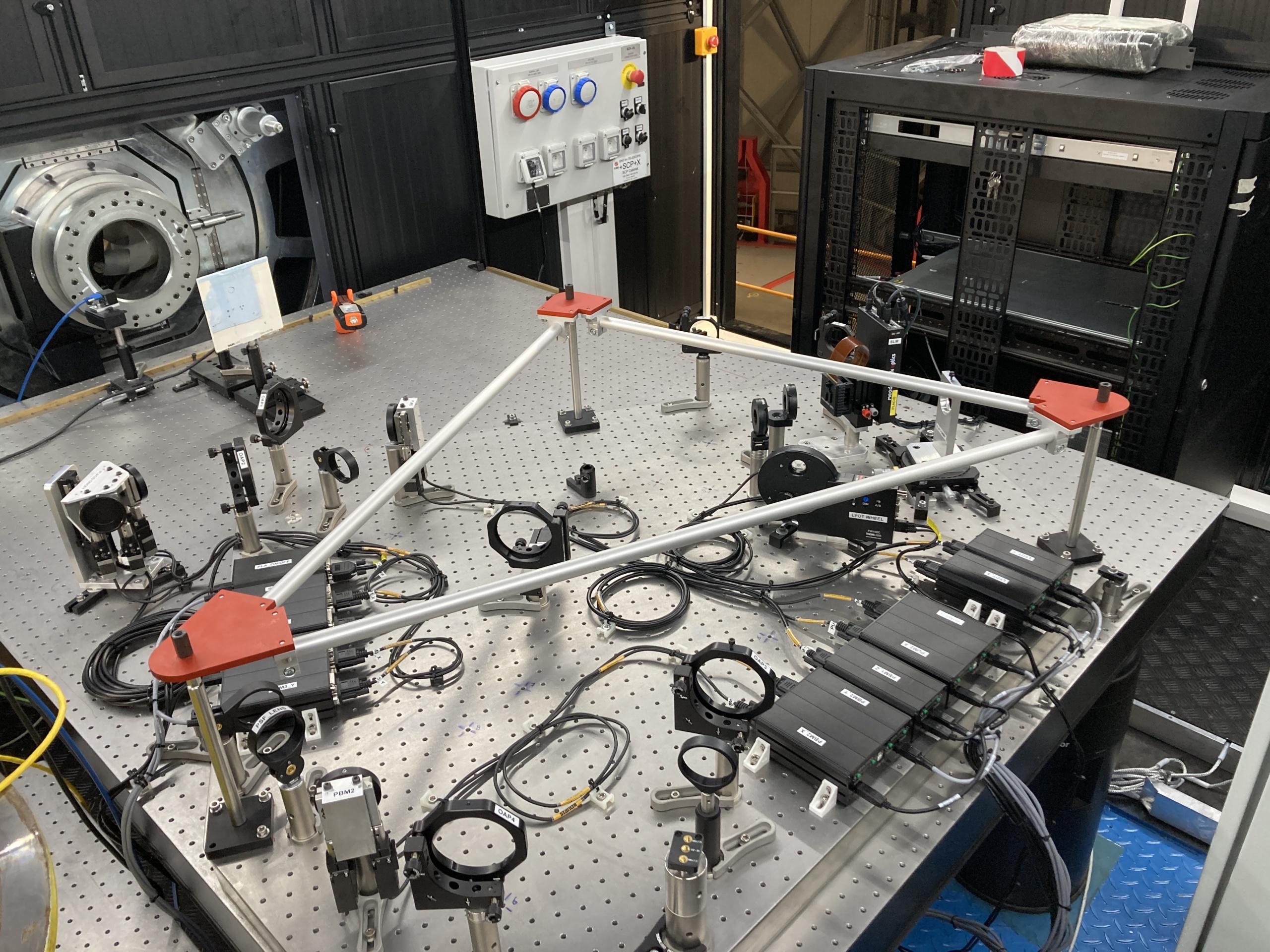
A game-changing instrument is set to improve the detection and direct imaging of planets outside our Solar System by harnessing the power of liquid crystals. The Programmable Liquid-crystal Active Coronagraphic Imager for the DAG telescope (PLACID) was installed earlier this year at the 4m-diameter telescope of the newly-built Eastern Anatolian Observatory (DAG) observatory in Eastern Turkey. Now in the integration and validation phase, the first on-sky observations of PLACID are expected in the first quarter of 2026.
PLACID, which has been developed by a team of Swiss researchers from the University of Bern in cooperation with the University of Applied Sciences Western Switzerland of Yverdon (HEIG-VD), will join the small club of direct high-contrast imaging facilities in the northern hemisphere. The technology and status of the instrument, as well as the science it will enable, were presented at the recent EPSC-DPS2025 Joint Meeting in Helsinki.
Most of the nearly 6000 exoplanets discovered to date have been found using indirect methods, which focus on periodic changes of the host star’s apparent properties to infer the existence of a planet. Direct imaging requires an ‘eclipse machine’, known as a coronagraph, to mask the light of a star and reveal any body orbiting it – planets, discs, or brown dwarfs. To date, only a few dozen exoplanets have been directly imaged, as it is highly challenging to take an actual picture of a dim planet next to its very bright host star. Nonetheless, direct imaging is infinitely valuable for scientists as it can provide unique insights into how planets form and their composition, particularly their atmosphere.
“With recent developments in technology and the construction of increasingly large telescopes, the future of exoplanet detection lies in direct imaging. PLACID is one of the stepping stones towards this future,” said Prof Jonas Kühn of the University of Bern in Switzerland, who leads the PLACID project. “It will revolutionise our approach to coronagraphs and bring them into the digital domain.”
Rather than placing a physical plate very precisely in the light path of a telescope, PLACID uses a Spatial Light Modulator (SLM) that relies on the optical properties of liquid crystals to change the optical path or ‘phase’ of light waves for each pixel across a screen. This allows very complex masks to be created at the click of a button.
“We use SLM screens all the time in every-day devices, such as our phones, TVs or computers. In PLACID, the liquid crystals influence how the light passes through each pixel, so we can display any mask we want, giving us an extreme adaptability,” explained Ruben Tandon, a doctoral candidate at the University of Bern and member of the PLACID team.
PLACID’s programming of advanced masks also gives it the exclusive capacity to do direct imaging of so-called circumbinary planets and proto-planetary discs – the cradles for planet formation – orbiting binary or multiple stars. With a traditional coronagraph, this is very challenging, since the unique and variable orbital configuration of each star system makes it almost impossible to set up plates that can block the light from the multiple stars. Thus, while such stars represent about 50% of all stars in our galaxy, no exoplanet orbiting more than one star has been directly imaged to date.
“With PLACID, we can simply adapt the mask in real time to perfectly block the light of any star systems we choose to observe through the night,” said Tandon, who compiled the catalogue of targets for the instrument. “While we will start by targeting the small number of exoplanets that have already been directly imaged to better understand the instrument behaviour, our next step will be to try to directly image exoplanets orbiting binary stars, which will be a first.”
The PLACID instrument, which has been almost a decade in development at the University of Bern, was assembled in the laboratory facilities of the HEIG-VD in Switzerland. After comprehensive laboratory testing to ensure it would meet the expected performances, the instrument was shipped to Turkey in early 2024 and delivered to the DAG telescope for installation in January 2025.
“As with any novel idea, building PLACID involved some risk, but we thankfully benefitted from the support of the National Center of Competence in Research (NCCR) PlanetS and the Division of Space Research and Planetary Science of the University of Bern, who enabled us to do early validation of the technology, before the Türkiye National Observatories (TNO) awarded us the procurement contract. And later, the ERC review panel funded the science exploitation,” said Kühn.
For the instrument performance to be fully harnessed, it also needs to be paired with an Adaptive Optics (AO) system, built by the team of Prof Laurent Jolissaint of HEIG-VD, which will reduce the effects of atmospheric turbulence. The two instruments are in their final stages of installation and will enable PLACID to observe its first targets in the first quarter of 2026.
“We are happy to welcome PLACID. Its capacities, coupled with our 4-meter class telescope, will lead to the first fully-European instrument in the northern hemisphere able to directly image exoplanets,” concluded Derya Öztürk Çetni, the PLACID instrument scientist from TNO.
Further information
Abstract: EPSC-DPS2025-1774. The Programmable Liquid-crystal Active Coronagraphic Imager for the 4-m DAG telescope (PLACID) instrument: Discovery Space and Status. Ruben Tandon, Liurong Lin, Lucas Marquis, Axel Potier, Derya Öztürk Çetni, and Jonas G. Kühn. https://doi.org/10.5194/epsc-dps2025-1774
The PLACID and RACE-GO projects have received funding from the Swiss State Secretariat for Education, Research, and Innovation (SERI) as a SERI-Funded ERC 2021 Consolidator Grant, project RACE-GO # M822.00084, following the discontinued participation of Switzerland to Horizon Europe. Part of this work has been carried out within the framework of the National Centre of Competence in Research PlanetS supported by the Swiss National Science Foundation under grants 51NF40 182901 and 51NF40 205606.
Contact Ruben Tandon PhD Candidate Physics Institute, Space Research & Planetary Science University of Bern Switzerland ruben.tandon@unibe.ch +41316843290
Prof. Jonas Kühn Assistant Professor Physics Institute, Space Research & Planetary Science University of Bern Switzerland jonas.kuehn@unibe.ch +41316844765
EPSC-DPS2025 Press Office press@europlanet.org
Notes for Editors
About the Joint Meeting of the Europlanet Science Congress and the Division of Planetary Sciences (EPSC-DPS) The Europlanet Science Congress (EPSC), established in 2006 as the European Planetary Science Congress, is the largest planetary science meeting in Europe. It covers the entire range of planetary sciences, with an extensive mix of talks, workshops and poster sessions, as well as providing a unique space for networking and exchanges of experiences.
EPSC joined forces for the first time with the American Astronomical Society’s Division for Planetary Sciences (DPS) for a joint meeting in Nantes, France, in 2011. This was followed by DPS-EPSC 2016 in Pasadena, EPSC-DPS 2019 in Geneva, and the return to the United States for the DPS-EPSC 2023 meeting in San Antonio. This year will mark the third iteration of a joint European-based meeting. The intent of the joint meetings is not only to connect the European and North American planetary science communities, but also to consolidate two major meetings and motivate planetary scientists from all over the globe to attend.
Follow on social media (Bluesky, X and LinkedIn) with the hashtag #EPSCDPS2025 for updates on the meeting.
About Europlanet Europlanet (europlanet.org) is a non-profit association and membership organisation that provides the planetary science community with access to research infrastructure, services and training. The Europlanet Association Sans But Lucratif (AISBL), established in 2023, builds on the heritage of a series of projects funded by the European Commission between 2005 and 2024 (Grant Numbers 871149, 654208, 228319 and RICA-CT-2004-001637) to support the planetary science community in Europe and around the world.
About the DPS The Division for Planetary Sciences (DPS), founded in 1968, is the largest special-interest Division of the American Astronomical Society (AAS). Members of the DPS study the bodies of our own solar system, from planets and moons to comets and asteroids, and all other solar-system objects and processes. With the discovery that planets exist around other stars, the DPS has expanded its scope to include the study of extrasolar planetary systems as well. The American Astronomical Society (AAS), established in 1899, is the major organization of professional astronomers in North America. The mission of the AAS is to enhance and share humanity’s scientific understanding of the universe as a diverse and inclusive astronomical community, which it achieves through publishing, meeting organization, science advocacy, education and outreach, and training and professional development.
EPSC-DPS2025: Artificial intelligence drives the discovery of new exoplanets
Researchers from the University of Bern have developed an Artificial Intelligence (AI) model capable of predicting the architecture of planetary systems and subsequently inferring the presence of yet-to-be-discovered planets. They use the so-called Transformer architecture which is the basis of the Large Language Models powering tools like the recently launched Swiss model Apertus or chatbots such as ChatGPT. The findings have been presented this week at the Joint Meeting of the Europlanet Science Congress and the Division for Planetary Sciences (EPSC-DPS) 2025 in Helsinki.
For more than two decades, researchers at the University of Bern have developed the so-called ‘Bern model’, a suite of computer programs that can numerically simulate the formation of planetary systems, thus shedding light on system architecture. These models are, however, very complex: each simulation from the Bern model can take a few days to a few weeks to be computed using modern super-computers.
Using modern AI techniques trained on the Bern model data, Prof. Yann Alibert and Sara Marques from the NCCR PlanetS and the Center for Space and Habitability of the University of Bern, and Dr. Jeanne Davoult, former PhD student of the University of Bern and now researcher at the DLR in Berlin, have developed an AI model capable of computing the formation of planetary systems in seconds, a million times faster than traditional computations. The study has just been published in the journal Astronomy and Astrophysics and was also presented last week at the ‘Fast Machine Learning for Science’ conference in Zurich.
Knowing where to observe
Present day and near future observational facilities will soon be able to observe and characterize extrasolar planets similar to the Earth, while they so far have been limited to planets closer to their host stars. “Earth-like planet detection requires large amount of observing time. In this context, knowing where to observe is very important to save very costly observation time”, explains Yann Alibert, first author of the study.
In order to prioritize between different possible targets, one can use the observations of easier-to-observe other planets in the same systems. This, however, requires a profound understanding of the so-called architecture of a system: how the properties (orbital position, mass, etc.) of one planet in a system relate to the properties of other planets in the same system.
Inspired by Large Language Models
The team trained its AI model on tens of thousands of numerical simulations of planetary system formation also developed at the University of Bern. “The new AI model can be used to predict the presence and properties of yet-to-be-discovered additional planets in already known extrasolar planetary systems”, as Sara Marques, PhD student at the University of Bern, points out.
In an experiment presented in the current study, the authors showed that in a real three-planet system, the properties of the second and third planet can be inferred from the properties of the innermost planet of the system. Alibert explains: “This approach can be used to generate new planetary systems: Knowing a single planet in a system, we can predict the rest of the planets for systems of three planets with our model.” Alibert continues: “The key in our study was to realize that planetary systems can be seen as sequences of planets, exactly as sentences are sequences of words. This triggered the idea of using the AI methods from Large Language Models, used for instance by chatbots such as ChatGPT, to build our AI model.”
The authors used the so-called ‘Transformer architecture’ introduced in the field in 2017 to create a generative model that can produce sequences of planets orbiting the same stars. “The Large Language Models predict the rest of a sentence based on the sequence created by the first few words. In our case, we predict the sequence of outer planets in a system, based on the first inner ones,” further explains Marques.
“This new study builds upon a previous AI model encouraging results,” points out Dr. Jeanne Davoult, former student in the NCCR PlanetS, now working at the DLR Berlin. “In the last model, based on the inner planet of a system, we were predicting the probability of an Earth-like planet to be in the system. Keeping the analogy with language models, it was like predicting the presence of a specific word in a sentence, based on its beginning. In this new study, we predict all the rest of the sentence and not only the probability of a single word.”
“The results of the generative AI model were so accurate that we were very skeptical at first,” remembers Marques. A large range of tests were made by the researchers, in which they used machine learning classifiers, and they submitted their results to other scientists. “In the end, they all concluded the same: generated planetary systems are virtually indistinguishable from numerical simulations,” continues Marques.
Preparing for the PLATO mission and others
Scheduled to be launched in 2026, the ESA PLATO mission will discover thousands of planetary systems, with the planet closest to the star being, in general, the first to be observed. Some of these systems could harbor planets like the Earth, yet these will likely be discovered by ground-based telescope using other observations later.
“Our new AI model could be used to prioritize the observations of these systems by telescope, enhancing the probability to find Earth twins”, says Davoult. In the coming years, the models will be extended to predict more properties of planets, such as their composition or habitability. “When I was hired as a postdoc in 2001, I initiated numerical simulations of planetary systems at the University of Bern. This new AI model is the natural continuation of this Bernese expertise”, says Alibert. “AI is now present in everyone’s life, I am convinced it will more and more be key in scientific discoveries, in planetary sciences and elsewhere”, he concludes.
The generative AI model of the University of Bern is able to create synthetic planetary systems. Credit: UniBE / NCCR PlanetS, Illustration: Thibaut Roger.
About the Joint Meeting of the Europlanet Science Congress and the Division of Planetary Sciences (EPSC-DPS)
The Europlanet Science Congress (EPSC), established in 2006 as the European Planetary Science Congress, is the largest planetary science meeting in Europe. It covers the entire range of planetary sciences, with an extensive mix of talks, workshops and poster sessions, as well as providing a unique space for networking and exchanges of experiences.
EPSC joined forces for the first time with the American Astronomical Society’s Division for Planetary Sciences (DPS) for a joint meeting in Nantes, France, in 2011. This was followed by DPS-EPSC 2016 in Pasadena, EPSC-DPS 2019 in Geneva, and the return to the United States for the DPS-EPSC 2023 meeting in San Antonio. This year will mark the third iteration of a joint European-based meeting. The intent of the joint meetings is not only to connect the European and North American planetary science communities, but also to consolidate two major meetings and motivate planetary scientists from all over the globe to attend. With around 1800 participants expected to join in person and online, EPSC-DPS2025 will be the largest planetary science meeting held to date in Europe.
Follow on social media (Bluesky, X and LinkedIn) with the hashtag #EPSC-DPS2025 for updates on the meeting.
About Europlanet
Europlanet (europlanet.org) is a non-profit association and membership organisation that provides the planetary science community with access to research infrastructure, services and training. The Europlanet Association Sans But Lucratif (AISBL), established in 2023, builds on the heritage of a series of projects funded by the European Commission between 2005 and 2024 (Grant Numbers 871149, 654208, 228319 and RICA-CT-2004-001637) to support the planetary science community in Europe and around the world.
About the DPS
The Division for Planetary Sciences (DPS), founded in 1968, is the largest special-interest Division of the American Astronomical Society (AAS). Members of the DPS study the bodies of our own solar system, from planets and moons to comets and asteroids, and all other solar-system objects and processes. With the discovery that planets exist around other stars, the DPS has expanded its scope to include the study of extrasolar planetary systems as well. The American Astronomical Society (AAS), established in 1899, is the major organization of professional astronomers in North America. The mission of the AAS is to enhance and share humanity’s scientific understanding of the universe as a diverse and inclusive astronomical community, which it achieves through publishing, meeting organization, science advocacy, education and outreach, and training and professional development.
Bern Model of Planet Formation and Evolution
Statements can be made about how a planet was formed and how it has evolved using the “Bern Model of Planet Formation and Evolution”. The Bern model has been continuously developed at the University of Bern since 2001. Insights into the manifold processes involved in the formation and evolution of planets are integrated into the model. These are, for example, sub models of accretion (growth of a planet’s core) or of how planets interact gravitationally and influence each other, and of processes in the protoplanetary disks in which planets are formed. The model is also used to create so-called population syntheses, which show how often planets form in a protoplanetary disk under certain conditions.
Bernese space exploration
With the world’s elite since the first moon landingWhen the second man, “Buzz” Aldrin, stepped out of the lunar module on July 21, 1969, the first task he did was to set up the Bernese Solar Wind Composition experiment (SWC) also known as the “solar wind sail” by planting it in the ground of the moon, even before the American flag. This experiment, which was planned, built and the results analyzed by Prof. Dr. Johannes Geiss and his team from the Physics Institute of the University of Bern, was the first great highlight in the history of Bernese space exploration.Ever since Bernese space exploration has been among the world’s elite, and the University of Bern has been participating in space missions of the major space organizations, such as ESA, NASA, and JAXA. With CHEOPS the University of Bern shares responsibility with ESA for a whole mission. In addition, Bernese researchers are among the world leaders when it comes to models and simulations of the formation and development of planets.The successful work of the Space Research and Planetary Sciences Division (WP) from the Physics Institute of the University of Bern was consolidated by the foundation of a university competence center, the Center for Space and Habitability (CSH). The Swiss National Fund also awarded the University of Bern the National Center of Competence in Research (NCCR) PlanetS, which it manages together with the University of Geneva.
The Europlanet Switzerland Hub has opened two calls for funding. Application deadlines are 09th of March 23h59 CET using the form below. For any question, please contact the Hub Chair at thibaut.roger@unibe.ch. The two calls are:
Call for Hub funding proposals (up to 1000 €) submitted by Europlanet members residing in Switzerland, working for a Swiss organisation, of Swiss nationality or with a project benefiting Switzerland. You do not need to be a current member to apply; however, the successful applicants will be required to become member prior to 31st of March 2025 in order to receive the money. See below for application guidelines and application form.
Call for Committee funding scheme proposal Support (projects up to 5000 €), to follow the committee funding scheme of Europlanet. As individual members cannot apply directly to this scheme, the Switzerland Hub welcomes applications to select one or two projects to submit as Hub. Given the deadline for this scheme is 14th of March, the candidates should make sure they are available between the 10th and the 14th of March to refine their proposal should they be selected. See the funding scheme page for further guidelines and use the form below to apply. Eligibility
Guidelines for submitting a Hub funding request
Budget
The total budget allocated to the hub funding call is up to1000€; projects of higher magnitude up to 5000€ will follow the committee funding scheme procedure.
The evaluation committee reserves the right to attribute only part of this total budget.
Eligibility
Proposals for support can only be submitted either by:
Members of Europlanet residing in Switzerland
Members of Europlanet of Swiss nationality
Members of Europlanet employed (now or within the last year) by a Swiss organisation (company, university, foundation, association, etc.)
Members of Europlanet proposing a project beneficial for the Swiss planetary science community.
Only projects that have already taken place in 2025 or that will take place in 2025 will be considered – Refund requests by the successful applicants must be submitted by the end of year 2025, with proofs of payment of the claimed expense: as such this grant cannot cover for activities, events and travels to occur in 2026.
Scope
The scope of the funding scheme is deliberately broad to enable the community to request support for diverse and innovative projects. As such, it can include projects such as, but not limited to: travel to conferences, outreach and public activities, equal opportunity initiative, knowledge and technology transfer events, etc.
The project conducted should further the aims of Europlanet and/or actively involve Europlanet members.
This grant will favour projects from junior members (up to 4 years after completion of a PhD), amateurs astronomers and professional acting in support of research (e.g., science communicators, knowledge and technology transfer officers, educators, etc.)
Administration
The administration of the supported projects should be handled by the local organisation (note: overheads will not be supported).
Successful proposals will need to provide a short report on outcomes of the funded activities to the Europlanet Switzerland Hub Chair – if not included in the application.
Evaluation
The Europlanet Switzerland Hub Chair will compose an evaluation panel composed of Europlanet members and Swiss planetary science community members, based on the scopes of the proposed projects (e.g., for outreach projects evaluation, science communicators will be added to the evaluation panel).
Any panel member with a conflict of interest for a given proposal will be excluded from its evaluation.
Submission
The call is opened until 09th of March 2025 23h59 CET. Late or incomplete applications will not be considered.
The Europlanet Switzerland Hub has opened a call for funding proposals (up to 1000 €) submitted by Europlanet members residing in Switzerland, working for a Swiss organisation, of Swiss nationality or with a project benefiting Switzerland. You do not need to be a current member to apply; however, the successful applicants will be required to become member prior to 31st of December 2024 in order to receive the money. Application deadline is 22nd of December 2024 23h59 CET. For any question, please contact the Hub Chair at thibaut.roger@unibe.ch.
Guidelines for submitting a request
Budget
The total budget allocated to this call is up to1000€; projects of higher magnitude should be requested via the committee funding scheme of Europlanet (a new call for this scheme will be opened in early 2025.
The evaluation committee reserves the right to attribute only part of this total budget.
Eligibility
Proposals for financial support can only be submitted either by:
Members of Europlanet residing in Switzerland
Members of Europlanet of Swiss nationality
Members of Europlanet employed (now or within the last year) by a Swiss organisation (company, university, foundation, association, etc.)
Members of Europlanet proposing a project beneficial for the Swiss planetary science community.
Only projects that have taken place in 2024 will be considered – Refund requests by the successful applicants must be submitted by the end of year 2024, with proofs of payment of the claimed expense: as such this grant cannot cover for upcoming activities, events and travels to occur in 2025.
Scope
The scope of the funding scheme is deliberately broad to enable the community to request support for diverse and innovative projects. As such, it can include projects such as, but not limited to: travel to conferences, outreach and public activities, equal opportunity initiative, knowledge and technology transfer events, etc.
The project conducted should further the aims of Europlanet and/or active ly involve Europlanet members.
This grant will favour projects from junior members (up to 4 years after completion of a PhD), amateurs astronomers and professional acting in support of research (e.g., science communicators, knowledge and technology transfer officers, educators, etc.)
Administration
The administration of the supported projects should be handled by the local organisation (note: overheads will not be supported).
Successful proposals will need to provide a short report on outcomes of the funded activities to the Europlanet Switzerland Hub Chair – if not included in the application.
Evaluation
The Europlanet Switzerland Hub Chair will compose an evaluation panel composed of Europlanet members and Swiss planetary science community members, based on the scopes of the projects (e.g., for outreach projects evaluation, science communicators will be added to the evaluation panel).
Any panel member with a conflict of interest for a given proposal will be excluded from its evaluation.
Submission
The call is opened until 22th of December 2024 23h59 CET. Late or incomplete applications will not be considered.
How global warming affects astronomical observations
Astronomical observations from ground-based telescopes are sensitive to local atmospheric conditions. Anthropogenic climate change will negatively affect some of these conditions at observation sites around the globe, as a team of researchers led by the University of Bern and the National Centre of Competence in Research (NCCR) PlanetS report.
The quality of ground-based astronomical observations delicately depends on the clarity of the atmosphere above the location from which they are made. Sites for telescopes are therefore very carefully selected. They are often high above sea level, so that less atmosphere stands between them and their targets. Many telescopes are also built in deserts, as clouds and even water vapour hinder a clear view of the night sky.
A team of researchers led by the University of Bern and the National Centre of Competence in Research (NCCR) PlanetS shows in a study, published in the journal Astronomy & Astrophysics and presented at the Europlanet Science Congress 2022 in Granada, how one of the major challenges of our time – anthropogenic climate change – now even affects our view of the cosmos.
A blind spot in the selection process
“Even though telescopes usually have a lifetime of several decades, site selection processes only consider the atmospheric conditions over a short timeframe. Usually over the past five years – too short to capture long-term trends, let alone future changes caused by global warming,” Caroline Haslebacher, lead author of the study and researcher at the NCCR PlanetS at the University of Bern, points out. The team of researchers from the University of Bern and the NCCR PlanetS, ETH Zurich, the European Southern Observatory (ESO) as well as the University of Reading in the UK therefore took it upon themselves to show the long-term perspective.
Worsening conditions around the globe
Their analysis of future climate trends, based on high resolution global climate models, shows that major astronomical observatories from Hawaii to the Canary Islands, Chile, Mexico, South Africa and Australia will likely experience an increase in temperature and atmospheric water content by 2050. This, in turn, could mean a loss in observing time as well as a loss of quality in the observations.
“Nowadays, astronomical observatories are designed to work under the current site conditions and only have a few possibilities for adaptation. Potential consequences of the climatic conditions for telescopes therefore include a higher risk of condensation due to an increased dew point or malfunctioning cooling systems, which can lead to more air turbulence in the telescope dome,” Haslebacher says.
The fact that the effects of climate change on observatories had not been taken into account before was not an oversight, as study co-author Marie-Estelle Demory says, but was not least due to the state of the art: “This is the first time that such a study has been possible. Thanks to the higher resolution of the global climate models developed through the Horizon 2020 PRIMAVERA project, we were able to examine the conditions at various locations of the globe with great fidelity – something that we were unable to do with conventional models. These models are valuable tools for the work we do at the Wyss Academy,” says the senior scientist at the University of Bern and member of the Wyss Academy for Nature.
“This now allows us to say with certainty that anthropogenic climate change must be taken into account in the site selection for next-generation telescopes, and in the construction and maintenance of astronomical facilities,” says Haslebacher.
Caroline Haslebacher Center for Space and Habitability (CSH), Department of Space Research & Planetary Sciences (WP) and NCCR PlanetS, University of Bern Phone: +41 31 684 36 21 E-Mail: caroline.haslebacher@unibe.ch
Dr. Marie-Estelle Demory Wyss Academy for Nature, University of Bern E-Mail: marie-estelle.demory@wyssacademy.org
The Wyss Academy for Nature at the University of Bern is a place of innovation, where research, business, policymakers and communities come together to co-design solutions for sustainable futures. The Wyss Academy’s mission is to turn scientific knowledge into action. Combining ambitious, innovative goals with a transformative approach, it was founded to develop innovative long-term pathways that strengthen and reconcile biodiversity conservation, human well-being and the sustainable use of natural resources in a variety of landscapes throughout the world. We co-design and implement concrete projects across a swathe of regions and countries. This global structure facilitates the replication of successes and learning. The Wyss Academy for Nature currently operates Hubs in Central Europe (Bern, Switzerland), Southeast Asia, East Africa and South America.
In December 2019, the Wyss Foundation, the University of Bern, and the Canton of Bern signed the tripartite framework agreement for the Wyss Academy for Nature at the University of Bern. In
May 2020, the Wyss Academy was founded as an independent foundation, the foundation Board of Trustees was appointed and the Director was elected. The Wyss Foundation donates within the framework of the Wyss Campaign for Nature a contribution of 100 million Swiss francs. The canton and the University of Bern contribute 50 million francs each.More information: www.wyssacademy.org
About Center for Space and Habitability (CSH)
The mission of the Center for Space and Habitability (CSH) is to foster dialogue and interactions between the various scientific disciplines interested in the formation, detection and characterization of other worlds within and beyond the Solar System, the search for life elsewhere in the Universe, and its implications for disciplines outside of the sciences. The members, affiliates and collaborators include astronomers, astrophysicists and astrochemists, atmospheric, climate and planetary scientists, geologists and geophysicists, biochemists and philosophers. The CSH is home to the CSH and Bernoulli Fellowships, which host young, dynamic and talented researchers from all over the world to conduct independent research. It actively run a series of programs to stimulate interdisciplinary research within the University of Bern including collaborations and/or open dialogue with Medicine, Philosophy and Theology. More information: https://www.csh.unibe.ch/
Bernese space exploration: With the world’s elite since the first moon landing
When the second man, “Buzz” Aldrin, stepped out of the lunar module on July 21, 1969, the first task he did was to set up the Bernese Solar Wind Composition experiment (SWC) also known as the “solar wind sail” by planting it in the ground of the moon, even before the American flag. This experiment, which was planned, built and the results analysed by Prof. Dr. Johannes Geiss and his team from the Physics Institute of the University of Bern, was the first great highlight in the history of Bernese space exploration.
Ever since Bernese space exploration has been among the world’s elite. The University of Bern has been participating in space missions of the major space organizations, such as ESA, NASA and JAXA. It is currently co-leading the European Space Agency’s (ESA) CHEOPS mission with the University of Geneva. In addition, Bernese researchers are among the world leaders when it comes to models and simulations of the formation and development of planets.The successful work of the Department of Space Research and Planetary Sciences (WP) from the Physics Institute of the University of Bern was consolidated by the foundation of a university competence center, the Center for Space and Habitability (CSH). The Swiss National Science Foundation also awarded the University of Bern the National Center of Competence in Research (NCCR) PlanetS, which it manages together with the University of Geneva.
About the Europlanet Science Congress (EPSC)
The Europlanet Science Congress (https://www.epsc2022.eu/) formerly the European Planetary Science Congress, is the annual meeting of the Europlanet Society. With a track record of 16 years, and regularly attracting around 1000 participants, EPSC is the largest planetary science meeting in Europe. It covers the entire range of planetary sciences with an extensive mix of talks, workshops and poster sessions, as well as providing a unique space for networking and exchanges of experiences.
Since 2005, Europlanet (www.europlanet-society.org) has provided Europe’s planetary science community with a platform to exchange ideas and personnel, share research tools, data and facilities, define key science goals for the future, and engage stakeholders, policy makers and European citizens with planetary science.
The Europlanet 2024 Research Infrastructure (RI) has received funding from the European Union’s Horizon 2020 research and innovation programme under grant agreement No 871149 to provide access to state-of-the-art research facilities and a mechanism to coordinate Europe’s planetary science community.
The Europlanet Society promotes the advancement of European planetary science and related fields for the benefit of the community and is open to individual and organisational members. The Europlanet Society is the parent organisation of the Europlanet Science Congress (EPSC).
About EANA
The European Astrobiology Network Association (http://www.eana-net.eu), joins together people interested in the origins of life and the search for extraterrestrial life in the Solar System and beyond. This interdisciplinary domain involves scientists from multiple disciplines such as chemistry, physics, biology, geology, astronomy, and human sciences.
2022 Farinella Prize Awarded to Julie Castillo-Rogez and Martin Jutzi
Dr Julie Castillo-Rogez, a planetary scientist working at NASA’s Jet Propulsion Laboratory (JPL) in California (USA), and Dr Martin Jutzi, a physicist working at the Physics Institute of University of Bern (Switzerland), have been awarded jointly the 2022 Paolo Farinella Prize for their outstanding contributions to the field of “Asteroids: Physics, Dynamics, Modelling and Observations”. The award ceremony took place during the Europlanet Science Congress (EPSC) 2022 in Granada, Spain, and was followed by a 15-minute prize lecture from each of the winners.
The annual Prize was established in 2010 to honour the memory of the Italian scientist Paolo Farinella (1953-2000). The Prize acknowledges an outstanding researcher not older than 47 years (the age of Farinella when he passed away) who has achieved important results in one of Farinella’s fields of work. Each year the Prize focuses on a different research area and, in 2022, the twelfth edition was devoted to asteroids, which in recent years have become an increasingly important area of interest for the scientific community.
Dr Castillo-Rogez has made significant contributions to our understanding of the physical and chemical evolutions of small and mid-sized Solar System bodies. Through modelling and synthesis of existing data, she has gleaned information about the origins and dynamical evolution of objects from the main belt, between Mars and Jupiter, to the trans-Neptunian region, i.e. the region that extends farther from the Sun than the planet Neptune. Her multi-disciplinary expertise, which embraces geology, geophysics and planetology, has allowed her to apply increasingly sophisticated tools to understand the geochemical evolution of objects potentially characterised by volatile elements. Dr Castillo-Rogez’s contribution was critical to the success of the Dawn mission at the dwarf planet Ceres: before the mission, her studies paved the way to understanding that Ceres likely had a subsurface ocean in its past, and might still harbour brines; after the mission, her analysis of Dawn’s data advanced the hypothesis that mid-sized cold bodies could be past or present ocean worlds.
Dr Jutzi has made outstanding contributions to the study of collisional processes involving bodies ranging from small asteroids to planetary scales. In particular, he developed a state-of-the-art Smoothed Particle Hydrodynamic (SPH) shock physics code specially suited to study the regimes of collisions among small bodies where the complex effects of material strength, friction, porosity as well as gravity determine the outcome concurrently. Dr Jutzi also succeeded in reproducing the evolution of the asteroid Vesta’s observed shape following two overlapping planet-scale collisions, and even provided maps of impact excavation and deposition of ejected materials. Recently, he contributed to the numerical modelling of the impact of NASA’s DART mission on the moon of the binary asteroid Didymos, which showed that the small moon Dimorphos may be entirely reshaped by the impact.
Overall, Dr Castillo-Rogez’s and Dr Jutzi’s work have led to a deeper understanding of the nature and evolution of asteroids, both from a theoretical and an observational point of view.
Dr Castillo-Rogez received her MS in Geophysics and her PhD in Planetary Geophysics at University of Rennes (France). She is currently Associate Scientist for the Planetary Science Directorate at Jet Propulsion Laboratory (California, USA).
Dr Jutzi received his MS in Physics at University of Bern (Switzerland) and then his PhD in Physics at University of Bern and Nice Observatory (France). He now holds the position of Senior Researcher at University of Bern.
Before receiving the Prize, Dr Castillo-Rogez commented “I am honored to win this prize, especially as there are so many deserving colleagues out there. The bulk of my work is based on the observations returned by the Cassini-Huygens and Dawn mission, both built on highly successful international collaborations. Working with these teams has been an incredible experience and led to long-lasting friendships on both sides of the Atlantic. So this makes receiving this prize at EPSC 2022 very special. Unfortunately, I have never had the privilege to meet Dr. Farinella, although I have many times referred to his work.”
Dr Jutzi said: “I am very honoured to be awarded the Paolo Farinella Prize. For me this is an important recognition of my contribution to the understanding of asteroid physics, in particular the impact processes that determined the evolution and current state of these objects – some of them being explored by ongoing space missions as we speak. I am grateful to my scientific mentors and colleagues who have helped me achieve this.”
About the Paolo Farinella Prize
The Paolo Farinella Prize (https://www.europlanet.org/paolo-farinella-prize/) was established to honour the memory and the outstanding figure of Paolo Farinella (1953-2000), an extraordinary scientist and person, in recognition of significant contributions given in the fields of interest of Farinella, which span from planetary sciences to space geodesy, fundamental physics, science popularisation, and security in space, weapons control and disarmament. The winner of the prize is selected each year on the basis of his/her overall research results in a chosen field, among candidates with international and interdisciplinary collaborations, not older than 47 years, the age of Farinella when he passed away, at the date of 25 March 2000. The prize was first proposed during the “International Workshop on Paolo Farinella the scientist and the man,” held in Pisa in 2010, supported by the University of Pisa, ISTI/CNR and by IAPS-INAF (Rome).
The first “Paolo Farinella Prize” was awarded in 2011 to William Bottke, for his contribution to the field of “physics and dynamics of small solar system bodies”. In 2012 the Prize went to John Chambers, for his contribution to the field of “formation and early evolution of the solar system”. In 2013, to Patrick Michel, for his work in the field of “collisional processes in the solar system.” In 2014, to David Vokrouhlicky for his contributions to “our understanding of the dynamics and physics of solar system, including how pressure from solar radiation affects the orbits of both asteroids and artificial satellites”, in 2015 to Nicolas Biver for his studies of “the molecular and isotopic composition of cometary volatiles by means of submillimetre and millimetre ground and space observations”, and in 2016 to Kleomenis Tsiganis for “his studies of the applications of celestial mechanics to the dynamics of planetary systems, including the development of the Nice model”. In 2017, to Simone Marchi for his contributions to “understanding the complex problems related to the impact history and physical evolution of the inner Solar System, including the Moon”. In 2018, to Francis Nimmo, for his contributions in our “understanding of the internal structure and evolution of icy bodies in the Solar System and the resulting influence on their surface processes”. In 2019, to Scott Sheppard and Chad Trujillo, for their outstanding collaborative work for the “observational characterisation of the Kuiper belt and the Neptune-trojan population”. In 2020, to Jonathan Fortney and Heather Knutson for their significant contribution in our “understanding of the structure, evolution and atmospheric dynamics of giant planets”. Finally, in 2021, to Diana Valencia and Lena Noack, for their significant contributions in “our understanding of the interior structure and dynamics of terrestrial and super-Earth exoplanets”.
Images
Julie Castillo-Rogez. Credit: J Castillo-Rogez
Martin Jutzi. Credit: M Jutzi
The Farinella Prize winners 2022, Julie Castillo-Rogez of JPL (left) and Martin Jutzi of the University of Bern (right). The prizes were presented by Alessandro Rossi, IFAC-CNR, Italy.
The Europlanet Science Congress (https://www.epsc2022.eu/) formerly the European Planetary Science Congress, is the annual meeting of the Europlanet Society. With a track record of 16 years, and regularly attracting around 1000 participants, EPSC is the largest planetary science meeting in Europe. It covers the entire range of planetary sciences with an extensive mix of talks, workshops and poster sessions, as well as providing a unique space for networking and exchanges of experiences.
Since 2005, Europlanet (www.europlanet-society.org) has provided Europe’s planetary science community with a platform to exchange ideas and personnel, share research tools, data and facilities, define key science goals for the future, and engage stakeholders, policy makers and European citizens with planetary science.
The Europlanet 2024 Research Infrastructure (RI) has received funding from the European Union’s Horizon 2020 research and innovation programme under grant agreement No 871149 to provide access to state-of-the-art research facilities and a mechanism to coordinate Europe’s planetary science community.
The Europlanet Society promotes the advancement of European planetary science and related fields for the benefit of the community and is open to individual and organisational members. The Europlanet Society is the parent organisation of the Europlanet Science Congress (EPSC).
About EANA
The European Astrobiology Network Association (http://www.eana-net.eu), joins together people interested in the origins of life and the search for extraterrestrial life in the Solar System and beyond. This interdisciplinary domain involves scientists from multiple disciplines such as chemistry, physics, biology, geology, astronomy, and human sciences.
Earth-like exoplanets unlikely to be another ‘pale blue dot’
When searching for Earth-like worlds around other stars, instead of looking for the ‘pale blue dot’ described by Carl Sagan, new research suggests that a hunt for dry, cold ‘pale yellow dots’ might have a better chance of success. The near balance of land-to-water that has helped life flourish on Earth could be highly unusual, according to a Swiss-German study presented at the Europlanet Science Congress 2022 in Granada.
Tilman Spohn and Dennis Höning studied how the evolution and cycles of continents and water could shape the development of terrestrial exoplanets. Results from their models suggest that planets have approximately an 80 percent probability of being mostly covered by land, with 20 percent likely to be mainly oceanic worlds. Barely one percent of the outcomes had an Earth-like distribution of land and water.
“We Earthlings enjoy the balance between land areas and oceans on our home planet. It is tempting to assume that a second Earth would be just like ours, but our modelling results suggest that this is not likely to be the case,” said Prof Spohn, Executive Director of the International Space Science Institute in Bern, Switzerland.
The team’s numerical models suggest that the average surface temperatures would not be too different, with perhaps a 5° Celsius variation, but that the land-to-ocean distribution would affect the planets’ climates. An ocean world, with less than 10 percent land, would likely be moist and warm, with a climate similar to the Earth in the tropic and subtropic epoch that followed the asteroid impact that caused the extinction of the dinosaurs.
The continental worlds, with less than 30 percent oceans, would feature colder, drier and harsher climates. Cool deserts might occupy in the inner parts of landmasses, and overall they would resemble our Earth sometime during the last Ice Age, when extensive glaciers and ice-sheets developed.
On Earth, the growth of continents by volcanic activity and their erosion by weathering is approximately balanced. Life based on photosynthesis thrives on land, where it has direct access to solar energy. The oceans provide a huge reservoir of water that enhances rainfall and prevent the present climate from becoming too dry.
“In the engine of Earth’s plate tectonics, internal heat drives geologic activity, such as earthquakes, volcanoes and mountain building, and results in the growth of continents. The land’s erosion is part of a series of cycles that exchange water between the atmosphere and the interior. Our numerical models of how these cycles interact show that present-day Earth may be an exceptional planet, and that the equilibrium of landmass may be unstable over billions of years. While all the planets modelled could be considered habitable, their fauna and flora may be quite different,” said Prof Spohn.
Further information:
Spohn, T. and Hoening, D.: Land/Ocean Surface Diversity on Earth-like (Exo)planets: Implications for Habitability, Europlanet Science Congress 2022, Granada, Spain, 18–23 Sep 2022, EPSC2022-506, 2022. https://meetingorganizer.copernicus.org/EPSC2022/EPSC2022-506.html
Images
Terrestrial planets can evolve in three scenarios of land/ocean distribution: covered by lands, oceans or an equal mix of both. The land-covered planet is the most probable scenario ( around 80%), while our “equal mix” Earth (<1% chance) is even more unique than previously thought.
Modelling shows that the probabilities of three very-different looking types of terrestrial planets (covered with land, ocean or an equal mix of both) vary widely, while highly impacting their climate and thus their habitability. Credit: Europlanet 2024 RI/T. Roger.
Image showing the Earth from a distance of 6 billion kilometres, taken by the NASA Voyager 1 spacecraft in 1990. It has become iconic as the “pale blue dot”. The image was newly processed and released by NASA in 2020.
Image showing the Earth from a distance of 6 billion kilometres, taken by the NASA Voyager 1 spacecraft in 1990. It has become iconic as the “pale blue dot”. The image was newly processed and released by NASA in 2020. Credit:
Science Contacts
Prof. Tilman Spohn International Space Science Institute Bern, Switzerland tilman.spohn@issibern.ch
The Europlanet Science Congress (https://www.epsc2022.eu/) formerly the European Planetary Science Congress, is the annual meeting of the Europlanet Society. With a track record of 16 years, and regularly attracting around 1000 participants, EPSC is the largest planetary science meeting in Europe. It covers the entire range of planetary sciences with an extensive mix of talks, workshops and poster sessions, as well as providing a unique space for networking and exchanges of experiences.
Since 2005, Europlanet (www.europlanet-society.org) has provided Europe’s planetary science community with a platform to exchange ideas and personnel, share research tools, data and facilities, define key science goals for the future, and engage stakeholders, policy makers and European citizens with planetary science.
The Europlanet 2024 Research Infrastructure (RI) has received funding from the European Union’s Horizon 2020 research and innovation programme under grant agreement No 871149 to provide access to state-of-the-art research facilities and a mechanism to coordinate Europe’s planetary science community.
The Europlanet Society promotes the advancement of European planetary science and related fields for the benefit of the community and is open to individual and organisational members. The Europlanet Society is the parent organisation of the Europlanet Science Congress (EPSC).
About EANA
The European Astrobiology Network Association (http://www.eana-net.eu), joins together people interested in the origins of life and the search for extraterrestrial life in the Solar System and beyond. This interdisciplinary domain involves scientists from multiple disciplines such as chemistry, physics, biology, geology, astronomy, and human sciences.
Let us show you how the Europlanet Society and its regional hubs can serve you. We will present you the benefits of joining the hubs and will gladly hear about your needs.
12:45 Welcome (Séverine Robert)
12:50 Why am I a member of the EPS? (Miguel Lopez Valverde)
12:55 Funded project: Mars Atlas (Henrik Hargitai)
13:05 Why am I a member of the EPS? (Jonathan Merrison)
The Europlanet Society Regional Hubs support the development of planetary science at a national and regional level, particularly in countries and areas that are currently under-represented within the community.
Our Hub Committees organise networking events and workshops to support the research community, as well as to build links with amateur astronomers, industrial partners, policymakers, educators, the media and the wider public. Europlanet Society members are welcome to participate in the activities of one or more Hubs.
Europlanet 2024 RI has received funding from the European Union’s Horizon 2020 research and innovation programme under grant agreement No 871149.
Europlanet AISBL (Association Internationale Sans But Lucratif – 0800.634.634) is hosted by the Department of Planetary Atmospheres of the Royal Belgian Institute for Space Aeronomy (BIRA-IASB), Avenue Circulaire 3, B-1180 Brussels, Belgium.